

African Girls in Tech Academy empowers over 3,000 women with practical tech skills to thrive
On June 19th, 2026, the Africa Agility Foundation marked another milestone in its mission to close the gender gap in technology as more than 3,000 young women from across Africa showcased innovative solutions developed through the African Girls in Tech (AGIT) Academy.
The African Girls in Tech Academy is a fully funded training designed to equip young African women between the ages of 18 and 35 with the technical, leadership, and employability skills needed to thrive in the digital economy.
This is an initiative run by the Africa Agility Foundation, a pan-African nonprofit organisation dedicated to developing digital talent. The program seeks to bridge the gender gap in technology by providing accessible pathways into the industry for women, regardless of their prior experience.
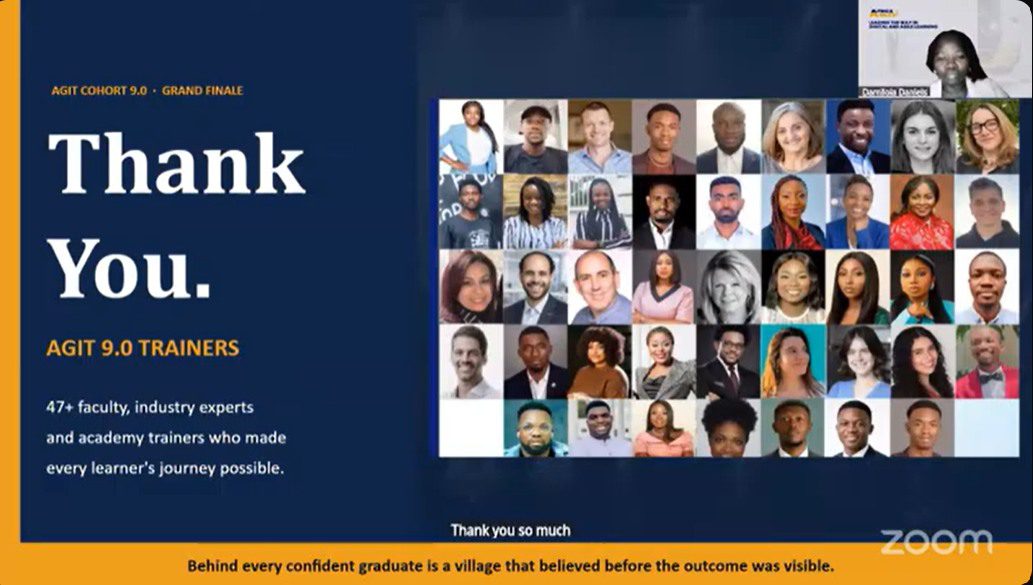
The Grand Finale of AGIT Cohort 9 was held virtually, bringing together participants, industry leaders, mentors, and judges to celebrate months of intensive learning, collaboration, and innovation required to thrive in a competitive job market.
 Source: Africa Agility
According to the team, this year’s cohort attracted more than 6,000 applications from all 54 African countries, demonstrating the increasing demand for technology education among young women across the continent. Following a rigorous selection process that included technical and soft-skills assessments, 3,034 women were admitted into the program, representing an acceptance rate of approximately 50%.
Notably, no prior technology experience was required. The program was intentionally designed to welcome beginners and provide them with the support needed to develop industry-relevant skills from the ground up.
The Cohort 9 academic journey for African Girls in Tech
The cohort officially commenced on January 26, 2026, with participants embarking on a structured learning journey that combined live and recorded sessions delivered primarily through Zoom. Over 16 weeks, participants received practical training in Artificial Intelligence, Product Management, Product Design, Data Analytics, Software Development, Scrum Mastery, and Digital Marketing.
Beyond technical instruction, the academy emphasised experiential learning through assignments, collaborative projects, and real-world problem-solving exercises. Participants worked independently and in teams, applying their knowledge to address social and economic challenges through technology-driven solutions.
The programme also incorporated specialised masterclasses focused on soft skills development, equipping participants with communication, leadership, teamwork, and workplace readiness competencies that are increasingly valued by employers.
The impact of the training was evident in the programme’s completion rate, with 75% of the selected cohort completing the intensive learning experience.
 Sena Dzokoto, Cohort 9 Graduand
Key activities during the Grande Finale
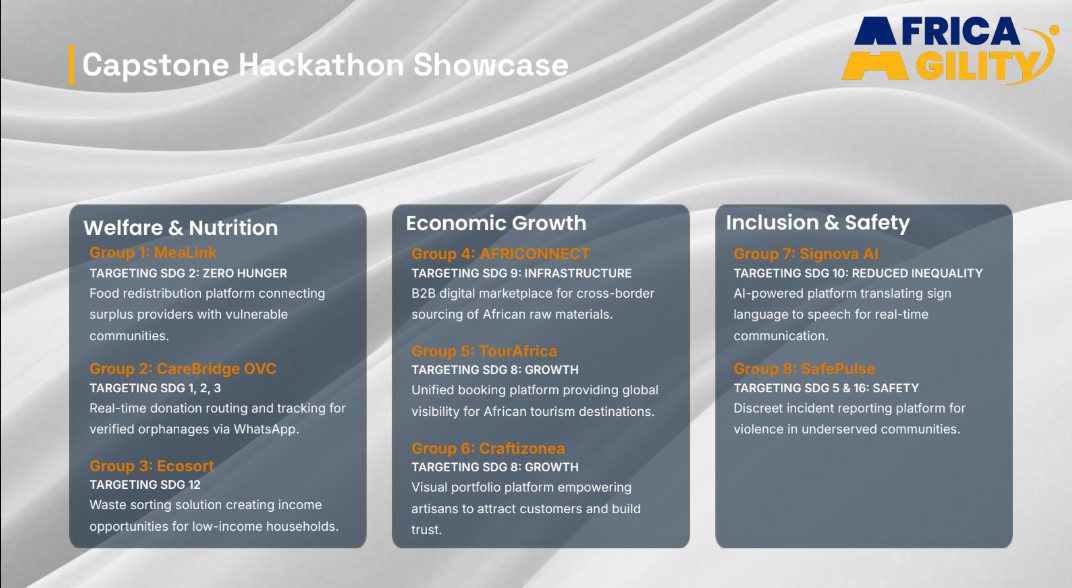
A major highlight of the Grand Finale was the hackathon showcase, where participants presented innovative solutions addressing challenges across sectors, including safety, education, tourism, sustainability, commerce, and social impact.
Among the projects presented was MeaLink, a food redistribution platform designed to reduce waste by connecting restaurants with organisations and vulnerable communities in need. CareBridge OVC introduced a transparent support platform for orphanages, enabling donors to monitor the impact of their contributions via WhatsApp, while Africonnect leveraged artificial intelligence to facilitate secure business-to-business commodity sourcing of African raw materials.
Other standout projects included SafePulse, a community safety intelligence platform that enables anonymous reporting of violence in underserved communities to support rapid intervention by non-governmental organisations and Ecosort, a community-powered waste management solution that transforms household waste into income opportunities while generating verified environmental data.
Another one is Craftizonea, a digital marketplace created to empower artisans and expand market access for locally made products; Signova AI, an AI-powered platform that translates sign language to speech for real-time communication; and TourAfrica, a platform designed to showcase authentic African tourism experiences.
 Source: Africa Agility
The projects were evaluated by a distinguished panel of judges, including Dr Ian Campbell, Dr Jasmine Pega, and Theophilus Osifo. Teams were assessed based on innovation, creativity, functionality, social impact, and commercial viability.
Following deliberations, the judges announced SafePulse as the overall winner of the hackathon. Carebridge secured second place, while Ecosort emerged in third place. Signova AI finished fourth, followed by MeaLink in fifth position. AfricConnect, Craftizonea, and TourAfrica completed the rankings in sixth, seventh, and eighth places, respectively.
Final words
During the event, Lanre Da Silva, a renowned fashion entrepreneur, delivered a great keynote speech encouraging participants to embrace vision, creativity, discipline, and resilience as they pursue careers in technology and entrepreneurship.
Drawing from her experience of building a successful fashion brand over the past two decades, Da Silva reflected on the importance of identifying opportunities where others see limitations.
“As entrepreneurs, innovators, and future leaders, your journey reflects the power of vision, consistency, creativity, and African excellence. These qualities are essential for anyone seeking to build a successful business or create meaningful change,” she said.
 Lanre Da Silva
She further highlighted the transformative influence of technology across industries, noting that innovations such as artificial intelligence are reshaping sectors ranging from fashion and education to healthcare and commerce.
Encouraging participants to think beyond the present, she urged them to consider how their solutions could continue creating value over the next five to ten years.
“Success is not determined only by what your product looks like today. It depends on how clearly you can see the future and how prepared you are to adapt to the changes that lie ahead. You must constantly ask yourself: What will the world look like five or ten years from now? How will my solution continue to create value in that future?” she said.
She added that values and principles are equally important. These are the foundations upon which successful businesses are built.
“Your values shape your culture, influence your decisions, and determine how people experience your brand. In the long run, integrity and consistency will always matter,” she said.
Da Silva advised that competition is another reality they must embrace. Whether in fashion, technology, or any other industry, competition is inevitable. However, competition should never discourage them. Instead, it should motivate them to become better, innovate faster, and give their very best.
Read also: How NectarFi’s Stephanie Okeke is building the infrastructure layer that crypto forgot


You May Also Like

Bitcoin Drop Sparks $700M Liquidation Wave As Leverage Gets Flushed

A 68-Year-Old’s Roth Conversion Cost Him the $6,000 Senior Deduction That Was Shielding His Social Security

Datavault AI Expands WiSA Wireless Audio Technology Into Goldhorn Home Systems in China



