

Crypto Is Now Fully Wired Into Global Markets, Says Pi42 CEO
Crypto Market Shows Signs of Recovery After Volatile Start to June, Says Pi42 CEO Avinash Shekhar
The cryptocurrency market is showing early signs of stabilization after a turbulent start to June 2026, according to Pi42 Co-founder and CEO Avinash Shekhar, who shared an exclusive market assessment describing a gradual recovery in sentiment across digital assets.
After weeks of heightened volatility driven by macroeconomic uncertainty, geopolitical tensions, and shifting institutional flows, Bitcoin and the broader crypto market are beginning to regain footing. However, analysts caution that while short-term stability is returning, the market remains highly sensitive to global economic developments.

Bitcoin, which recently rebounded above the $63,000 level, has been attempting to recover from a sharp correction earlier in the month. The asset briefly slipped below key support zones before buyers stepped in to stabilize price action.
Despite this recovery, Bitcoin remains significantly below its previous cycle highs above $120,000, reflecting a broader market still adjusting to changing liquidity conditions and global risk sentiment.
Market Recovery Driven by Improving Sentiment
According to Avinash Shekhar, the second week of June marked a notable shift in market behavior, with sentiment gradually improving after an extended period of uncertainty.
He noted that the crypto market’s recent resilience reflects its increasing connection to broader financial conditions rather than isolated digital asset trends.
“The second week of June highlighted the crypto market’s resilience as sentiment gradually improved following a period of heightened volatility and uncertainty,” Shekhar explained.
The recovery phase has been characterized by cautious buying activity rather than aggressive momentum, suggesting that investors are still waiting for clearer macroeconomic signals before committing significant capital.
While price action has stabilized, trading volumes and institutional flows indicate that market participants remain selective in their exposure to risk assets.
Bitcoin Leads Recovery While Altcoins Show Mixed Performance
Bitcoin has taken the lead in the ongoing recovery, acting as the primary driver of sentiment across the cryptocurrency sector.
The asset’s rebound above $63,000 has helped restore confidence among traders after a period of heavy selling pressure earlier in June.
However, altcoin performance has been uneven.
Ethereum has lagged behind Bitcoin during the recovery phase, reflecting weaker relative momentum in the broader smart contract ecosystem.
In contrast, select blockchain networks have shown stronger activity.
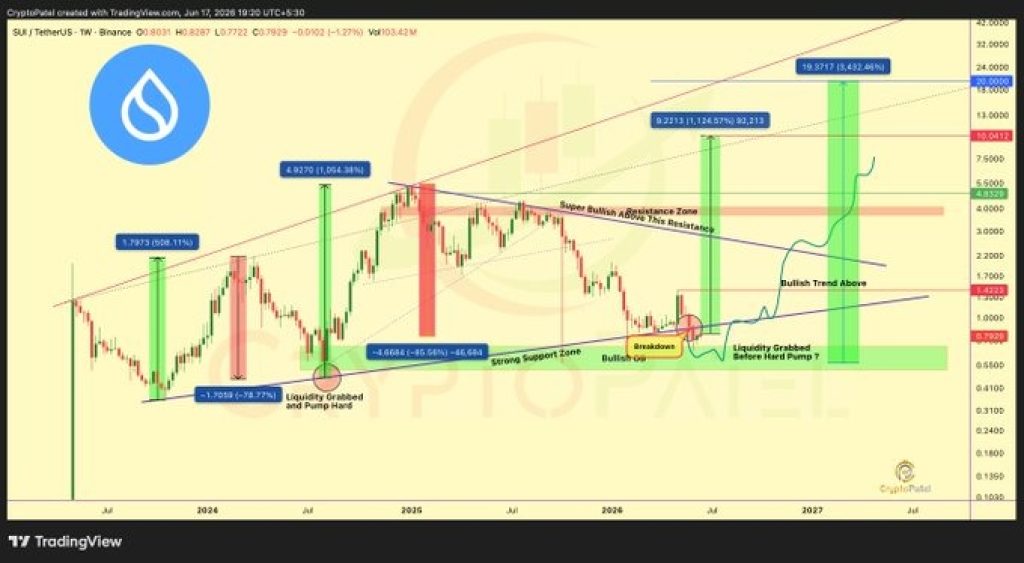
Solana has continued to attract attention from investors, driven by ongoing ecosystem development and increasing interest in real-world asset integration. Meanwhile, emerging networks such as SUI have experienced pockets of investor demand, particularly among traders seeking exposure to high-growth blockchain infrastructure projects.
This divergence highlights a growing trend in the market where capital is rotating selectively rather than flowing uniformly across all digital assets.
US-Iran Negotiations Emerge as Key Market Catalyst
One of the most significant drivers behind the recent stabilization appears to be easing geopolitical tensions, particularly surrounding US-Iran negotiations.
Shekhar identified improving diplomatic signals as a key factor supporting risk sentiment across global markets, including cryptocurrencies.
As fears of prolonged geopolitical conflict eased, investor appetite for risk assets began to recover, contributing to gains in both equities and digital currencies.
“The week’s price action further reinforced how closely crypto markets are now interconnected with broader economic developments, liquidity conditions, and global capital flows,” Shekhar said.
This growing correlation between crypto assets and traditional macroeconomic forces underscores how the industry has evolved from a niche market into a globally integrated financial sector.
Macro Liquidity and Institutional Flows Remain Critical
Despite short-term improvements in sentiment, market analysts continue to emphasize that liquidity conditions remain a central factor influencing price action.
Earlier in the year, Bitcoin and other digital assets faced significant pressure due to tightening liquidity and large-scale institutional repositioning.
In addition, ETF outflows and broader risk-off behavior among institutional investors contributed to downward pressure on prices throughout the first half of 2026.
While recent stabilization suggests a potential shift in sentiment, sustained recovery will likely depend on whether institutional capital begins to re-enter the market in a consistent manner.
Market participants are also closely monitoring broader financial conditions, including interest rate expectations and global liquidity trends, which continue to play a decisive role in shaping crypto market direction.
Long-Term Fundamentals Remain Intact
Despite ongoing volatility, Shekhar emphasized that the long-term outlook for the cryptocurrency industry remains strong, supported by continued structural development across multiple sectors.
He pointed to several key drivers of long-term growth:
- Increasing corporate treasury participation in digital assets
- Expansion of stablecoin usage across global payments
- Continued development of blockchain infrastructure
- Progress toward clearer regulatory frameworks in major markets
- Rising adoption of blockchain-based real-world applications
According to Shekhar, these factors represent the foundation of long-term industry expansion, even as short-term price movements remain unpredictable.
“The long-term indicators that matter most continue to be adoption, institutional participation, regulatory clarity, and the growing use of blockchain technology across real-world applications,” he stated.
This perspective reflects a broader industry view that short-term volatility does not necessarily undermine long-term structural growth.
Key Factors to Watch in the Second Half of 2026
Looking ahead, analysts expect market participants to focus on several critical variables that could shape crypto market performance through the remainder of the year.
Among the most important are:
ETF Flow Trends
Institutional inflows and outflows from crypto exchange-traded products will remain a key indicator of investor sentiment.
Sustained inflows could signal renewed institutional confidence, while continued outflows may indicate lingering caution.
Inflation and Monetary Policy
Global inflation data and central bank policy decisions continue to play a major role in shaping risk appetite.
Any signals of easing monetary conditions could provide additional support for digital assets.
Regulatory Developments
Regulatory clarity across major jurisdictions remains one of the most closely watched factors in the crypto industry.
Clearer frameworks could encourage institutional participation and improve market stability.
Geopolitical Stability
Ongoing developments in global diplomatic relations, including US-Iran negotiations, are expected to remain an important influence on broader financial markets.
Market Structure Suggests Cautious Optimism
While the recent rebound in Bitcoin and selective strength in altcoins suggest improving sentiment, the broader market structure still reflects caution.
Investors appear willing to re-enter the market, but only in a measured and selective manner.
This behavior suggests that confidence is rebuilding, but not yet fully restored.
The market remains in a transitional phase where macroeconomic signals, liquidity conditions, and geopolitical developments all compete to influence price direction.
Conclusion
The cryptocurrency market is showing early but cautious signs of recovery following a volatile start to June 2026. Bitcoin’s rebound above $63,000 has helped stabilize sentiment, while altcoins present a mixed picture of selective strength and ongoing weakness.
According to Pi42 CEO Avinash Shekhar, the improvement in market conditions is closely tied to easing geopolitical tensions, particularly US-Iran negotiations, as well as broader macroeconomic stabilization.
However, despite short-term recovery signals, the market continues to face significant uncertainty driven by liquidity conditions, institutional flows, and regulatory developments.
As the second half of 2026 approaches, traders and investors will be watching closely to determine whether the current recovery evolves into a sustained uptrend or remains a temporary stabilization within a broader corrective phase.
hoka.news – Not Just Crypto News. It’s Crypto Culture.
Writer @Erlin
Erlin hallen is an experienced crypto writer who loves to explore the intersection of blockchain technology and financial markets. She regularly provides insights into the latest trends and innovations in the digital currency space.
Check out other news and articles on Google News
Disclaimer:
The articles published on hoka.news are intended to provide up-to-date information on various topics, including cryptocurrency and technology news. The content on our site is not intended as an invitation to buy, sell, or invest in any assets. We encourage readers to conduct their own research and evaluation before making any investment or financial decisions.
hoka.news is not responsible for any losses or damages that may arise from the use of information provided on this site. Investment decisions should be based on thorough research and advice from qualified financial advisors. Information on hoka.news may change without notice, and we do not guarantee the accuracy or completeness of the content published.


You May Also Like

Redwood AI Corp. Leverages Artificial Intelligence to Accelerate Chemistry R&D Across Multiple Industries
SUI Price Prediction: Analyst Says a 10X Rally Is Still Possible

British Pound Slides as Warsh’s Hawkish Fed Stance Boosts US Dollar



