

Must Read
COUP. Senators raised their hands to vote for the ouster of Senate President Vicente Sotto III, on May 11, 2026.COUP. Senators raised their hands to vote for the ouster of Senate President Vicente Sotto III, on May 11, 2026.
The Senate’s quorum of 12 senators is legal — here’s why
For feedback or concerns regarding this content, please contact us at [email protected]
Senator Chiz Escudero’s appearance at the Senate session on Wednesday, June 3, broke the impasse in the paralyzed upper chamber, leading to a shake-up in its leadership.
On May 26, the minority led by Senator Tito Sotto walked out of the plenary session to avoid creating a quorum while deliberating on the online voting rule backed by the majority led by Senate President Alan Peter Cayetano.
In return, the majority skipped sessions on Monday, June 1, and Tuesday, June 2, to maintain the status quo, which essentially rendered the upper chamber inutile because the minority itself could not reach a quorum to do official business.
Escudero’s appearance on Wednesday allowed Sotto’s group to reach a quorum of 12, elect Senator Win Gatchalian as Senate president pro tempore, and assign new heads of key committees.
The senators’ legal basis in saying they had a quorum was a Supreme Court (SC) case from 1949.
Play Video 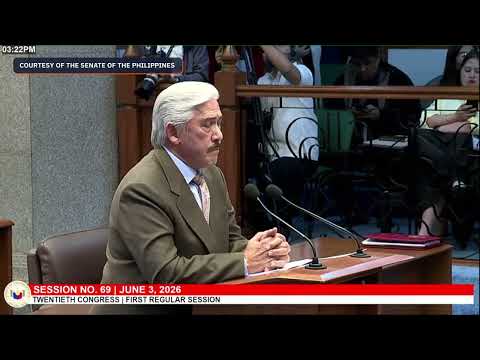
The Senate drama of 1949
In 1949, a landmark Supreme Court (SC) ruling was triggered by the actions of then-Senate president Jose Avelino and his allies during a Senate session.
Avelino and his companions deliberately ignored then-senator Lorenzo Tañada to censor him from delivering a privilege speech against Avelino himself during the session on February 21, 1949.
Senator Pablo Angeles David, one of Avelino’s allies, moved for the session’s adjournment even before Tañada could deliver his speech. After a while, Avelino banged the gavel and walked out of the session hall with his allies, while the rest of the senators remained.
A total of 10 senators left, while 12 remained. Then-senator Tomas Confesor was in the United States, while Senator Vicente Sotto (current Senator Sotto’s grandfather) was ill and confined in the hospital.
Then-Senate president pro tempore Melencio Arranz proceeded with the session after he was urged to do so by the 12 senators who remained. He then suggested to then-senator Mariano Cuenco to preside over the session. The present senators unanimously voted for Arranz’s suggestion.
Tañada was able to deliver his privilege speech during this session. Later, then-senator Prospero Sanidad introduced Senate Resolution No. 67, which sought to declare the Senate presidency seat vacant and designated Cuenco as Senate president.
The 12 present senators unanimously approved the motion. Cuenco took his oath as the 4th Senate president. Then-president Elpidio Quirino recognized Cuenco as acting Senate president on February 22.
Avelino doctrine
Avelino went to the SC to file a quo warranto petition (a legal action that can remove an official from his/her post) against Cuenco. He wanted the High Court to declare him as the rightful Senate president and oust Cuenco from the post.
The Avelino v. Cuenco case of 1949 then settled two important questions:
- Was the quorum of 12 senators legal?
- Were the actions made by this 12-senator quorum valid as well?
Initially, the SC ruled that it had no powers to decide on matters involving Senate leadership, citing separation of powers of the executive, legislative, and the judiciary. The High Court said the judiciary cannot intervene in the Senate’s constitutional power to elect its own president.
However, the SC later ruled — in the motion for reconsideration — that it assumed jurisdiction or power over the case because of subsequent events that justified its intervention. The High Court also declared that the quorum of 12 was valid, therefore, Cuenco’s election as acting Senate president was valid as well.
In the ruling, the SC explained that the justices were unanimous in believing that the session led by Arranz was a continuation of the morning session presided over by Avelino. The Court said the walkout of the 10 senators cannot prevent the 12 other senators from passing a resolution.
Article VI, Section 16(2) of the 1987 Constitution states that a “majority of each House shall constitute a quorum to do business.”
The SC said 12 senators constitute a majority of the Senate of 23 senators (only Confesor was not included, Sotto was still counted). It explained that the wording “majority of each House” does not mean “all” the members. It cited the Missouri Pac. vs. Kansas case, which said that even a majority of all the members constitute “the House.”
“There is a difference between a majority of ‘the House.’ The latter requiring less number than the first. Therefore an absolute majority (12) of all the members of the Senate less one (23), constitutes constitutional majority of the Senate for the purpose of a quorum,” said the SC.
Citing then-associate justice Guillermo Pablo’s opinion, the SC said that even if the 12 who remained did not constitute a quorum, they can order the arrest of one of the 10 who walked out so there will be a quorum, and Cuenco would still be elected.
The legal basis of the arrest can be found too in Article VI, Section 16(2), which states that the legislative branch “may compel the attendance of absent members in such manner, and under such penalties, as such House may provide.”
Gatchalian’s election, actions valid
Like in the Cuenco case, Malacañang also acknowledged Gatchalian’s election. “Ang nangyari sa Senado ngayong hapon ay naayon sa batas at rule of law. Kinikilala at nirerespeto ng Palasyo ang desisyon ng bagong mayorya at ang liderato ni acting Senate President Sherwin Gatchalian,” Palace Press Officer Claire Castro said.
(What happened in the Senate this afternoon was in accordance with law and the rule of law. The Palace recognizes and respects the new majority’s decision and the leadership of acting Senate President Sherwin Gatchalian.)
The Avelino doctrine became the basis of the Sotto-led minority to elect Gatchalian as Senate president pro tempore and assign new heads of Senate committees.
By itself, neither the 11-member Senate majority led by Cayetano, nor the 11-member Senate minority led by Sotto could reach a quorum.
International Criminal Court suspect Senator Bato dela Rosa is in hiding, while Senator Jinggoy Estrada is detained in the New Quezon City Jail in Payatas due to his plunder and graft cases that stem from alleged flood control corruption. Only 22 senators are within the coercive power of the Senate to compel its members’ attendance.
The key, really, was Escudero’s appearance.
But still, this quorum of 12 — though valid and powerful — was not enough to make the gentleman from Valenzuela City the new Senate president.
“Article VI, Section 16(1) says that the Senate shall elect its Senate president from a majority of all of its members,” University of the Philippines College of Law associate dean and constitutional law professor Paolo Tamase said.
The phrases “majority vote of all its respective members” (in electing a Senate president) and “majority of each House” (in reaching a quorum) are different. The majority of all senators is still 13, not 12, when the election of a Senate president is concerned.
“The only reason we could not elect a Senate president is because 13 votes are needed. Therefore, we elected a president pro tempore, which legally we can. [He] then automatically becomes acting Senate president. We will elect one soon as we get 13 to vote,” Sotto told Rappler.
Meanwhile, Cayetano may question the actions made by the quorum of 12 all he wants, but as far as Tamase is concerned, the senators’ actions on June 3 are all valid under the Avelino doctrine.
“We have to remember that despite the power and traditional prestige granted to the Senate president, he is but one of 24 members. And the power of the Senate belongs to the Senate in plenary, not to a particular individual,” Tamase explained.
“So insofar as it refers to the reorganization of the Senate, as well as their official acts for today, then I think despite the vagueness and the laws that may apply, the balance is in favor of the validity of Senator Gatchalian’s acts as pro tempore Senate president, or presiding officer,” he added. – Rappler.com


Disclaimer: The articles reposted on this site are sourced from public platforms and are provided for informational purposes only. They do not necessarily reflect the views of MEXC. All rights remain with the original authors. If you believe any content infringes on third-party rights, please contact [email protected] for removal. MEXC makes no guarantees regarding the accuracy, completeness, or timeliness of the content and is not responsible for any actions taken based on the information provided. The content does not constitute financial, legal, or other professional advice, nor should it be considered a recommendation or endorsement by MEXC.
You May Also Like

Canadian Dollar Holds Ground Against US Dollar as Resistance Caps Losses: Scotiabank
BitcoinWorld Canadian Dollar Holds Ground Against US Dollar as Resistance Caps Losses: Scotiabank The Canadian Dollar is finding support near key resistance levels
Share
bitcoinworld2026/06/03 23:40

Ionics, Inc. to hold Annual Stockholders’s Meeting on June 26 via remote communication
Spotlight is BusinessWorld’s sponsored section that allows advertisers to amplify their brand and connect with BusinessWorld’s audience by publishing their
Share
Bworldonline2026/06/04 00:02

Egrag Crypto to XRP Investors: You’re Either Early Or You’re Exit Liquidity
Crypto analyst EGRAG CRYPTO (@egragcrypto) recently shared a detailed assessment of XRP, highlighting both current price behavior and long-term targets. His analysis
Share
Timestabloid2026/04/02 18:15



