Top Privacy-Focused Cryptocurrencies for Long-Term Investment: Monero (XMR), Zcash (ZEC), and Bittensor (TAO)
Key Takeaways
- Monero employs ring signatures along with stealth addresses to ensure automatic privacy for all transactions
- Zcash leverages zk-SNARK technology to provide users with the choice between private and transparent transactions
- Bittensor operates as a decentralized artificial intelligence platform, emerging as a key player in the data ownership space
- Regulatory scrutiny has led several prominent cryptocurrency exchanges to delist Monero over compliance issues
- Growing concerns about AI surveillance and government monitoring could drive future demand for privacy-preserving cryptocurrencies
The conversation around privacy-focused cryptocurrencies has intensified in recent years. Let’s examine three prominent projects that long-term investors are monitoring closely.
While Bitcoin is frequently portrayed as providing anonymity, the reality is that nearly all Bitcoin transactions are visible and can be tracked through blockchain analysis. This transparency gap has fueled demand for digital currencies specifically engineered to shield user information, account balances, and transaction records from public view.
Within this emerging sector, three initiatives have captured significant attention: Monero, Zcash, and Bittensor. Each project employs distinct strategies for ensuring privacy and maintaining control over personal data.
Monero (XMR)
Monero debuted in 2014 with a fundamental design focused on transaction untraceability. The protocol incorporates technologies known as ring signatures and stealth addresses, which effectively conceal wallet identifiers, payment amounts, and participant identities.
[[IMG_0]]Monero (XMR) PriceUnlike many alternatives, Monero enables privacy automatically for every user. Each and every transaction receives identical protection measures, making it significantly more challenging to isolate individual users compared to platforms where privacy features are merely optional.
Over the last ten years, Monero has earned considerable credibility, supported by a dedicated user base and ongoing development efforts. Advocates argue it delivers one of the most straightforward value propositions in cryptocurrency: confidential person-to-person transactions.
That said, the project isn’t without challenges. Multiple leading cryptocurrency exchanges have delisted Monero in response to regulatory enforcement related to money laundering prevention requirements. Continued government scrutiny of privacy-focused tokens could further restrict accessibility for mainstream investors.
Nevertheless, many cryptocurrency proponents anticipate rising demand for financial confidentiality. Should this prediction materialize, Monero stands positioned as a leading option within its category.
Zcash (ZEC)
Zcash arrived on the scene in 2016, introducing a distinct privacy mechanism called zk-SNARKs, which represents sophisticated zero-knowledge proof cryptography. In contrast to Monero’s approach, Zcash makes privacy a user choice rather than a mandatory feature.
[[IMG_1]]Zcash (ZEC) PriceThis adaptability is considered beneficial by certain observers. Both individuals and enterprises can elect to conduct either confidential or visible transactions, potentially simplifying regulatory compliance when circumstances require it.
Zcash emerged as an early innovator in zero-knowledge proof technology, which has subsequently evolved into one of the most prominent subjects in blockchain innovation. Today, this technology is being investigated for applications in blockchain scalability solutions, digital identity systems, and decentralized web platforms.
Despite its technological merits, Zcash has encountered difficulties with user adoption and community expansion. Its market performance has also left numerous investors dissatisfied over recent years. The project’s future trajectory hinges substantially on whether zero-knowledge cryptography achieves broader acceptance.
Bittensor (TAO)
Bittensor doesn’t fit the conventional privacy coin mold, yet it’s increasingly associated with initiatives centered on data sovereignty and distributed artificial intelligence systems. The platform seeks to establish an open ecosystem where machine learning algorithms can share computational intelligence and receive token incentives.
This initiative exists at the convergence of multiple emerging trends: artificial intelligence advancement, decentralization principles, open-source development, and individual data rights. With major technology corporations accumulating vast quantities of user information, certain investors view decentralized AI networks as a viable alternative to centralized data collection.
Bittensor also capitalizes on the ongoing enthusiasm surrounding AI investment. This association provides greater market traction compared to legacy privacy coins lacking connections to the artificial intelligence sector.
The trade-off involves heightened speculation. The underlying technology presents considerable complexity, and widespread real-world adoption remains unverified.
Current Landscape
Monero maintains the most established reputation as a dedicated privacy cryptocurrency. Zcash provides an entry point into zero-knowledge proof innovation. Bittensor delivers investment exposure to decentralized AI infrastructure and data sovereignty concepts.
Each of these three projects carries substantial investment risk. However, for those prioritizing digital privacy and personal data control, these represent the most frequently mentioned options in current market discussions.
The post Top Privacy-Focused Cryptocurrencies for Long-Term Investment: Monero (XMR), Zcash (ZEC), and Bittensor (TAO) appeared first on Blockonomi.


You May Also Like
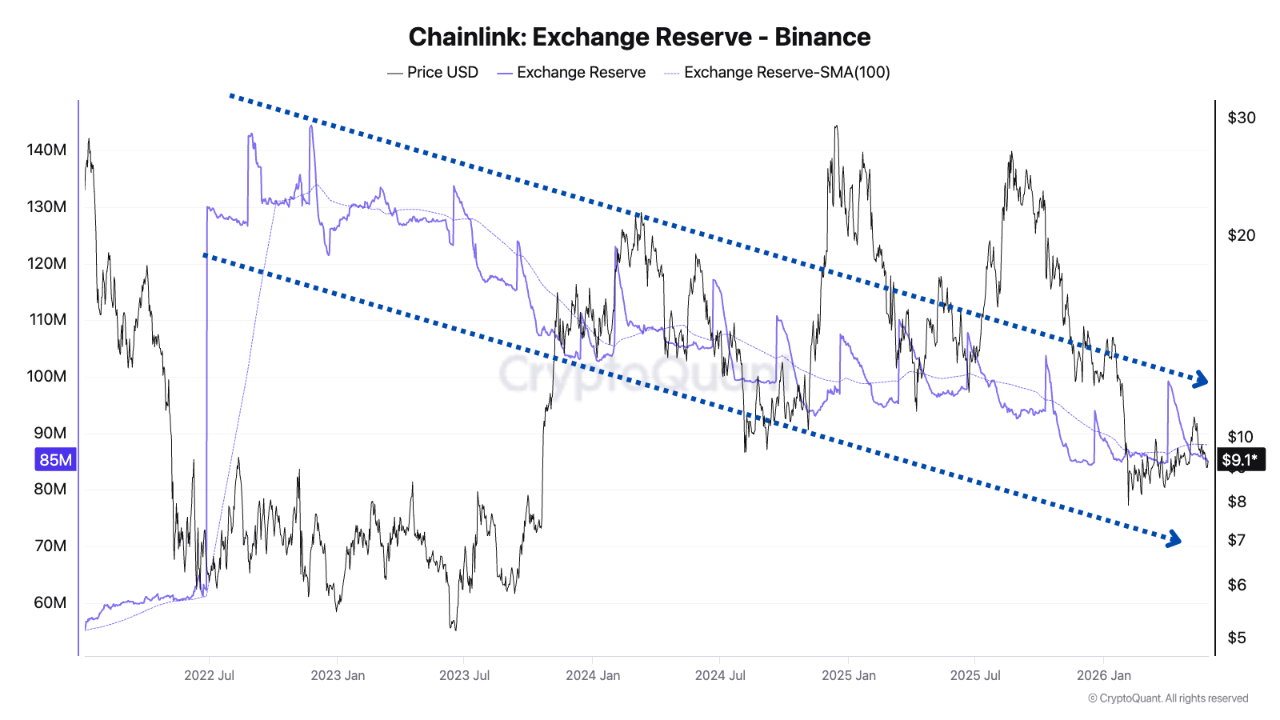
Binance Holds 66% of All Exchange LINK as Reserves Hit Multi-Year Lows

Ousted Trump official blasted for promoting ‘Hitlerian greeting’ ahead of ‘fascist summit’

NVIDIA Stock Rallied 8%, But 3 Signals Point to a Reversal