Over $526M Liquidated From Crypto Market in 1 Hour as Longs Lead Losses
More than $526 million in crypto positions were liquidated within a single hour, with long traders absorbing the vast majority of losses in one of the sharpest short-term derivatives wipeouts in recent months.
What Happened in the Latest Crypto Liquidation Wave
The $526 million liquidation event hit the crypto derivatives market rapidly, forcing the closure of leveraged positions across major exchanges. Long positions, bets that prices would rise, took the hardest hit as prices moved sharply against bullish traders.
The scale of the flush reflects how quickly cascading liquidations can accelerate a sell-off. When leveraged longs get stopped out, the forced selling adds downward pressure, which triggers more liquidations in a feedback loop.
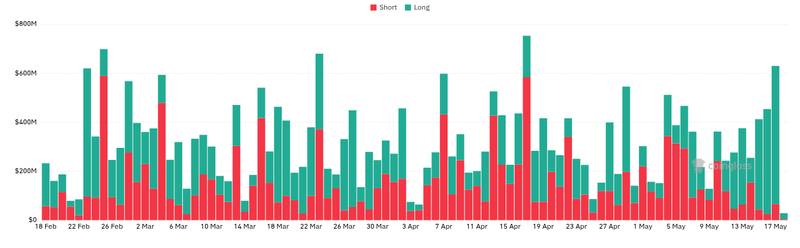 CoinGlass market-structure view used for the leverage and volatility section on Over $526M were liquidated from the crypto market in the past hour, with longs taking the hardest hit at $…
Bitcoin slid under key support levels while altcoins lagged, concentrating the pain among traders positioned for continued upside. BTC’s dominance in derivatives open interest made it the single largest source of liquidation volume.
Why Long Positions Were Hit Hardest
Liquidations occur when a leveraged position’s margin can no longer cover the unrealized loss, prompting the exchange to close the trade automatically. For long positions, this happens during sharp price drops.
The long-heavy imbalance in this event suggests that bullish positioning had become crowded heading into the move. When a large share of open interest sits on one side, even a moderate price swing can trigger an outsized wave of forced closures.
This is distinct from organic spot selling, where holders choose to exit. In a derivatives unwind, the selling is automatic and instantaneous. Understanding how Bitcoin’s fixed supply mechanics interact with leveraged markets helps explain why these flushes can be so violent; spot supply does not expand to absorb forced selling.
What This Means for Crypto Traders in the Near Term
A liquidation total of this magnitude signals extreme short-term volatility. Events like this typically clear out the most overleveraged participants, which can reduce open interest and temporarily stabilize price action.
Traders should watch whether volatility cools in the hours following the flush or whether a second wave extends the sell-off. A long-heavy washout often reflects crowded bullish positioning getting flushed, and the aftermath can go either way: a relief bounce as selling pressure evaporates, or continued weakness if spot demand fails to step in.
The gap between altcoin derivatives activity and spot market depth has widened in 2026, making leveraged positions increasingly vulnerable to sudden liquidation events. Meanwhile, enforcement actions like the DOJ’s recent charges against a darknet market admin continue to remind traders that regulatory pressure can surface as an additional volatility catalyst at any time.
No specific catalyst has been confirmed for the move. Until further evidence emerges, traders should treat this as a positioning-driven event rather than a fundamental shift in market structure.
Disclaimer: This article is for informational purposes only and does not constitute financial or investment advice. Cryptocurrency and digital asset markets carry significant risk. Always do your own research before making decisions.


You May Also Like

Pi Network Expands Beyond Mining with Protocol 23 and AI Web3 Growth

Chainlink Whale Activity Rises While Price Bleeds for 7 Straight Months