Trump Iran Ceasefire Decision: President Refuses to Rule Out Breaking Agreement – Global Tensions Surge
BitcoinWorld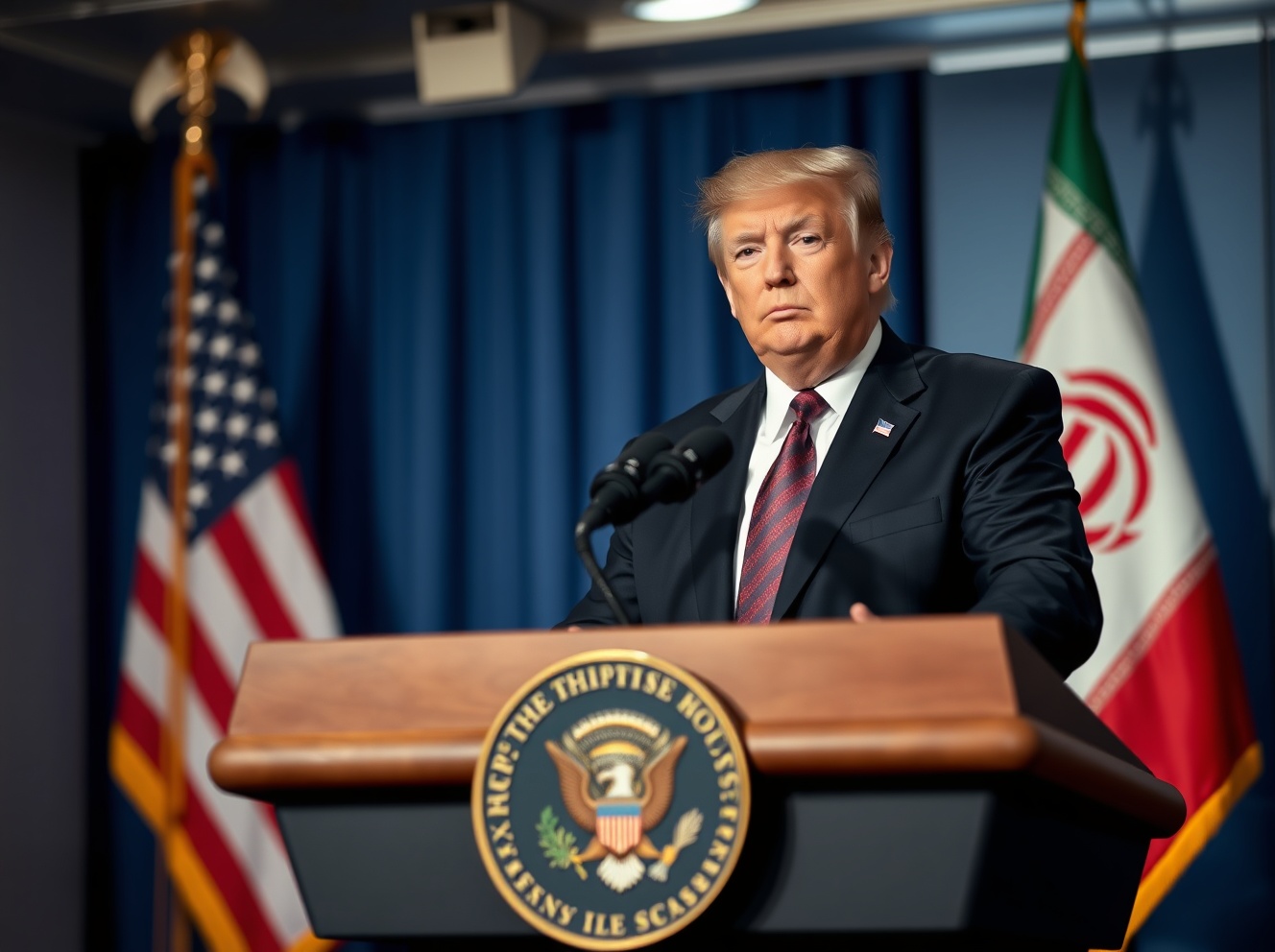
Trump Iran Ceasefire Decision: President Refuses to Rule Out Breaking Agreement – Global Tensions Surge
President Donald Trump has stated he has not ruled out breaking the ceasefire agreement with Iran. This announcement creates significant uncertainty in global markets and diplomatic circles. The Trump Iran ceasefire decision could reshape Middle East stability.
Trump Iran Ceasefire: A Critical Policy Shift
On March 18, 2025, from the White House, President Trump addressed reporters. He confirmed the possibility of ending the current ceasefire with Iran. This statement marks a major departure from previous diplomatic efforts.
The ceasefire, brokered in late 2024, aimed to reduce hostilities. It also sought to curb Iran’s nuclear enrichment activities. Now, the Trump administration signals a potential return to maximum pressure tactics.
International observers express deep concern. European allies urge restraint. They emphasize the fragile nature of regional peace.
Background of the US-Iran Ceasefire
The 2024 ceasefire followed months of indirect talks. Qatar and Oman served as mediators. Key terms included:
- Iranian nuclear enrichment capped at 3.67%
- Release of detained foreign nationals by both sides
- De-escalation of proxy conflicts in Yemen and Syria
- Humanitarian aid corridors established for civilians
These terms provided a fragile peace. Now, that peace faces its greatest test.
Breaking Ceasefire with Iran: What It Means
Breaking the ceasefire carries severe consequences. Military analysts predict immediate escalation. Iran could resume high-level enrichment. Regional proxies might attack US assets.
Economic impacts also loom large. Oil prices could spike. Global supply chains face disruption. Shipping lanes in the Persian Gulf may become unsafe.
Dr. Sarah Jenkins, a Middle East expert at Georgetown University, explains: “A broken ceasefire removes all diplomatic guardrails. We enter uncharted territory.”
Timeline of Key Events
| Date | Event |
|---|---|
| October 2023 | Hamas attack on Israel; regional tensions rise |
| January 2024 | Indirect US-Iran talks begin in Oman |
| August 2024 | Ceasefire agreement signed |
| March 2025 | Trump signals potential withdrawal |
This timeline shows the rapid deterioration of diplomacy.
Trump Middle East Policy: A Pattern of Reversals
President Trump’s approach to Iran follows a consistent pattern. He withdrew from the 2015 JCPOA in 2018. He reimposed sanctions. He ordered the killing of General Qasem Soleimani in 2020.
Now, his administration considers ending the ceasefire. This move aligns with his “America First” doctrine. Critics argue it isolates the US from allies.
Supporters counter that the ceasefire failed to stop Iranian aggression. They point to continued arms shipments to Hezbollah. They also cite Iranian drone sales to Russia.
International Reactions
Global response has been swift. The European Union issued a statement. It called for “maximum restraint.” The United Nations Security Council will hold an emergency session.
Israel welcomed the potential shift. Prime Minister Benjamin Netanyahu called it “a courageous decision.” Iran’s Foreign Ministry warned of “proportional consequences.”
Russia and China oppose any US withdrawal. They view the ceasefire as a stabilizing force. Both nations have economic interests in Iran.
Iran Nuclear Agreement: Stakes for Global Security
The Iran nuclear agreement remains central to this crisis. The 2024 ceasefire built on JCPOA frameworks. It added stricter verification measures.
IAEA inspectors have regular access to Iranian sites. They report compliance so far. A US withdrawal could end that cooperation.
Iran could then enrich uranium to 60% or higher. That level is weapons-grade. The breakout time to a nuclear bomb would shrink to weeks.
Former CIA Director John Brennan warns: “This is the most dangerous moment for non-proliferation since the Cold War.”
Economic Consequences of Breaking Ceasefire with Iran
Financial markets react negatively to uncertainty. The breaking ceasefire with Iran announcement caused oil prices to jump 4%. The S&P 500 fell 1.5% in early trading.
Key economic impacts include:
- Oil price surge above $95 per barrel
- Shipping insurance premiums rising for Persian Gulf routes
- European energy security threatened by potential Strait of Hormuz closure
- Global inflation pressures resurfacing
These effects could slow global economic growth.
Expert Analysis on Trump Iran Ceasefire Decision
Policy experts offer divided opinions. Some see strategic logic. Others warn of catastrophic miscalculation.
Dr. Michael Rubin, a former Pentagon official, supports the potential withdrawal. He states: “The ceasefire gave Iran a lifeline without real concessions. Trump is right to reconsider.”
Conversely, Ambassador Wendy Sherman, who negotiated the JCPOA, disagrees. She says: “Diplomacy requires consistency. Reversing course now empowers Iranian hardliners.”
The decision also impacts the 2026 midterm elections. Voters may judge the administration’s foreign policy record.
Military Preparedness and Regional Dynamics
The US military maintains significant assets in the region. The USS Dwight D. Eisenhower carrier group patrols the Arabian Sea. Air bases in Qatar and UAE host fighter squadrons.
Iran’s military capabilities have improved since 2020. It now possesses advanced drones and precision missiles. A direct conflict would be costly for both sides.
Regional allies like Saudi Arabia and the UAE urge caution. They seek to avoid another costly war. Their economies rely on stable oil markets.
Conclusion
The Trump Iran ceasefire decision represents a pivotal moment. President Trump has not ruled out breaking the agreement. This creates profound implications for global security, energy markets, and diplomatic relations. The world watches as the administration weighs its next move. A choice between peace and renewed conflict now rests in Washington.
FAQs
Q1: What did President Trump say about the Iran ceasefire?
President Trump stated he has not ruled out breaking the ceasefire agreement with Iran. He made this announcement from the White House on March 18, 2025.
Q2: Why might the US break the ceasefire with Iran?
The Trump administration argues the ceasefire failed to stop Iranian proxy activities and nuclear enrichment. They seek a more aggressive posture to deter Iranian aggression.
Q3: What are the consequences of breaking the ceasefire?
Consequences include potential Iranian nuclear escalation, oil price spikes, regional military conflict, and strained relations with European allies. Global markets could face significant disruption.
Q4: How did international leaders react to Trump’s statement?
The EU called for restraint. Israel supported the move. Iran warned of consequences. Russia and China opposed any US withdrawal. The UN Security Council will hold an emergency session.
Q5: What is the history of US-Iran agreements?
The 2015 JCPOA limited Iran’s nuclear program. Trump withdrew in 2018. A 2024 ceasefire added new restrictions. Now, Trump signals potential withdrawal from that ceasefire as well.
This post Trump Iran Ceasefire Decision: President Refuses to Rule Out Breaking Agreement – Global Tensions Surge first appeared on BitcoinWorld.


You May Also Like

Talkie-1930: Pre-1931 Giant AI Model

Massive XRP Escrow Unlock: 300 Million XRP Released by Ripple, Impacting Market Liquidity