Fed Chair Powell Reveals Why U.S. Oil Price Impact Is Lower Than Europe and Asia — But Warns of Persistent Risks
BitcoinWorld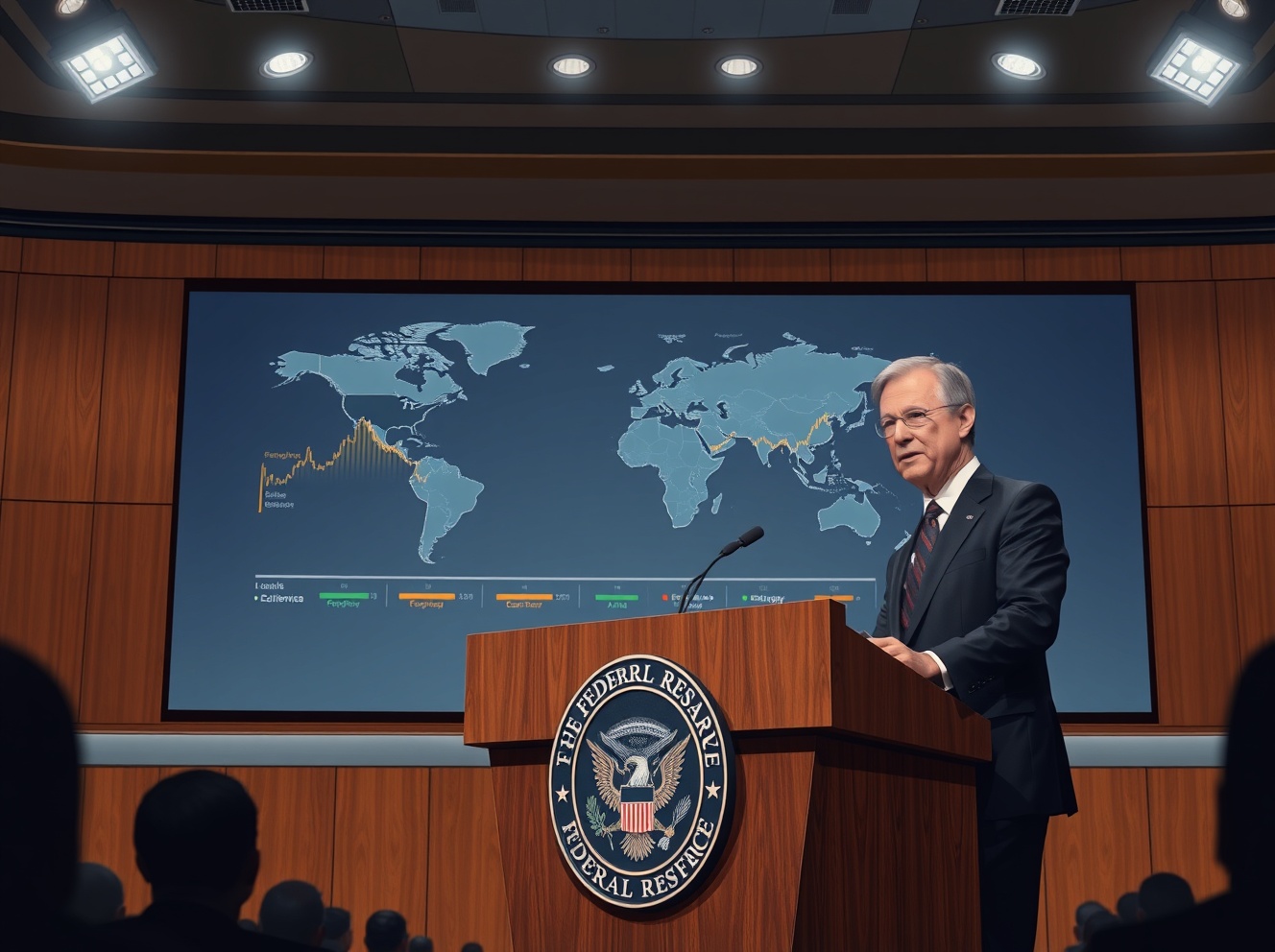
Fed Chair Powell Reveals Why U.S. Oil Price Impact Is Lower Than Europe and Asia — But Warns of Persistent Risks
Federal Reserve Chair Jerome Powell stated that the U.S. economy feels a lower impact from rising oil prices compared to Europe and Asia. He made these remarks during a press conference in Washington, D.C., on March 19, 2025. Powell acknowledged that Americans clearly feel the burden of current high energy costs. However, he emphasized that the structural differences in energy production and consumption patterns protect the United States.
Fed Chair Powell on Oil Prices and Regional Differences
Powell explained that the U.S. economy benefits from its status as a major oil producer. The country produces more crude oil than any other nation. This domestic supply buffers the economy against global price shocks. In contrast, Europe and Asia rely heavily on imports. Their economies are more exposed to volatile international oil markets.
Powell added that the impact of oil prices on inflation is also lower in the U.S. Energy costs make up a smaller share of the American consumer price index. European households spend a larger portion of their income on heating and transportation. Asian nations, especially those dependent on imported liquefied natural gas, face similar vulnerabilities.
Jerome Powell Warns of Persistent Risks
Despite the relative advantage, Powell warned that the U.S. would feel a greater impact if high oil prices persist. He noted that sustained price increases could eventually feed into broader inflation. This scenario would force the Federal Reserve to reconsider its monetary policy stance.
Powell acknowledged that people are clearly feeling the burden of current high oil prices. Gasoline prices in the U.S. remain elevated. This affects consumer spending and business operating costs. The Fed chair emphasized that the central bank is monitoring the situation closely.
Why the U.S. Is Less Vulnerable
The U.S. energy independence is a key factor. The country now produces over 13 million barrels of oil per day. This is a record high. The shale revolution transformed the U.S. from a net importer to a net exporter. This shift reduces the economic drag from global oil price spikes.
- Domestic production shields the economy from supply disruptions.
- Strategic Petroleum Reserve provides a buffer for emergencies.
- Energy efficiency improvements have reduced oil intensity per unit of GDP.
- Diverse energy mix includes natural gas, renewables, and nuclear power.
Oil Price Impact on Europe and Asia
European nations face a different reality. They import most of their oil and natural gas. The Russia-Ukraine war exacerbated this dependency. Energy costs in Europe surged by over 40% in 2022. This triggered a cost-of-living crisis and slowed economic growth.
Asian economies like Japan, South Korea, and India are also vulnerable. They import nearly all their oil. Rising crude prices increase their trade deficits. This puts pressure on their currencies and raises inflation. Central banks in these regions must raise interest rates more aggressively.
| Region | Oil Import Dependency | Energy Cost Share of GDP |
|---|---|---|
| United States | ~10% | ~4% |
| European Union | ~60% | ~12% |
| Asia (Japan, Korea, India) | ~80% | ~15% |
Federal Reserve’s Monetary Policy Response
Powell’s comments come at a critical time. The Fed has been fighting inflation since 2022. Core inflation remains above the 2% target. Oil prices add upward pressure on headline inflation. The Fed must balance the risk of raising rates too much against the risk of inflation becoming entrenched.
The Fed chair emphasized that the central bank will remain data-dependent. He did not signal an immediate rate cut. Instead, he stressed the need for patience. The Fed wants to see sustained evidence that inflation is moving toward its target.
What This Means for Consumers and Businesses
American consumers still face high gasoline prices. The national average is around $3.80 per gallon. This is down from the 2022 peak of $5.00 but still elevated. Businesses in transportation, logistics, and manufacturing feel the pinch. Higher fuel costs reduce profit margins.
Powell acknowledged that the burden is real. He said the Fed’s job is to bring inflation down without causing a recession. This is a delicate balancing act. The central bank’s tools are blunt. They work with a lag.
Global Economic Implications
The divergence in oil price impact has global consequences. A stronger U.S. economy supports global demand. But weaker growth in Europe and Asia drags on global trade. The International Monetary Fund (IMF) recently lowered its growth forecast for the eurozone and parts of Asia.
Oil prices themselves are influenced by geopolitical factors. OPEC+ production cuts, sanctions on Russia, and instability in the Middle East all play a role. Powell noted that the Fed has limited control over these external factors.
Conclusion
Federal Reserve Chair Jerome Powell’s remarks highlight the asymmetric impact of oil prices on the U.S. economy compared to Europe and Asia. While the U.S. enjoys a buffer due to domestic production and energy efficiency, persistent high prices still pose risks. The Federal Reserve remains vigilant. Powell’s message is clear: the central bank will act if needed, but it will not overreact to temporary price movements. The global economy watches closely as energy markets continue to evolve.
FAQs
Q1: Why does the U.S. feel less impact from oil prices than Europe and Asia?
A: The U.S. is a major oil producer and has lower energy cost share of GDP. It also has a more diversified energy mix and a strategic petroleum reserve.
Q2: What did Jerome Powell say about the burden of high oil prices?
A: Powell acknowledged that Americans clearly feel the burden of current high oil prices, but he noted the impact is structurally lower than in other regions.
Q3: How do high oil prices affect the Federal Reserve’s monetary policy?
A: High oil prices add upward pressure on inflation. The Fed may need to keep interest rates higher for longer to ensure inflation returns to its 2% target.
Q4: Which regions are most vulnerable to oil price shocks?
A: Europe and Asia are most vulnerable due to high import dependency. Japan, South Korea, India, and many European nations import over 60% of their oil.
Q5: Can the U.S. become completely immune to oil price fluctuations?
A: No. While domestic production reduces vulnerability, the U.S. is still part of the global oil market. Persistent high prices can eventually feed into broader inflation and affect consumer spending.
This post Fed Chair Powell Reveals Why U.S. Oil Price Impact Is Lower Than Europe and Asia — But Warns of Persistent Risks first appeared on BitcoinWorld.


You May Also Like

Treasury’s first GENIUS rule tightens Washington’s grip on who can scale stablecoins

US Stocks Mixed: Dow Jones Dips 0.57% as Nasdaq Clings to Gains