StableChain (STABLE) Market Insight: On-Chain Reality vs. Doubling Potential
Key Takeaways
- Innovation: StableChain uses USDT as its native gas token, removing the need for volatile assets like ETH or SOL for transaction fees.
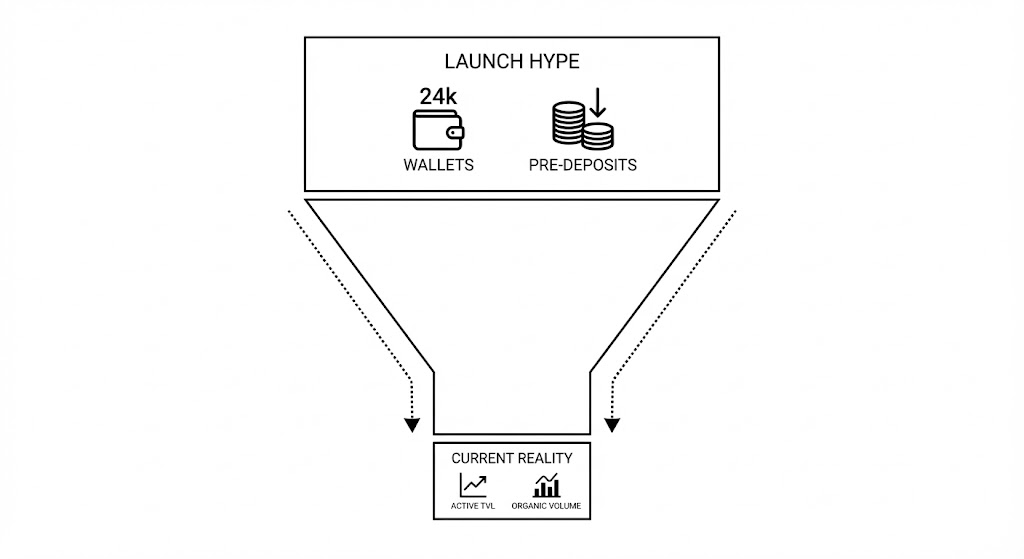
- Bearish Signal: Despite a high-profile launch in Dec 2025, on-chain data shows critically low DeFi TVL (~$30k) and zero DEX volume as of mid-January 2026.
- Supply Risk: Regular monthly ecosystem unlocks create consistent sell pressure that requires a significant uptick in usage to absorb.
- The Verdict: While the "payment-first" thesis is strong, STABLE currently lacks the organic retention loops required for a fundamental price doubling.
1.Introduction: The "Payments First" Thesis
2.What StableChain Actually Ships (The Utility Case)
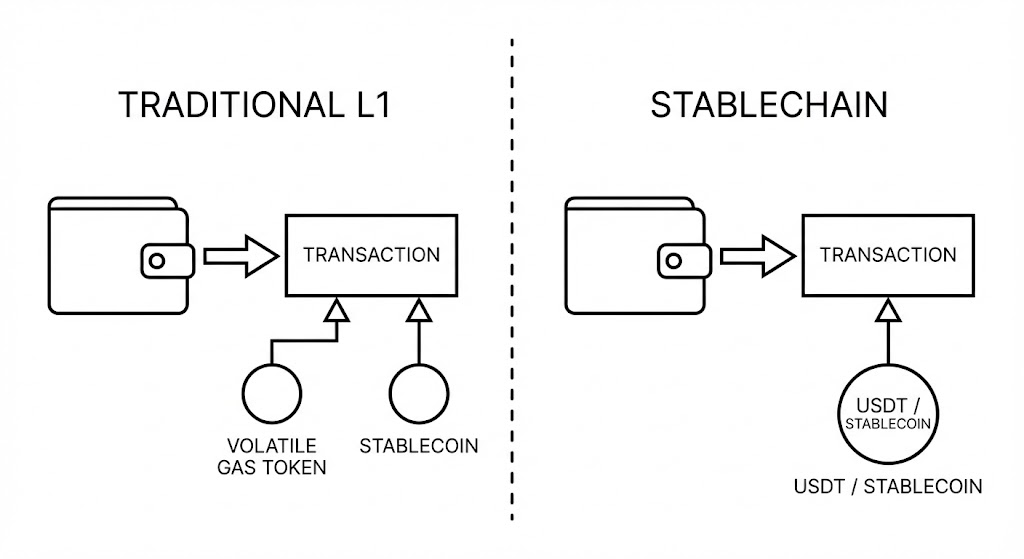
- Gas-Free Experience: Transfers of USDT0 can be gas-free.
- Seamless Conversion: Complex contract actions pay fees in USDT0, which are converted internally to gUSDT.
3.On-Chain Reality Check: Traction After Launch
Metric | Latest Value | Impact on STABLE Price |
DeFi TVL | $30,888 | High Risk. Shows minimal capital retention in dApps. |
Stablecoin MCap (On-chain) | $43.56M | Neutral/Bearish. Modest footprint compared to competitors. |
7-Day Stablecoin Change | -26.71% | Bearish. Capital is leaving the chain faster than it is arriving. |
DEX Volume (24h) | $0 | Critical. Indicates a lack of organic economic loops. |
STABLE Circulating Supply | 17.6 Billion | Upside requires real demand to combat meaningful float. |
All-Time High (ATH) | $0.05 | Price has cooled significantly since the Dec 8 launch spike. |
4.Why the "Market Opportunity" Argument is Weaker Than It Looks
- ** The Tron Moat:** The majority of current USDT velocity lives on Tron, which has entrenched distribution, wallet support, and user habits. StableChain must displace these existing workflows, not just exist alongside them.
- Macro vs. Micro: A rising global stablecoin market cap (now roughly $308B) does not automatically lift every niche payment chain.
- Token Value Capture: While the network uses USDT for gas, the STABLE token is used for governance and security staking. If payment volume is low, the demand for security staking remains low, weakening the token's value accrual.
5.What is Holding STABLE Back? (The Bear Case)
- Retention Gap: The drop from billion-dollar pre-deposits to a $30k TVL suggests early incentives failed to create sticky behavior.
- Early Friction: Reports from The Defiant highlighted launch-day friction regarding bridging and obtaining gUSDT. In the payments sector, any friction is a "growth tax."
- Supply Pressure: According to Messari’s vesting schedule, monthly ecosystem unlocks are active. Without a corresponding surge in demand, this constant supply acts as a ceiling on price appreciation.
6.The Path to Doubling: What Needs to Change? (The Bull Case)
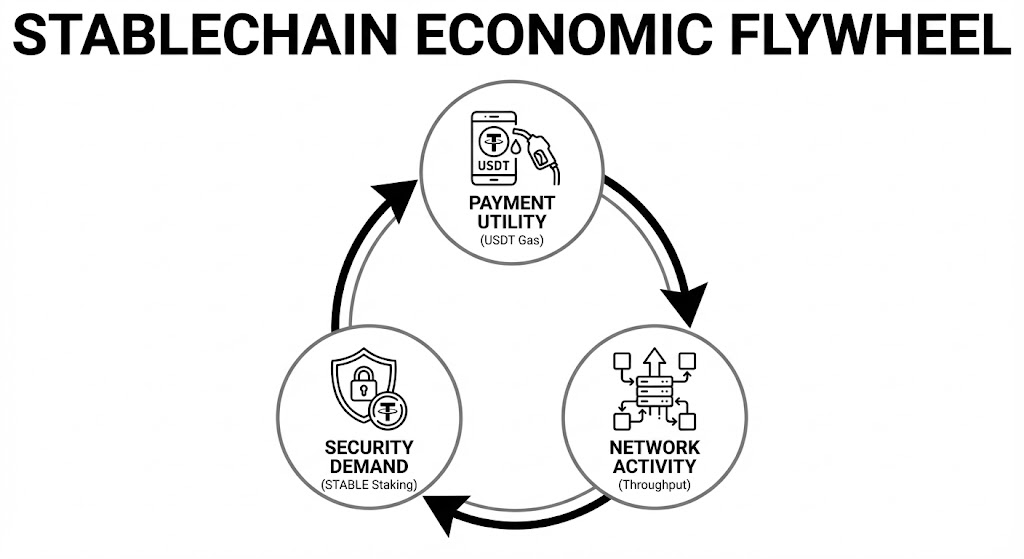
- Verified Distribution Partners: Moving beyond logos. If partnerships with entities like PayPal or Anchorage Digital result in visible on-chain throughput, the market will re-price the asset immediately.
- TVL Reversal: If the chain’s stablecoin market cap stops declining (currently down 26% weekly) and starts growing for consecutive weeks, it signals the start of a "network effect."
- A "Killer App": The emergence of a specific use case—such as a seamless remittance corridor or merchant settlement app—that makes the USDT-gas model obviously superior to Tron or Ethereum L2s.
7.Conclusion: What to Watch Next
- Wait for DeFi TVL to move from five figures to mid-seven figures ($5M+).
- Monitor DEX volume to ensure users are actually trading, not just holding.
- Ensure the Monthly Unlock windows pass without significant price dumping.
FAQ: Frequently Asked Questions about StableChain
What is StableChain (STABLE)?
Why is the STABLE token price down since launch?
How does StableChain compare to Tron for USDT transfers?
Disclaimer:
Popular Articles

Can Stargate (STG) Regain Price Momentum Through veSTG Incentives in 2026?
As the cross-chain interoperability landscape matures in 2026, Stargate Finance (STG) finds itself at a structural crossroads following its acquisition by the LayerZero Foundation. For investors, the

Crypto Market Fear Analysis: When Sentiment Diverges from Price Action
As we settle into 2026, it is valuable to look back at the "Extreme Fear" episode of late December 2025. During that period, market sentiment and price action disconnected significantly. In this revie

Solana vs. Ethereum L2s: 2026 Fundamental Analysis (TVL, Revenue & Stablecoins)
Key Takeaways (Executive Summary)The Capital Split: DeFi TVL is neck-and-neck (Solana $9.2B vs. Major L2 Basket $9.05B), but Ethereum L2s dominate in broad secured assets ($40.5B TVS).The Revenue Flip
Dogecoin to the Moon: Decoding the Hype, Memes, and Market Reality
In the digital asset lexicon, few phrases carry as much cultural weight as "Dogecoin to the moon." What began as a playful rallying cry on Reddit and X has evolved into a psychological benchmark for s
Hot Crypto Updates
View More
Benefits of Using Crypto to Pay for Porn Site Memberships: 2026 Privacy, Security & Cost Savings In-Depth Guide
Key Takeaways Crypto payments for porn sites offer 100% anonymity with blockchain, no personal data vs credit card 3-5% tracking risk. Fees <1% vs 3-15% for cards, 2025 adult crypto adoption 47%,
STABLE Token Price Prediction 2026: Investment Outlook & MEXC Trading Guide
Core Overview STABLE is the native governance token of the USDFI protocol, featuring a unique perpetual buyback mechanism and innovative dual-ve tokenomics. As the cornerstone of the USDFI ecosystem,

XAUT as a Hedge Against Inflation and Currency Risk
Tether Gold (XAUT) offers investors a digital alternative to holding physical gold, providing a stable store of value in an increasingly volatile financial environment. As of 11 November 2025, XAUT

USDT Laws Worldwide: Country by Country Guide
Introduction to Global Cryptocurrency Regulation The global regulatory landscape for cryptocurrencies is rapidly evolving, with over 75 countries developing or implementing regulatory frameworks as
Trending News
View More
Can Chainlink sustain its breakout as whales shift $4.8M in LINK?
The post Can Chainlink sustain its breakout as whales shift $4.8M in LINK? appeared on BitcoinEthereumNews.com. Large holders pulled Chainlink [LINK] from Binance

POL January 15, 2026: Consolidation in the Uptrend and Critical Resistance Test
The post POL January 15, 2026: Consolidation in the Uptrend and Critical Resistance Test appeared on BitcoinEthereumNews.com. Despite its upward trend, POL has

What It Means for DeFi
The post What It Means for DeFi appeared on BitcoinEthereumNews.com. What are decentralized stablecoins? A decentralized stablecoin aims to maintain a stable value

Central Bank: There is still room for reserve requirement ratio and interest rate cuts this year.
PANews reported on January 15th, citing the Securities Times, that Zou Lan, spokesperson and vice governor of the People's Bank of China, stated at a press conference
Related Articles
Solana vs. Ethereum L2s: 2026 Fundamental Analysis (TVL, Revenue & Stablecoins)
Key Takeaways (Executive Summary)The Capital Split: DeFi TVL is neck-and-neck (Solana $9.2B vs. Major L2 Basket $9.05B), but Ethereum L2s dominate in broad secured assets ($40.5B TVS).The Revenue Flip
Crypto Market Fear Analysis: When Sentiment Diverges from Price Action
As we settle into 2026, it is valuable to look back at the "Extreme Fear" episode of late December 2025. During that period, market sentiment and price action disconnected significantly. In this revie
Common Dogecoin Trading Mistakes Beginners Make and How to Avoid Them
Dogecoin (DOGE)is one of the most famous digital assets in crypto. Its meme identity, familiar branding, and constant online conversation can make DOGE feel "easy" to understand—sometimes easier than

Dogecoin ETF: Current Status and Future Prospects
Key Takeaways:TheREX-Osprey Dogecoin ETF (DOJE)launched in September 2025 as the first U.S. product offering DOGE exposure through a combination of holdings and derivatives.TheGrayscale Dogecoin Trust