

South Korean Won Slips to 17-Month Low Amid Political and Trade Headwinds
BitcoinWorld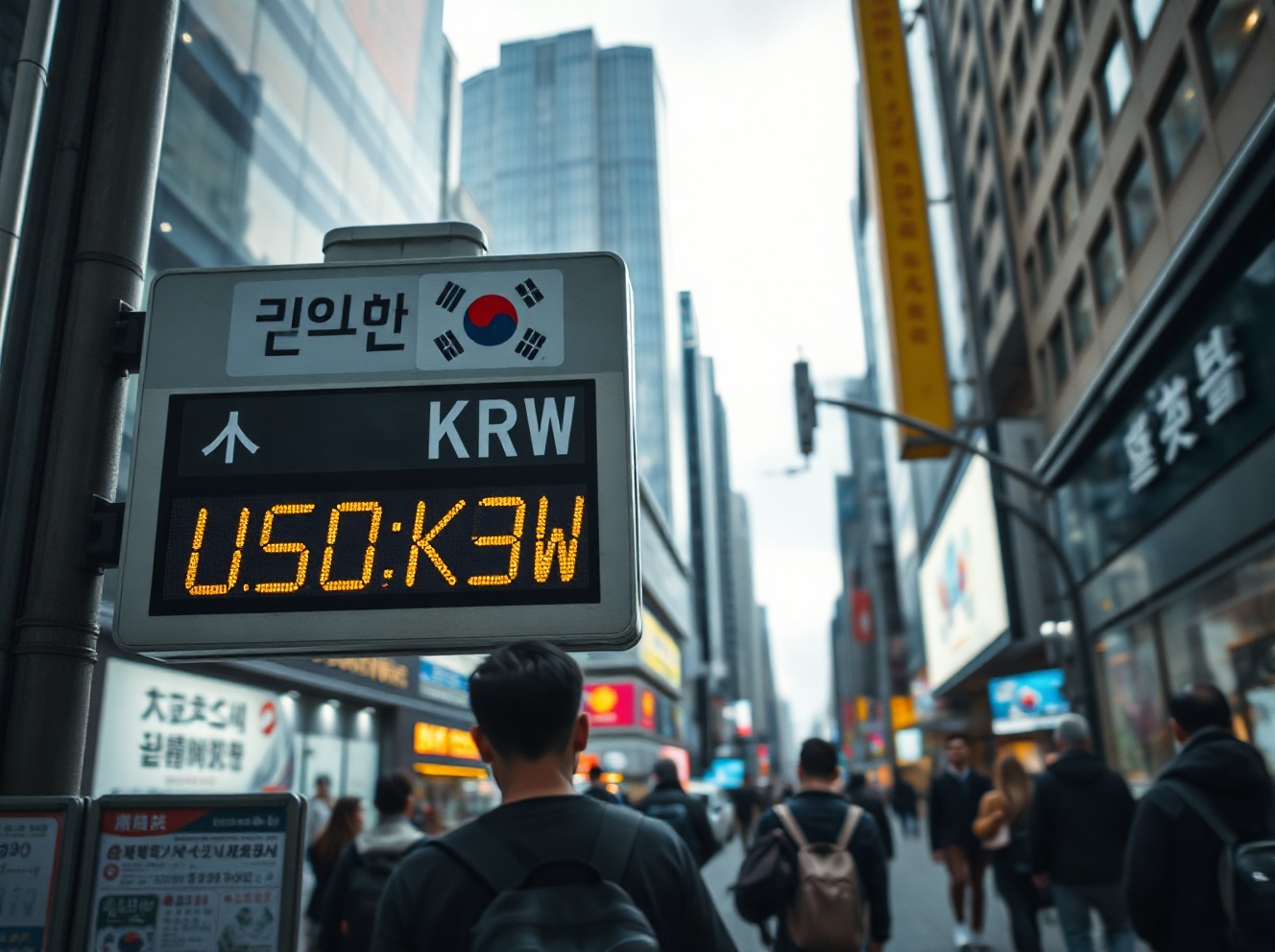
South Korean Won Slips to 17-Month Low Amid Political and Trade Headwinds
The South Korean won has weakened to its lowest level in 17 months, crossing the psychologically important 1,400 won per US dollar threshold on Tuesday. The decline reflects growing investor anxiety over domestic political instability and persistent global trade uncertainties, particularly related to US tariff policies.
What is Driving the Won’s Decline?
The won’s depreciation accelerated following the impeachment of President Yoon Suk Yeol in December 2024, which triggered a period of political vacuum and policy uncertainty. Foreign investors have pulled capital from Korean equities and bonds, seeking safer havens amid the leadership crisis. Additionally, the US Federal Reserve’s extended higher-for-longer interest rate stance has strengthened the dollar broadly, putting further pressure on emerging market currencies.
Trade data also shows a widening current account deficit for South Korea, driven by higher energy import costs and slowing export growth to China. The combination of domestic political risk and external trade headwinds has created a challenging environment for the won.
Implications for the Cryptocurrency Market
The won’s weakness has direct consequences for South Korea’s vibrant cryptocurrency market. As the won depreciates, Korean retail investors often turn to digital assets like Bitcoin and Ethereum as a hedge against currency devaluation. This phenomenon, known as the ‘kimchi premium’ — where crypto prices in Korea trade at a premium compared to global exchanges — has widened in recent days.
Data from CryptoQuant indicates that the kimchi premium for Bitcoin has risen to over 5%, suggesting increased buying pressure from Korean traders. However, this also introduces arbitrage opportunities and potential volatility. If the won continues to weaken, Korean regulators may step up scrutiny on capital outflows through crypto channels.
Broader Economic Risks
A sustained weak won raises import costs for South Korea, which relies heavily on energy and raw material imports. This could fuel inflation and reduce consumer purchasing power. The Bank of Korea faces a difficult policy dilemma: raising rates to support the won risks slowing an already fragile economy, while cutting rates could accelerate the currency’s decline.
Market participants are closely watching for any intervention from the Bank of Korea or the Ministry of Economy and Finance. The authorities have signaled readiness to deploy stabilization measures, including direct market intervention and increased liquidity supply, but have so far refrained from aggressive action.
Conclusion
The South Korean won’s slide to a 17-month low underscores the confluence of political and economic challenges facing Asia’s fourth-largest economy. While the currency’s trajectory will depend on the resolution of domestic political uncertainty and global trade developments, the near-term outlook remains cautious. For crypto investors, the weakening won may continue to drive local demand for digital assets, but regulatory responses could alter that dynamic.
FAQs
Q1: Why is the South Korean won falling?
The won is under pressure due to domestic political instability following the presidential impeachment, a strong US dollar, and a widening current account deficit. These factors have reduced foreign investor confidence and increased capital outflows.
Q2: How does a weak won affect cryptocurrency prices in Korea?
A weaker won often leads to higher demand for cryptocurrencies as a hedge, resulting in a ‘kimchi premium’ where Bitcoin and other assets trade at higher prices on Korean exchanges compared to global markets. This can create arbitrage opportunities and increased volatility.
Q3: Could the Bank of Korea intervene to support the won?
Yes, the Bank of Korea has tools such as direct currency market intervention, interest rate adjustments, and liquidity measures. However, intervention carries risks and may only provide temporary relief if underlying political and economic issues persist.
This post South Korean Won Slips to 17-Month Low Amid Political and Trade Headwinds first appeared on BitcoinWorld.


추천 콘텐츠

Bitcoin’s Most Important Metric Flashes Warning As Bulls Fight To Hold $60K

Metaplanet Stock Passes MARA to Become Third-Largest BTC Holder — Stock Slips Anyway

Crypto-Fueled Peptide Boom Surges Past US$100M as Biohacking Meets Looksmaxxing


인기 뉴스
더보기
