

‘Samahang Tenderness’: Tsarlyboy, Finney Santos put spin on Pinoy basketball culture
It’s nearly impossible to imagine the Philippines without basketball. From the densest neighborhoods in the city, to remote islands at the fringes, you’ll find a hoop, a backboard, and a space that’s never too small to play in.
Roughly 40 million Filipinos (nearly 40% of the population) actively follow the sport. Virtually all barangays across the country host their own local games and leagues, too.
Despite its enormous fanbase, there are those who criticize the sport’s popularity because of the physical disadvantages Filipino players have when stacked against larger European opponents. It’s why the belief that heart over height has become a pillar of Pinoy basketball culture.
So, should we just throw in the towel and call it a day if we can’t dominate international tournaments? Nope, says artist-designer duo Charles Salazar and Finney Santos. More than the measure of rankings and medals, they believe basketball still deserves its significant place in our culture.
“Just because hindi tayo nananalo… [hindi na importante?] Eh, integral part siya ng culture natin,” Santos says.
((Just because we’re not winning… it’s not important anymore? Well, it’s an integral part of our culture.)
“Sobrang deep kasi yung connection natin with basketball,” Salazar explains. “Somehow siguro nasasalamin din tayo eh…. We always have to fight for a place.”
(Our connection with basketball is so deep. Somehow it also reflects us…. We always have to fight for a place.)
Basketball ‘sa hirap at ginhawa’
And so, the two created Baller Room, a live music program the two founded which combines live basketball games with DJ performances.
Salazar and Santos started it as a creative concept that toyed around the idea of the famous Boiler Room sets — but with basketball players in the background. They play right outside Santos’ t-shirt printing lab, at the concrete courtyard they dubbed the Baller Room Square Garden (a tongue-in-cheek nod to New York’s most famous arena).
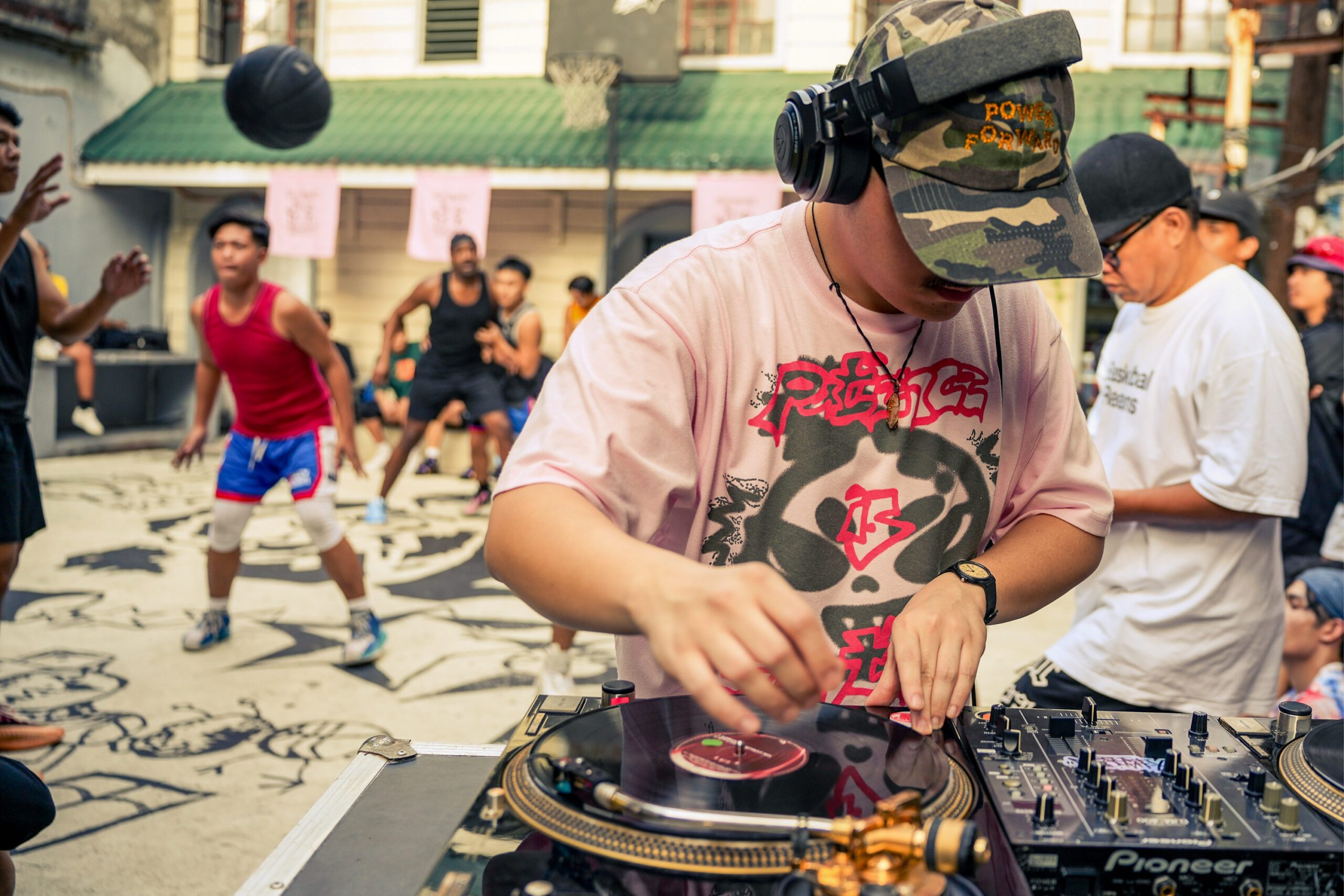 Music and sports come together. Photo by Danny Castillo
They’ve described it as “the only basketball game where you can share your frustrations to the DJ.” The magnetic visual aesthetic and the thrill of danger from packing real basketball and real vinyl sets together in the same space make for good entertainment.
It makes sense how they’ve racked up thousands of views on YouTube and on Instagram in a year, but when asked about it, a more important achievement for the two is the dedicated community they’ve cultivated for ballers and music nerds alike.
Long before Baller Room was created, and even longer from when it was popular to do so, Salazar had been using his relationship with basketball as the central subject for his body of work. Under the moniker “Tsarlyboy,” he’s held exhibitions where he displays his works in collage, installations, photography, and object appropriation formats.
His most recent exhibition, Signs of the Crossover (2024), is an exploration of the relationship between basketball and belief in the Philippines. It involves a striking film compilation of PBA players making the sign of the cross as a ritual in their games.
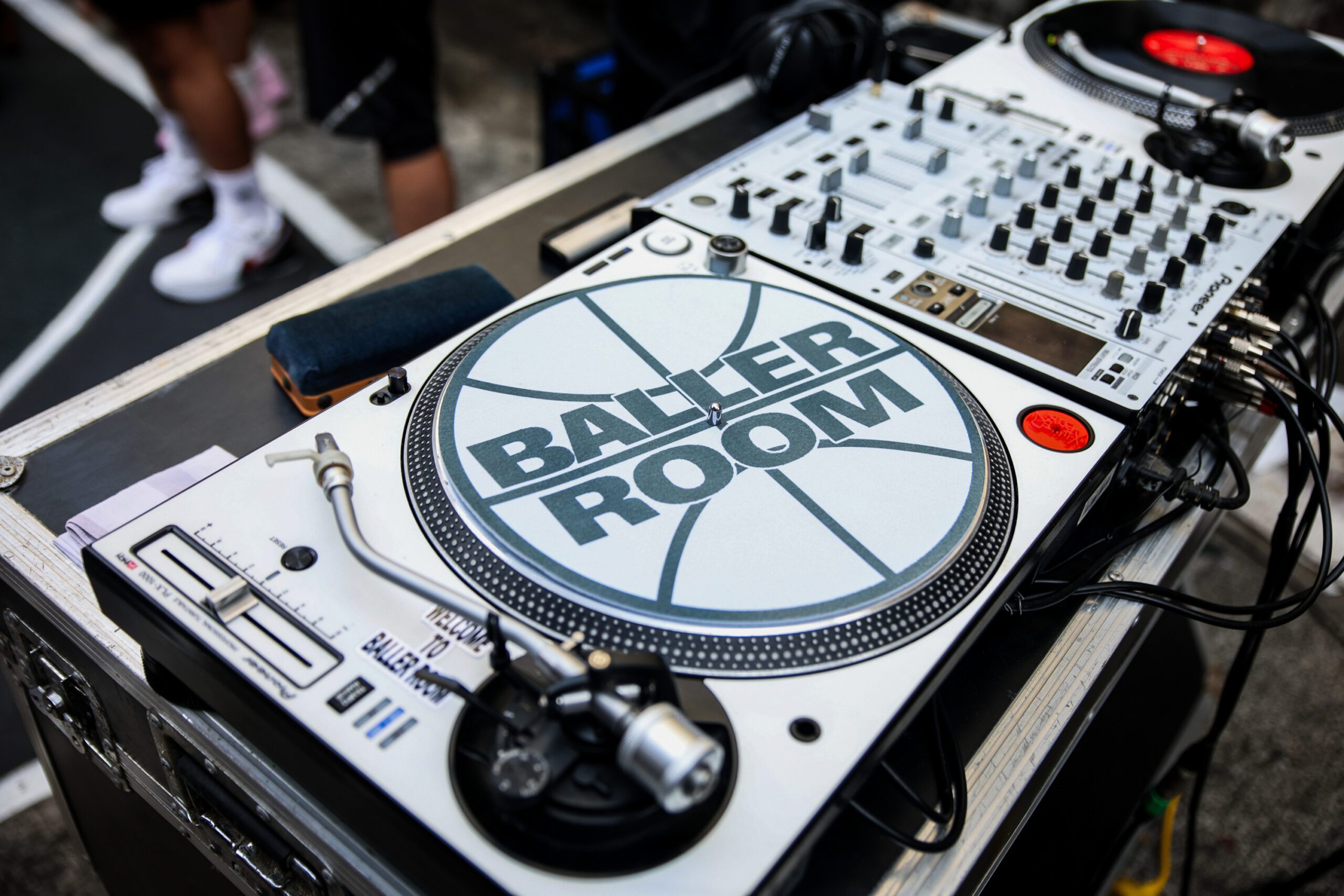 In Baller Room action, players hoop to a beat. Photo by Geric Cruz
When Salazar started making art about basketball in 2012, he recalls that there weren’t many artists or basketball fans that were like him. At most, there were lifestyle brands like Titan, a specialty basketball concept store that bridged the gap when it first opened in 2010, but only at a commercial capacity.
“Dalawang separate identity siya eh. [The early belief was] kung sporty ka, hindi ka artistic. Kung artist ka, lampa ka,” he shares, talking about why the connection between sport and art wasn’t commonly made back then.
(They’re two separate identities. The early belief was if you’re sporty, you’re not artistic. If you’re an artist, you’re uncoordinated.)
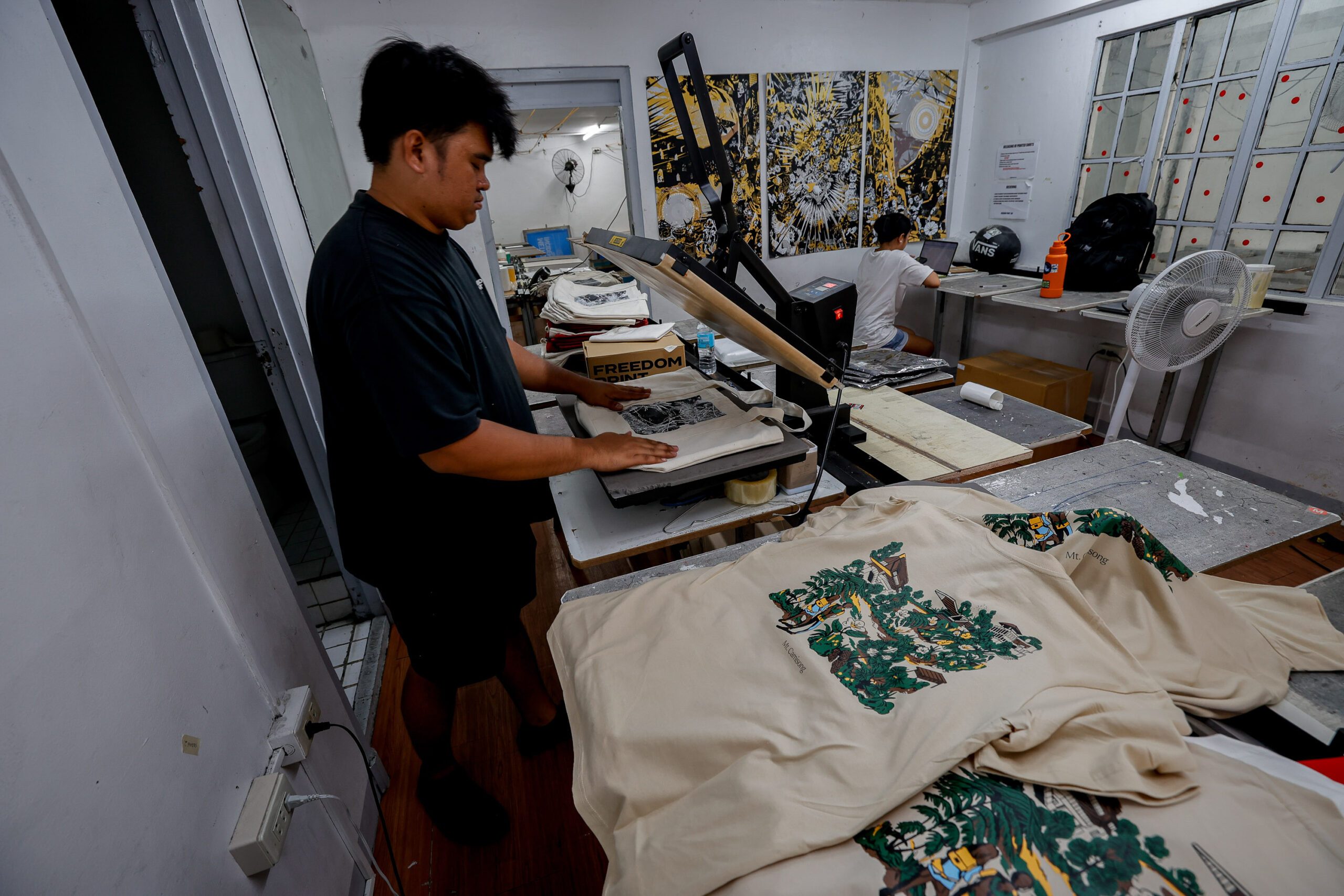 Staff artists working on printing shirts inside the work space at The Baller Room, in Cubao, Quezon City. Photo by Jire Carreon/Rappler
But both sports and art are powerful in similar ways. When done right, artworks can elicit the same electrifying emotion from a game-winning shot; and the sight of your favorite player retiring after years in the game can draw out the same melancholy that a photograph can.
Only in the past few years did he feel like the local culture was catching on to using basketball as “hugot” (personal feelings) for art.
“I guess ngayon… mas open na yung tao. Sabi nga 2026 na, hindi na ganun ka stereotype,” Salazar says.
(I guess now… people are more open. As they say, it’s 2026, it’s not that stereotypical anymore.)
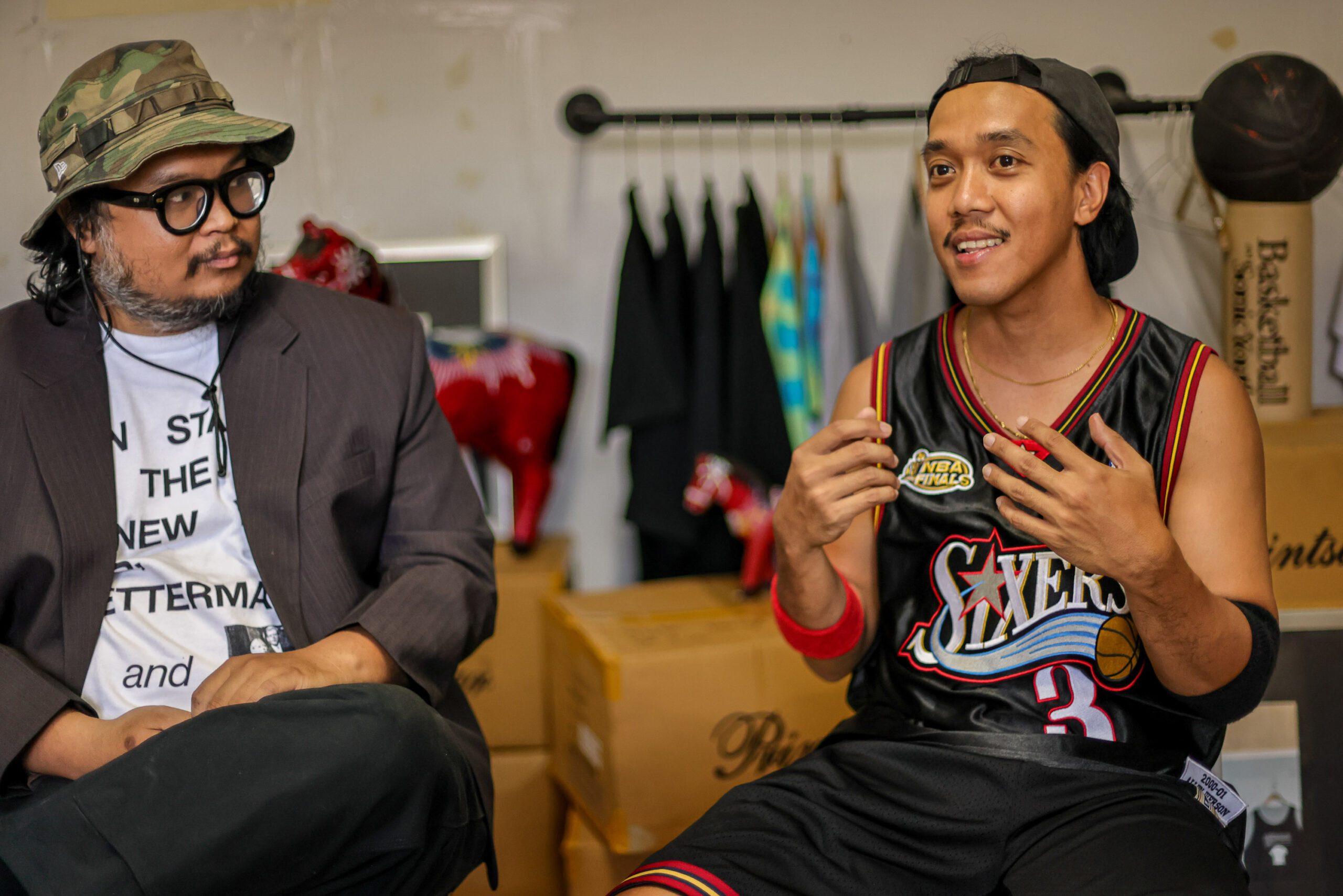 Artists Charles Salazar (right) and Finney Santos share their love for the arts and sports. Photo by Jire Carreon/Rappler
The growing recognition for his art over the years is a marker for how cultural perceptions between the two worlds have shifted.
And this experience is where one of Baller Room’s slogans, “Basketball sa Hirap at Ginhawa” (Basketball in good times and bad times) comes from.
“Kasi kahit nung wala pang [support], kahit na we can’t make money out of it, ginagawa na namin siya…. Or kahit kumita kami sa basketball, that’s the ginhawa. So, basketball tayo, sige. Doon din nagsimula yun.”
(Even when there was no support, even when we couldn’t make money out of it, we were already doing it…. Or even when we made money from basketball, it’s good. So, let’s just play basketball, okay. That’s where it started.)
‘Samahang Tenderness’
Looking back at the four iterations of the program that they’ve held, Santos emphasizes how a large part of it all has been funded by the community: sales from the shirts and other merchandise he prints in his studio allow them to rent the DJ decks and other equipment for people to play.
The Samahang Tenderness Tee is one of his latest designs, which drew inspiration from a writeup one of their friends, photographer Dennese Victoria, shared after they invited her into one of their sessions:
“Photographing for Baller Room, I was surprised to see tenderness in the court, how often they reach for each other, look out for each other, wait for their turn,” she wrote.
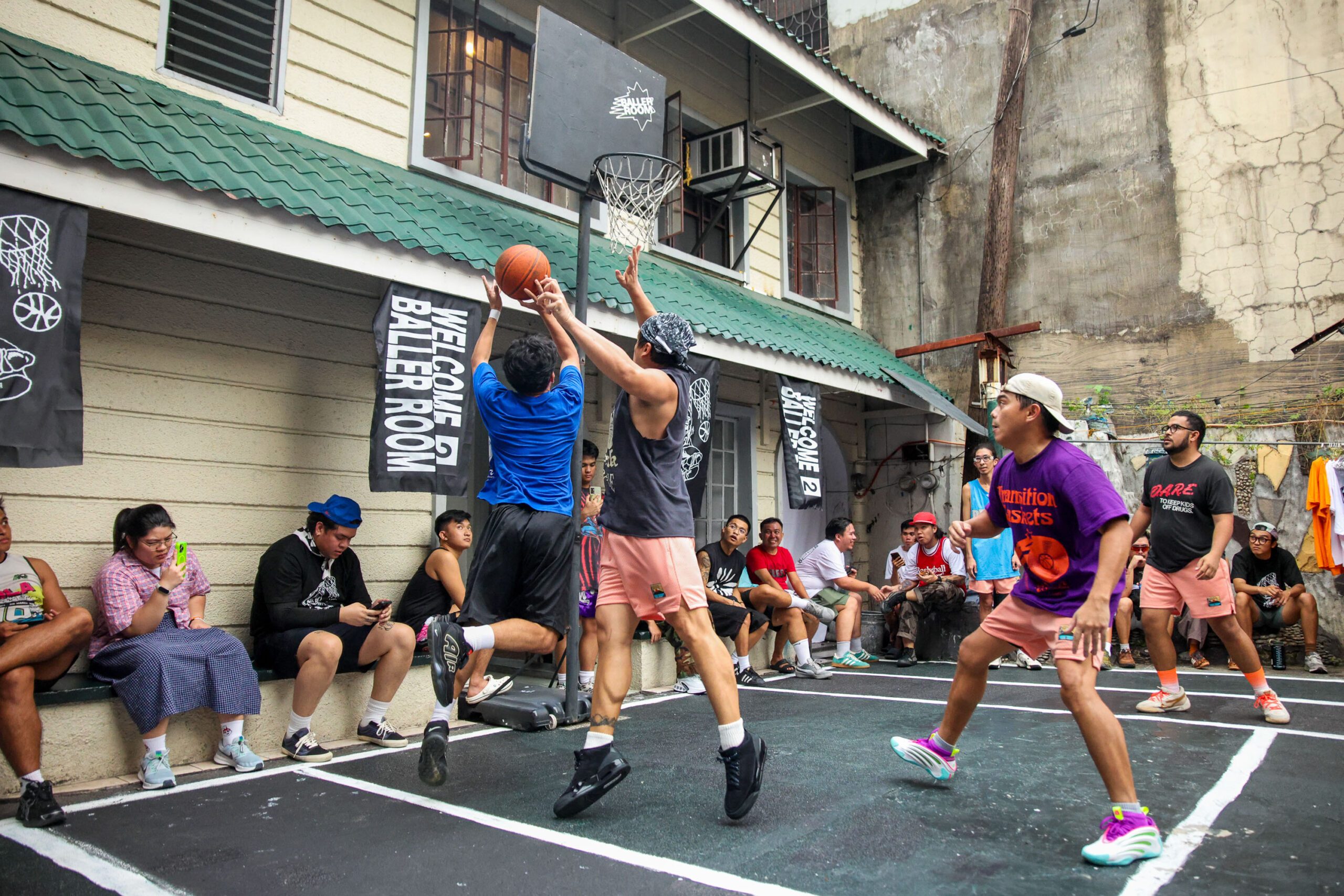 Players go all out in the Baller Room sessions. Photo by Geric Cruz
The word “tenderness” struck a chord with the two because it captured what they hoped to do with their program.
“Intentional yun. Gusto namin ng alternative na perspective sa basketball,” Santos explains.
(That’s intentional. We want an alternative perspective on basketball.)
A space for basketball enthusiasts who love the game and want to play it with a friendly competitive spirit; for friends to use it as a communal space rather than a high-level arena. And so, Samahang Tenderness was coined to name their third session.
The name has the cadence of the country’s national basketball association (Samahang Basketbol ng Pilipinas) but twists the final words at the end.
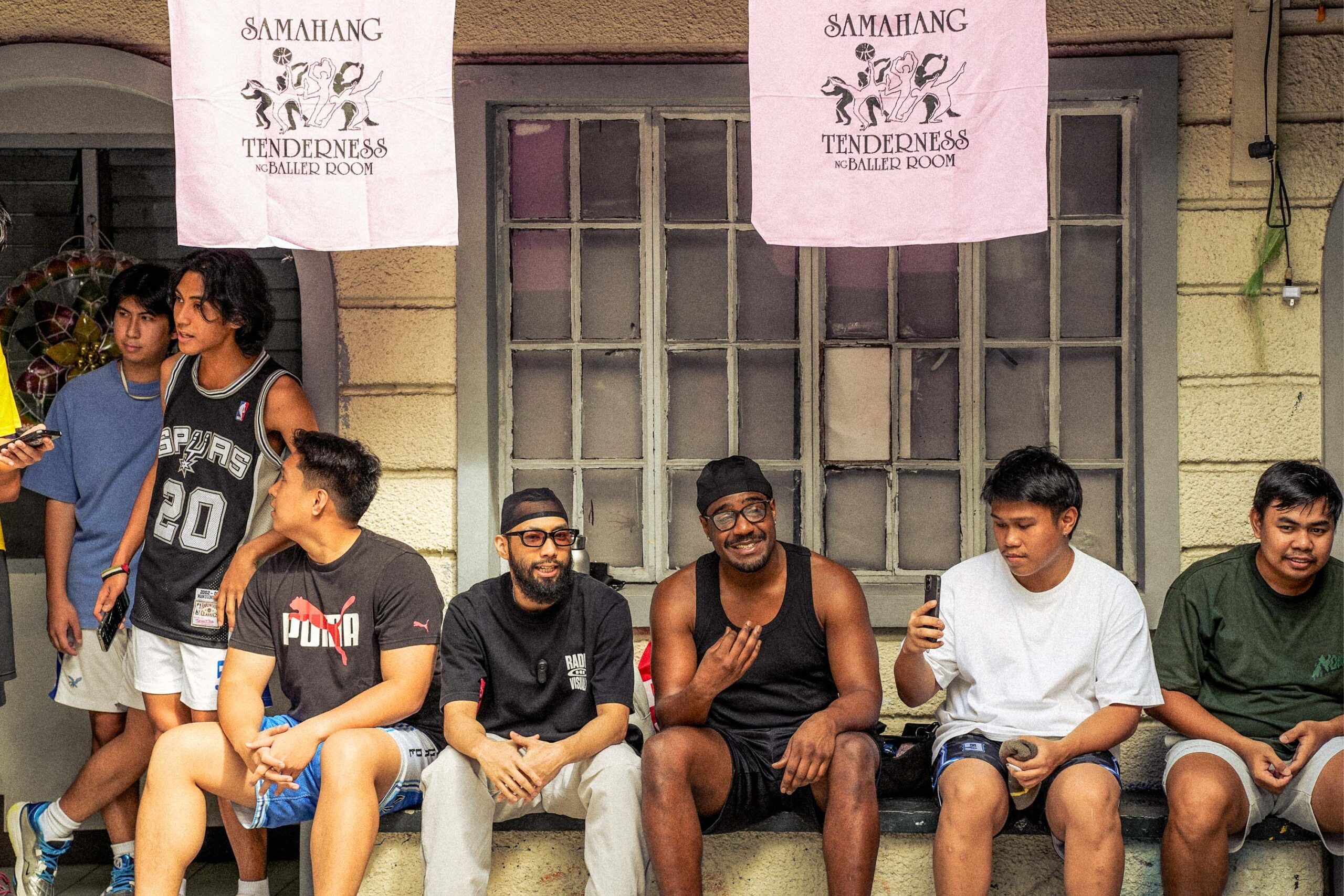 Good times all around in the hoop sessions. Photo by Danny Castillo
Power Forward is the name they gave for the Baller Room’s fourth session. It’s a common term used in the sport, but according to him, when used in the context of yearning, it becomes a source of inspiration.
“Power. Forward. [You’re] moving forward, powering forward.”
Santos sees designs like these as a way to get deeper messages across in a captivating way. Through years of what he calls his “t-shirt design practice,” his creations are layered with references to deeper stories about Filipino culture and basketball. He hopes that what he makes prompts a curiosity for knowledge.
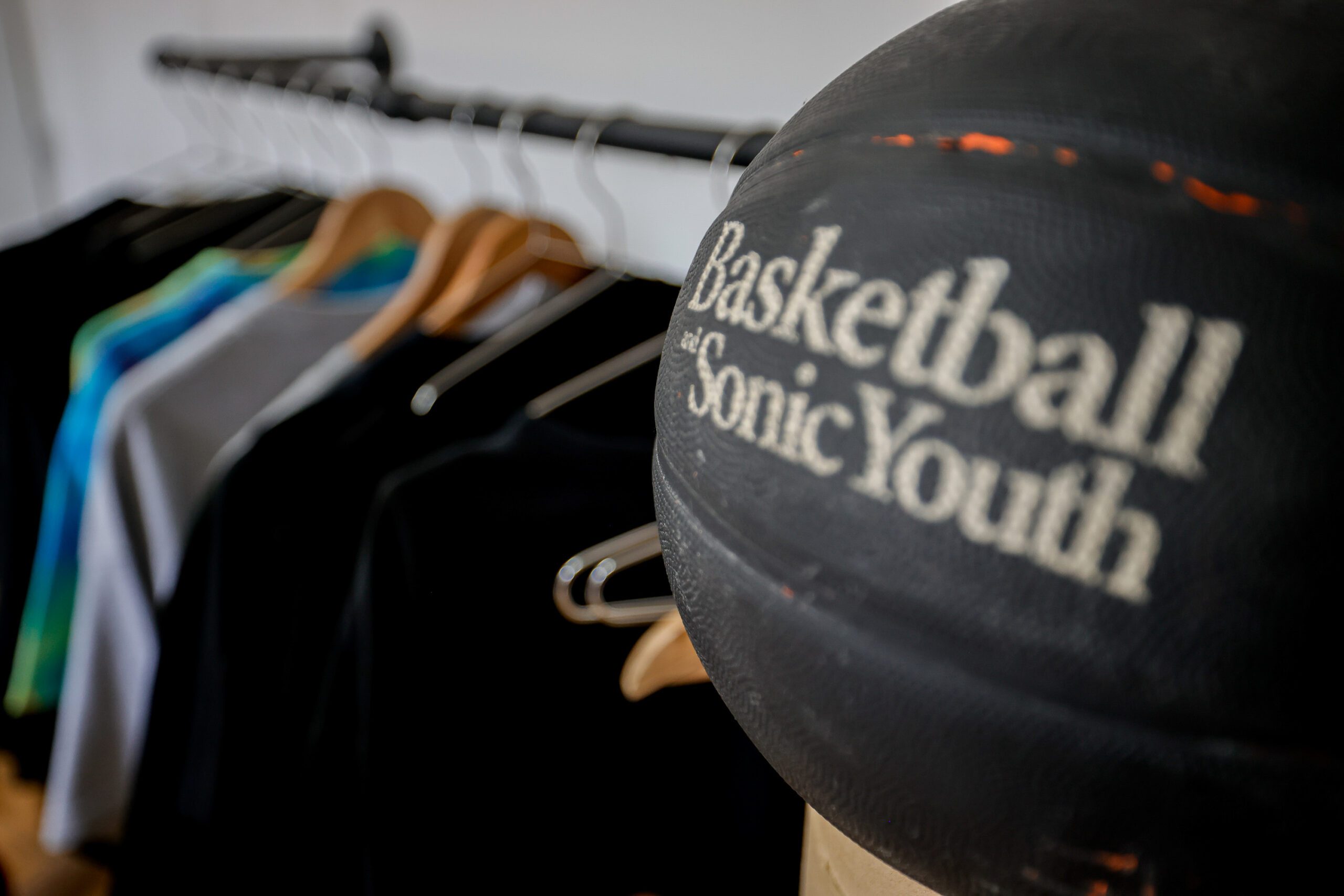 Inside the Baller Room studio. Photo by Jire Carreon/Rappler
To Santos, sometimes you need to restate the obvious for people to truly appreciate it. This is why he works well with artists like Salazar — because they’re both particular not only to the game, but also to the mundane, auxiliary happenings on the fringes. For them, that is where culture happens.
“While growing up, nakikita ko din minsan not more of the game itself eh, minsan tinitignan ko din yung nasa paligid. Yung nagtitinda, mga referee, kung paano sila mag act…. Pag basketball game, alam mo na mangyayari diyan eh. May mananalo, may matatalo. Eh yung mga tao sa paligid?” Salazar says.
(While growing up, I sometimes watch not more of the game itself, but sometimes I also look at those around me. The vendors, the referees, how they act…. When it comes to a basketball game, you know what’s going to happen. Someone will win, someone will lose. What about the people around me?)
Lost in the sauce
Back at Baller Room Square Garden, dressed in an Allen Iverson jersey complete with basketball sneakers and wrist sweatbands, Salazar dribbles and sinks the ball. Santos then picks it up and takes his turn to shoot, all while wearing a boonie hat and a business coat over his t-shirt (dressed as a basketball agent, they later share on Instagram).
“Habang tumatagal kami, parang mas dumadami yung work…” Santos says. “Siguro yung isang gusto namin gawin is yung Baller Room sessions… is maging ganun lang siya. Nothing extra. Disiplina lang na, ito yun eh. Ito yung puso [ng Baller Room].”
(As we go on, it seems like there’s more work. Maybe the one thing we want to do with the Baller Room sessions… is for it to just be that way. Nothing extra. Just discipline, that’s it. This is the heart of the Baller Room.)
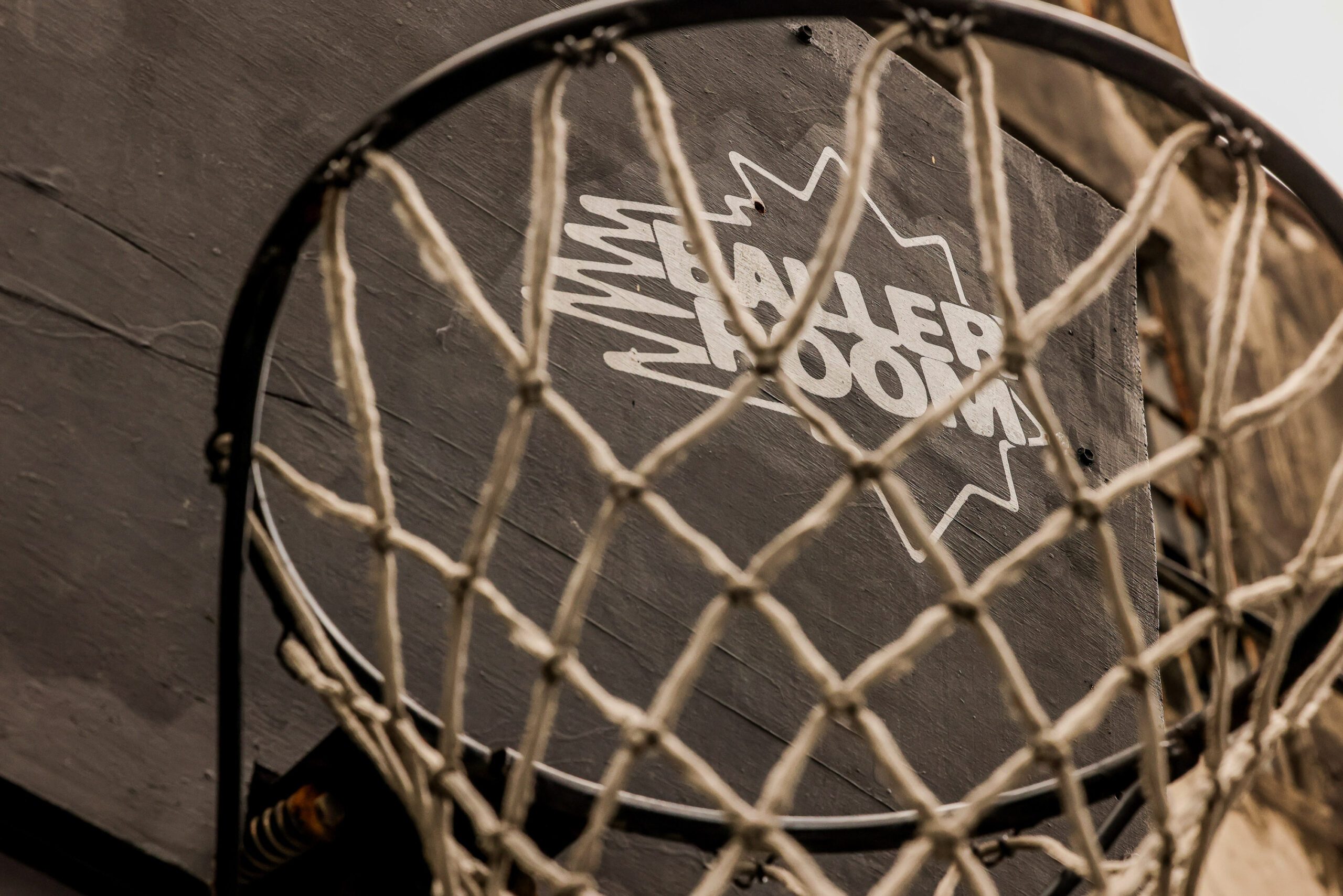 The Baller Room backboard. Photo by Jire Carreon/Rappler
Salazar adds that it’s easy to be tempted when there are so many people who want to play and brands wanting to come in and collaborate, too. The idea to make things bigger, grander, immediately starts to take form but the challenge is to preserve its identity and let it grow naturally.
As they plan their next seasons of the program, the duo does not want to be gatekeepers. But they plan to safeguard what they’ve built. “‘Yung term [ay]: ayaw namin ma-lost in the sauce,” Salazar says.
(The term is: we don’t want to get lost in the sauce.)
He continues, “Kasi parang mabebetray mo din… yung community eh kung bigla kang nagpasok ng kung anu-ano[ng] pagkakakitaan mo. Nakakahanap nga [yung basketball and music] community dito ng space eh, ayaw namin i-betray yung mga tao.”
(It seems like you’d be betraying… the community if you suddenly brought in stuff just to earn. The basketball and music community found a space here, so we don’t want to betray these people.)
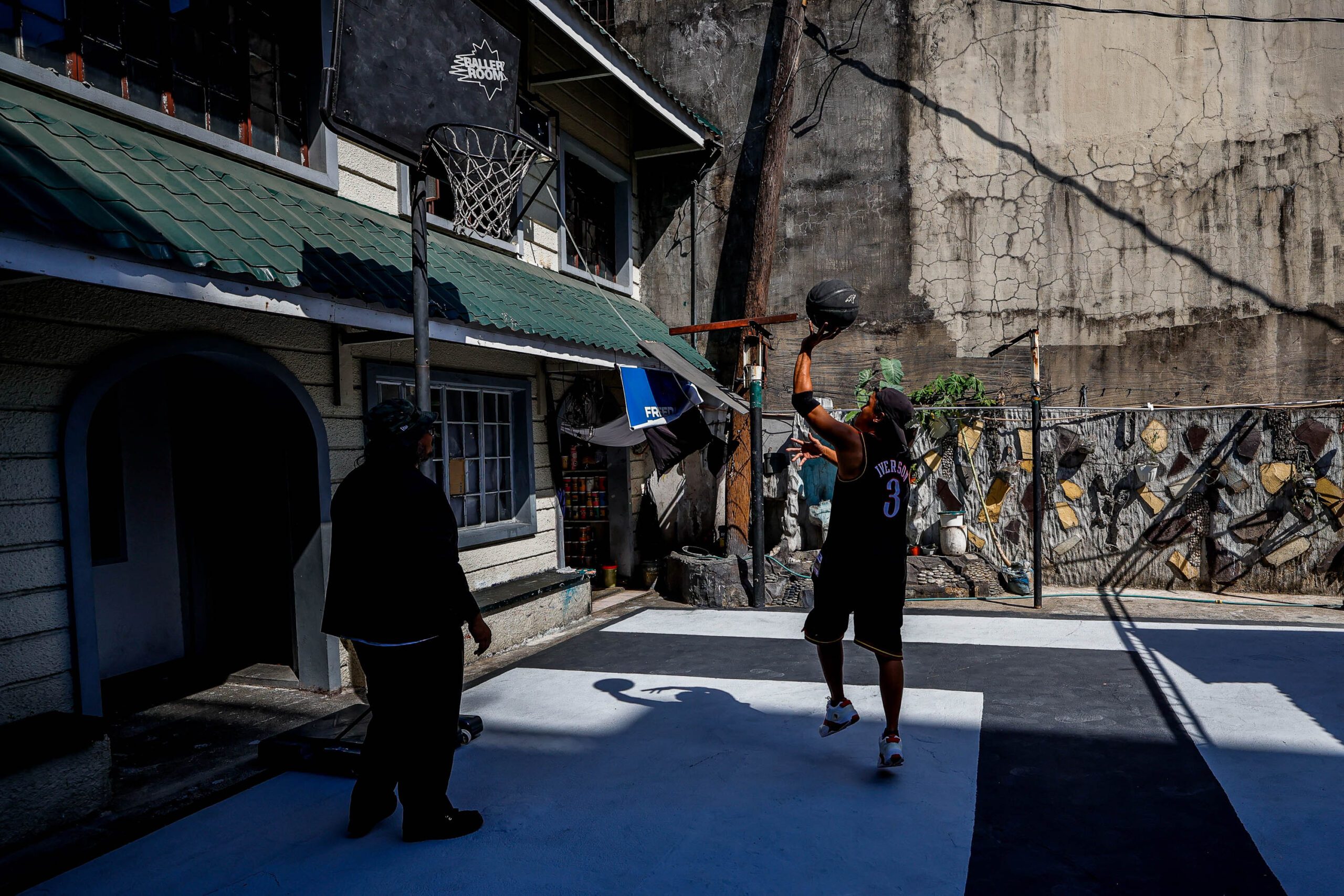 Artists Charlie Salazar (in a basketball jersey) and Finney Santos play basketball at their studio, The Baller Room, in Cubao, Quezon City. Photo by Jire Carreon/Rappler
As Baller Room continues to grow in terms of the size of its community and relevance to other brands and advertisers, Salazar and Santos are faced with the problem of finding ways to sustain the program for a long time. They are also faced with decisions that call to light their values behind the witty wordplay and easygoing aesthetic.
Amidst it all, they say their focus is staying true to the culture, community, and artistry they first set out to create when it was just them and a handful of friends playing pickup at the same court. – Rappler.com


추천 콘텐츠

Analyst Sees Fed Rate Cuts Under Warsh, Crypto Regulation

OpenAI Shows ChatGPT Completing Paperwork Using Voice and Image Uploads

EUR/GBP Exchange Rate Surges as Bank of England Rate Hike Expectations Intensify – Market Analysis


인기 뉴스
더보기
