

Glassnode: 6.04 Million Bitcoin Have Public Keys Exposed – What It Means for Network Privacy
The Scale of Exposed Public Keys
Glassnode’s latest research uncovers a stark figure: 6.04 million BTC, equivalent to roughly $469 billion at recent prices, have public keys exposed on the Bitcoin network. That is not a trivial slice of the circulating supply. It represents a significant portion of coins where transaction habits, address linkages, and potential real-world identities could be pieced together by motivated actors. According to the original research, the exposure stems from address reuse, exchange cluster analysis, and on-chain activity patterns that leave fingerprints visible to anyone running a node.
This is not a code exploit or a sudden vulnerability. It is a structural characteristic of Bitcoin’s pseudonymous design. Every transaction broadcasts the public key. Over time, clustering heuristics can connect addresses to the same wallet, and external data sources like exchange withdrawals, KYC leaks, or off-chain metadata can decorate those clusters with names. The $469 billion question is who exactly can view these connections and what it means for the network’s privacy assumptions.
What Public Key Exposure Means for Bitcoin Privacy
The immediate takeaway is that Bitcoin’s privacy is thinner than its proponents often claim. Public key exposure does not directly reveal private keys, so funds remain secure. But it does make address attribution dramatically easier. Chain analysis firms have been doing this for years, mapping flows to flag illicit activity. The difference now is the sheer volume of exposed keys that Glassnode quantified—6.04 million BTC—meaning that a huge chunk of the network is effectively transparent to surveillance if someone has the right datasets.
This finding lands at a moment when long-term holders have been actively redistributing supply. In fact, on-chain data shows $36.8 billion in Bitcoin was sold by LTHs in just 30 days. If those coins flow through exchanges that require KYC, the combination of exposed public keys and identity-linked off-ramps erodes deniability fast. A whale moving old coins can no longer assume their history is hidden behind fresh addresses. Every hop is potentially traceable.
Privacy-focused users often rely on coinjoins or other mixing techniques. But Glassnode’s research suggests that the majority of exposed keys have not benefited from those obscuring methods. The data reflects ordinary wallet behavior: sending change back to the same address, reusing addresses for multiple transactions, and interacting with centralized services. The result is a network where a large portion of activity is linkable to real entities.
Implications for Institutional and Large-Scale Transaction Tracking
For institutions, this research cuts both ways. On one hand, the transparency helps compliance teams demonstrate that they are not handling tainted coins. On the other hand, it exposes their own treasury movements to competitors and regulators in unintended ways. When a corporate treasury shifts Bitcoin between cold storage and hot wallets, the public key trail can reveal patterns even if the value is not immediately visible. Recent whale stabilization signals were partly identified by tracking large-entity address clusters that stopped sending coins to exchanges. That analysis would be far less precise without the kind of public key exposure Glassnode documented.
Regulators may view this data as a compliance boon. The Financial Action Task Force already encourages virtual asset service providers to use blockchain analytics. Sixty-nine percent of Bitcoin’s supply with exposed keys makes it harder to argue for blanket privacy protections. Exchanges and custodians that have resisted sharing address-level data could face fresh pressure if this metric becomes a regulatory talking point.
At the same time, the research raises questions about how much meta-data leakage occurs in other blockchains. Bitcoin’s UTXO model is uniquely susceptible to certain clustering techniques, but Ethereum’s account-based architecture and smart contract interactions create their own surveillance surfaces. For now, though, the $469 billion figure puts Bitcoin squarely in the spotlight.
Why This Research Matters Now for Market Structure
Market structure has been increasingly dominated by on-chain transparency narratives. Liquidation maps that flag heavy long positioning rely on exchange order books, but on-chain data adds another dimension. When analysts combine liquidation levels with exposed public key flows, they can gauge whether large holders are moving coins to exchanges to deleverage or to sell. That gives a tactical edge in volatile markets. ETF issuers and authorized participants face a similar dilemma. While fund flows are public, the underlying coin movements of providers like BlackRock or Fidelity likely sit inside that 6.04 million BTC pool. If regulators begin demanding that custody chains prove coin provenance with exposed keys, the cost of ETF creation could rise, and some arb-heavy strategies may pull back.
Large wallet movements have already attracted attention. The recent SpaceX wallet transfers worth over $230 million were tracked precisely because addresses could be linked to known clusters. Exposed public keys made that possible. As the ecosystem matures, the gap between those who want privacy and those who profit from transparency will only widen.
BTCUSA Insight
Glassnode’s finding is not a breaking security alert. It is a sobering quantification of a condition that has always existed underneath Bitcoin’s pseudonymous surface. The real concern is not that public keys are exposed—by design they are—but that 6.04 million BTC worth of exposed keys means the network’s privacy assumptions have been thoroughly mapped. For years, the industry operated on a mixture of hope and obscurity. That era is winding down.
The next battlefield will be metadata. While private keys stay safe, public key linkage combined with exchange KYC and IP metadata creates a surveillance stack that many Bitcoin holders did not sign up for. The Glassnode data should push developers, wallet providers, and exchanges to integrate stronger privacy defaults. If they do not, the result will be a Bitcoin network that is less private than a typical bank account, where at least the ledger is not publicly readable. That is a structural shift that matters for every participant, from the retail holder to the nation-state treasury.
<p>The post Glassnode: 6.04 Million Bitcoin Have Public Keys Exposed – What It Means for Network Privacy first appeared on Crypto News And Market Updates | BTCUSA.</p>


추천 콘텐츠
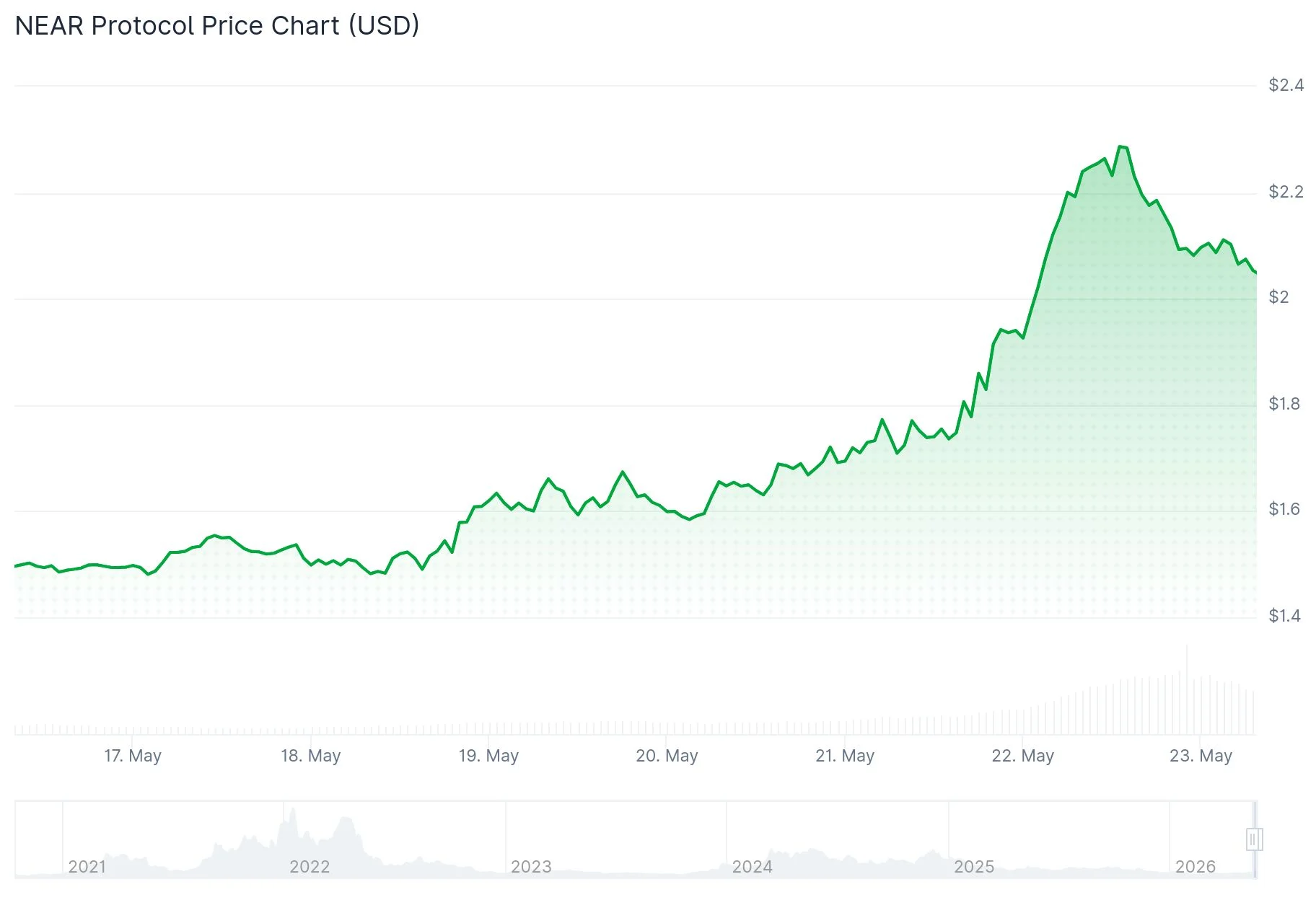
NEAR Protocol (NEAR) Skyrockets 50% After Arthur Hayes Names It a Top Altcoin Pick

Saylor Signals Possible 2026 Bitcoin Sale by MicroStrategy

Fed Governor Calls For Strong Stablecoin Oversight As CLARITY Act’s Final Text Gets Delayed


인기 뉴스
더보기
