

MTN, Airtel, others spend ₦72 billion monthly on diesel amid erratic electricity supply
MTN, Airtel, Glo and other telcos spend around N72 billion per month on diesel. This was disclosed by Yusuf Sheriff, the Special Adviser (Strategy) to the Executive Vice Chairman (EVC) of the Nigerian Communications Commission (NCC) during The National Telecommunications Policy 2000 Review Workshop organised by the NCC.
Rough data revealed at “” organised by the Nigerian Communications Commission (NCC) revealed that telcos spend about N40 billion per month on diesel.
Speaking during a panel on ‘The International Telecommunications Policy Approaches and Best Practices’, Yusuf Sheriff disclosed that companies operating in the industry use about 40 million litres of diesel to power towers every month.
The response comes amid issues of epileptic power supply, which has continued to be a pain point for Nigerians and poses an economic threat to business owners and firms. Industries that depend on electricity are now forced to heavily depend on high-cost fuels like diesel.
In most Nigerian cities, a litre of diesel currently retails between N1,800 and N1,950 at most filling stations. Taking a base calculation of N1,800 at 40 million litres per month pushes the operational cost of diesel to N72 million.
Amid these issues, Sheriff noted that Nigeria’s deficiency in generating and distributing adequate power supply affects both the supply of quality service and as well hinders the demand for such.
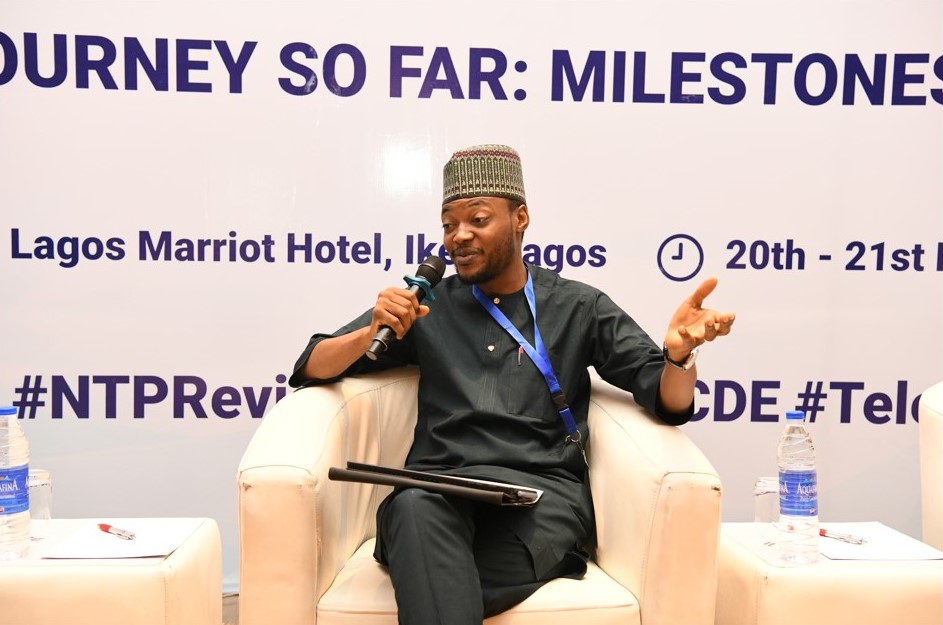 Yusuf Sheriff, Special Adviser (Strategy) to the NCC’s EVC during NCC’s NTP 2000 Review Workshop on Thursday, May 21, 2026.
High operational costs that high dependence on fuel causes have a dire impact on investment and network delivery. Increasing operation costs indirectly affect capital expenditure, thereby limiting operators’ ability to close the quality network supply gap.
Sheriff noted that finding a solution to the power supply problem is central to the telecom operators achieving the set of targets expected to be rolled out in the ongoing policy review.
“Nigeria needs to address this issue to close the connectivity gap, and the NCC must prioritise incentives to reduce these constraints in the ongoing policy review,” he said.
He explained that how quickly the government and regulators address these issues will determine the speed at which Nigeria catches up with the rest of Africa in terms of 4G/5G coverage and quality of experience on fibre.

Also Read: Stakeholders questions 26 years wait for telecoms policy review
MTN, Airtel, other telcos shift to alternative
Energy supply has rapidly become one of the stiffest pains bedevilling businesses. Nigeria’s public power grid is highly unstable, generating only a fraction of the power needed for its population.
There is also the frequent rate of grid collapse. Between 2015 and early 2026, Nigeria experienced over 110 power grid failures and significant lapses, repeatedly driving the nation into darkness. A recent study shows that epileptic power supply costs the Nigerian economy an estimated N38 trillion ($29 billion) annually.
However, Nigerian telcos are already exploring alternatives to both the high diesel cost and power supply. This includes running base stations on gas and solar, shared infrastructure and collocation.
For instance, MTN Nigeria noted that the use of gas-powered Independent Power Producer (IPP) electricity and inverter solutions yielded a joint cost saving of N8.5 billion in 2025. In its sustainability report, the operator hinted at plans to pivot more of its energy mix towards gas and reduce dependence on high-cost diesel.
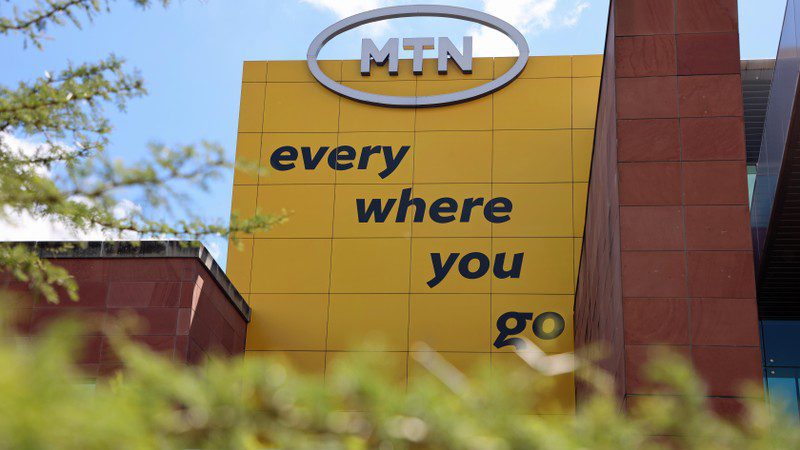 MTN-headquarters-in-Fairlands-14th-avenue-Johannesburg-Picture-Timothy-Bernard-African-News-Agency-ANA
In fact, it costs MTN over N60 billion yearly to run its 2,087 base stations on diesel. For an operation serving over 96 million Nigerians, a temporary shutdown of base stations only causes network disruptions to subscribers’ voice and data activities, but results in financial loss.
Yusuf Sheriff recaptured it all in a short form. He stressed that while telecoms policy review is critical for a new direction to reflect changes, addressing power issues is the driver of achieving nationwide connectivity and an all-round digital economy.


추천 콘텐츠

Super Micro Computer (SMCI) Co-Founder Enters Not Guilty Plea in AI Chip Export Case

Waymo robotaxi flood recall triggers wider service pause

Kraken Secures VARA Approval to Launch Crypto Trading and Staking in UAE


인기 뉴스
더보기
