Ethereum founder, Vitalik Buterin, has unveiled new goals for the Ethereum blockchain today at the Japan Developer Conference. The plan lays out short-term, mid-term, and long-term goals touching on L2 interoperability and faster responsiveness among others. In terms of technology, he said again that he is sure that Layer 2 options are the best way […]Ethereum founder, Vitalik Buterin, has unveiled new goals for the Ethereum blockchain today at the Japan Developer Conference. The plan lays out short-term, mid-term, and long-term goals touching on L2 interoperability and faster responsiveness among others. In terms of technology, he said again that he is sure that Layer 2 options are the best way […]

Buterin pushes Layer 2 interoperability as cornerstone of Ethereum’s future

2025/09/18 01:15
4 min di lettura
Per feedback o dubbi su questo contenuto, contattateci all'indirizzo [email protected].

Ethereum founder, Vitalik Buterin, has unveiled new goals for the Ethereum blockchain today at the Japan Developer Conference. The plan lays out short-term, mid-term, and long-term goals touching on L2 interoperability and faster responsiveness among others.

In terms of technology, he said again that he is sure that Layer 2 options are the best way to go. They not only make Ethereum more scalable but also make it easier to interoperably cross ecosystems.  

He went even further and set a very high goal: Ethereum wants to grow 10 times by next year, increasing throughput and usability while keeping security and decentralization. His team aims to gradually stabilize and become a more reliable underlying infrastructure. 

He also said that L2 networks will feature strong scalability and user experience in the coming years. This will decrease trust assumptions, and more users can use Ethereum in environments requiring minimal trust.

 L1’s credibility, security, and creation of new technology 

According to Vitalik, their current priority is the assurance of L1’s credibility and security. One of the goals is to increase the gas limit of Ethereum L1 while maintaining decentralization. According to Vitalik, this will require block-level access lists, ZK-EVMs, gas price repricing, and slot optimization to further enhance performance. 

This short-term performance optimization strategy for the Ethereum mainnet balances expansion and decentralization. He noted that ideas dominating the 2010s differ significantly from those in the 2020s, and predicted the 2030s will bring another paradigm shift.

The Ethereum technology will also enhance the privacy of users’ on-chain operations as they write. This will include payments, voting, DeFi operations, and account operations such as key changes and social recovery. Vitalik said Ethereum is actively exploring privacy protection for users during on-chain interactions.

For instance, the writing privacy key technologies will use zero-knowledge proofs to protect transaction privacy on the client side, anonymous fund pools or association sets, encrypted voting based on minimized auditability, and mix network transmission of transactions to obscure the source further.

According to Vitalik, multiple encryption and obfuscation techniques enhance the privacy of on-chain write operations.

In addition, reading privacy key technologies will provide a trusted execution environment and random access memory, private information retrieval, and partial state nodes, providing only necessary data. They will also have padding and dummy request techniques, which will prevent leakage of data access patterns. These will not only need to hide write operations, but also protect privacy when users read on-chain data.

This initiative shows the crypto industry’s quest to create privacy within the blockchain. As reported by Cryptopolitan, XRP’s ledger is looking to introduce privacy to balances and transfers for confidential multi-purpose tokens.

Vitalik encourages Asian developers to use AI 

Vitalik introduced a goal of creating faster slots and certainty. This will be achieved through shortening block finalization time, network optimization, erasure coding, and improving data propagation and fault tolerance. Faster block production and finality can directly enhance user experience and network security.

Long-term, Vitalik said they look to improve their Quantum resistance to prepare for future quantum computing risks. Formal verification will ensure protocol security through mathematical means. Transition to ideal cryptographic primitives, such as optimal solutions for hashing, signatures, ZKP, etc, will also come in handy.

He encouraged Asian developers and researchers to focus on core technical issues that will make Ethereum more efficient, secure, and decentralized. He even suggested that AI could be a powerful tool for learning and onboarding, especially in technical domains.

He added that the Chinese and Japanese developer groups work differently. China has a quick, large-scale push that is often tied to big projects. In Japan, on the other hand, coders were quick to adopt new technologies and often tried out cutting-edge ideas before they caught on around the world.

Don’t just read crypto news. Understand it. Subscribe to our newsletter. It's free.

Opportunità di mercato
Logo Solayer
Valore Solayer (LAYER)
$0.08672
$0.08672$0.08672
-0.80%
USD
Grafico dei prezzi in tempo reale di Solayer (LAYER)
Disclaimer: gli articoli ripubblicati su questo sito provengono da piattaforme pubbliche e sono forniti esclusivamente a scopo informativo. Non riflettono necessariamente le opinioni di MEXC. Tutti i diritti rimangono agli autori originali. Se ritieni che un contenuto violi i diritti di terze parti, contatta [email protected] per la rimozione. MEXC non fornisce alcuna garanzia in merito all'accuratezza, completezza o tempestività del contenuto e non è responsabile per eventuali azioni intraprese sulla base delle informazioni fornite. Il contenuto non costituisce consulenza finanziaria, legale o professionale di altro tipo, né deve essere considerato una raccomandazione o un'approvazione da parte di MEXC.

Potrebbe anche piacerti

Vitalik Buterin Admits Ethereum Hasn’t Meaningfully Improved People’s Lives

Vitalik Buterin Admits Ethereum Hasn’t Meaningfully Improved People’s Lives

The post Vitalik Buterin Admits Ethereum Hasn’t Meaningfully Improved People’s Lives appeared first on Coinpedia Fintech News In the recent downtrend, as crypto
Condividi
CoinPedia2026/03/05 12:41
Moove.xyz Launches KYC-Free Cross-Chain Crypto Payment Platform
Moove.xyz Launches KYC-Free Cross-Chain Crypto Payment Platform

moove.xyz, a global Web3 fintech platform focused on enabling seamless cryptocurrency transactions, has officially introduced its next-generation permissionless
Condividi
CoinTrust2026/03/05 12:00
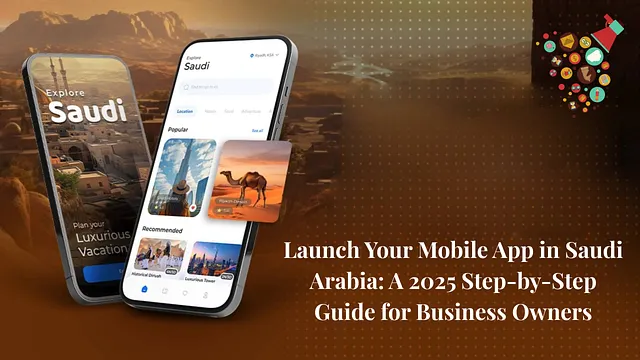
From Idea to App Store: The Complete Guide to Mobile App Development in Saudi Arabia

From Idea to App Store: The Complete Guide to Mobile App Development in Saudi Arabia

Saudi Arabia is at the forefront of digital transformation. With Vision 2030 driving innovation and a rapidly growing population of tech-savvy users, mobile apps have become a core driver of business growth in the Kingdom. From e-commerce and fintech to healthcare, logistics, and on-demand services, Saudi businesses are embracing mobile apps to connect with customers and scale faster. But how do you take a mobile app idea and turn it into a successful launch on the App Store or Google Play? This guide breaks down the complete mobile app development process in Saudi Arabia — step by step. Step 1: Validate Your App Idea for the Saudi Market Before you start building, ask: What problem does my app solve for Saudi users? Is there a cultural or market gap my app can fill? How do local competitors approach the same challenge? For example, apps related to digital payments, e-learning, delivery services, and healthcare are in high demand across Saudi Arabia. Conducting market research and aligning your app idea with local user behavior is critical. Step 2: Plan Features with Local Needs in Mind Your app should start with an MVP (Minimum Viable Product) — a core version that solves the main problem. Later, you can scale with advanced features. In Saudi Arabia, consider adding: Arabic language support (essential for user adoption) Integration with local payment gateways like STC Pay, Mada, or Apple Pay Regulatory compliance (especially for fintech and health apps) Localization for user preferences (Hijri calendar, cultural UI elements) Step 3: Select the Right Development Approach You can choose: Native Apps (Swift for iOS, Kotlin for Android) — Great for scalability and performance. Cross-Platform Apps (Flutter, React Native) — Cost-effective for startups targeting both iOS and Android simultaneously. Hybrid Apps — Suitable for simpler apps with limited features. For Saudi startups and enterprises, cross-platform development is often preferred to reach a wider audience quickly and efficiently. Step 4: Design With a Local Touch The design must balance global usability standards with local cultural relevance. UI (User Interface): Clean, modern visuals that align with Saudi branding. UX (User Experience): Simple navigation, clear Arabic text support, and intuitive flows. Wireframing & Prototyping: Test early with Saudi users to ensure adoption. A user-friendly design is one of the top reasons apps succeed in the Kingdom’s competitive market. Step 5: Develop Your Mobile App Once the design is ready, the coding begins. Saudi app development companies often follow Agile methodology, ensuring flexibility and faster delivery. Front-End Development: Interface and user interactions. Back-End Development: Databases, servers, and APIs. Integration: Secure connections between front-end and back-end. Strong collaboration between developers, designers, and business analysts ensures your app aligns with Saudi market needs. Step 6: Testing Across Devices and Networks Saudi users rely on different devices and network speeds. That’s why rigorous testing is critical: Functionality Testing: Features work as expected. Performance Testing: The app runs smoothly on both 4G and 5G networks. Localization Testing: Arabic text displays correctly, without alignment issues. Security Testing: Data protection compliance with Saudi cybersecurity standards. Step 7: App Store & Google Play Launch in Saudi Arabia To publish your app: Apple App Store (iOS): Requires an Apple Developer account and strict guideline compliance. Google Play Store (Android): Faster approval but still requires detailed app info. You’ll also need metadata in both English and Arabic — titles, descriptions, and screenshots — to maximize visibility among Saudi users. Step 8: Market Your App in Saudi Arabia Launching an app is only the beginning. You need a marketing strategy tailored to the Kingdom: App Store Optimization (ASO): Use Arabic and English keywords. Social Media Campaigns: Leverage platforms like Snapchat, Twitter (X), and Instagram, which are highly popular in Saudi Arabia. Influencer Marketing: Collaborate with Saudi influencers for early traction. Paid Ads: Google Ads and Saudi-focused Facebook/Instagram ads. Partnerships: Collaborate with local businesses to reach a wider audience. Step 9: Gather Feedback and Optimize Once your app is live, monitor: User reviews on app stores Analytics on engagement, retention, and churn rates Suggestions from Saudi users for culturally relevant features Continuous updates and improvements are vital to stay competitive. Step 10: Scale With Advanced Features Once your MVP gains traction, you can expand with advanced features such as: AI and machine learning for personalization Blockchain-based payments for fintech apps AR/VR features for retail and gaming apps IoT integration for smart home and mobility solutions Saudi Arabia’s digital ecosystem is growing rapidly — apps that adapt quickly will thrive. Conclusion Mobile app development in Saudi Arabia is not just about building an app — it’s about aligning with Vision 2030, cultural needs, and user expectations. By following a clear process — from idea validation to launch and beyond — you can transform your concept into a profitable digital product. Whether you’re a startup or an enterprise in Saudi Arabia, the opportunity is massive. With the right strategy, you can move from idea to App Store and create an app that truly resonates with Saudi users. From Idea to App Store: The Complete Guide to Mobile App Development in Saudi Arabia was originally published in Coinmonks on Medium, where people are continuing the conversation by highlighting and responding to this story
Condividi
Medium2025/09/18 14:46