

Does automated crypto trading work? A clear guide from FinancePolice
How the best automated crypto trading platform works
If you are asking whether the best automated crypto trading platform can meet your needs, start with a simple definition. Automated crypto trading means software executes trades for you based on rules, templates, or code, and platforms bundle strategy templates, an execution engine, and custody or API access so you do not have to click each order.
Platforms vary a lot. Some are hosted retail services with prebuilt templates. Others are bot frameworks you run yourself that connect to exchange APIs. A third group automates trades inside decentralized finance through smart contracts that execute on chain. See Top Trading Bots for 2025 for examples of hosted and bot-based services.
Automated crypto trading can work in some market conditions and with careful controls, but live results often fall short of backtests because of fees, slippage, latency, liquidity limits, and operational risks. Test carefully and demand transparent, auditable records.
Technically, the pieces are familiar: a strategy module that decides when to act, an execution layer that sends orders to exchanges or smart contracts, and a custody or API layer that holds assets or signs transactions. That custody layer and the way a platform connects to exchanges shapes many risks and controls.
Note that legal treatment and required disclosures for algorithmic services differ by country and are changing as regulators update rules and guidance. For example, recent EU work on crypto rules affects provider obligations and transparency expectations EU MiCA framework.
What automation means in crypto trading
Automation replaces manual order entry with programmatic logic. That logic can be simple, like a rule to buy after a price moves a set amount, or complex, like a market making schedule that updates quotes continuously. Many users call these tools crypto trading bots, but the name covers a wide range of capability levels and trust models. For discussion on whether bots are worth it, see Are Crypto Trading Bots Worth It in 2025?
For beginners, remember automation is a convenience and a tool, not a guarantee. Whether it helps depends on your plan, risk tolerance, and how well the platform manages execution and custody.
Basic architecture: strategy, execution, custody
A clear way to picture a platform is three layers. The strategy layer holds templates and parameters. The execution layer talks to exchanges and handles order management. The custody layer stores funds or provides API keys for accounts. Each layer can be hosted by the same vendor or split across providers, and that choice affects control and risk.
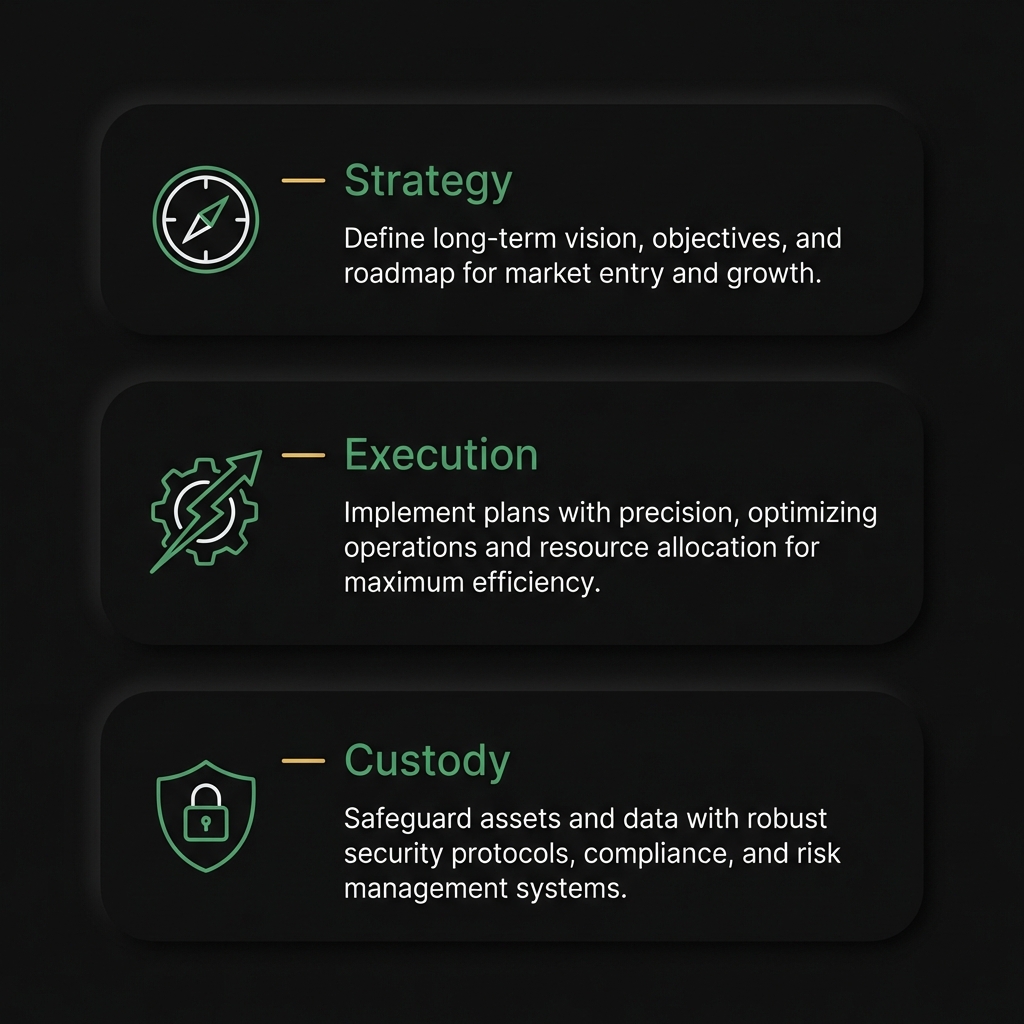
When automation uses smart contracts, custody and execution blur because code on chain can move funds automatically. That model removes some intermediaries but adds smart-contract risks that require separate checks.
Regulation, safety, and platform obligations for the best automated crypto trading platform
Regulation for crypto trading tools has been moving toward clearer standards. In the EU, frameworks and national measures now cover many trading activities and create obligations for transparency and disclosures that can help users evaluate vendors EU MiCA framework. See our crypto category for related coverage.
Outside the EU, regulation is uneven and evolving, and national authorities are increasingly focused on platform practices. As a user, the regulatory environment matters because it shapes what protections you can expect and which remedies are available if something goes wrong.
How regulation is evolving and why it matters
Better regulatory coverage tends to push vendors toward audited results, clearer custody statements, and fee disclosure. That makes it easier to compare claims and to hold providers to standards. However, rules differ by market, so a vendor may meet strict requirements in one jurisdiction but not in another.
For this reason, when you evaluate a platform, confirm where it operates, what license it has if any, and whether its disclosures meet standards you require for transparency and auditability.
What disclosures and protections to expect
Useful vendor disclosures include audited performance records, clear fee schedules, custody arrangements, and documented incident history. The trend toward improved transparency means more platforms now offer testnet or paper trade options and clearer contract language about custody and liability Global Crypto Regulation Report.
These disclosures do not eliminate operational risk, but they reduce information asymmetry and give you concrete items to verify when comparing options.
Common automated crypto trading strategies and what they actually do
Academic and industry reviews find three strategies are most studied: market-making, trend-following, and arbitrage. Researchers focus on these because they are straightforward to define and to backtest, and because they map to clear market roles.
Market-making attempts to capture the spread between buy and sell prices by posting quotes on both sides of an order book. Trend-following tries to ride sustained moves by buying into uptrends and selling into downtrends. Arbitrage seeks price differences across venues or instruments and buys where cheap and sells where expensive.
Estimate live profit after fees and slippage for a small strategy
–
USD
Use conservative slippage inputs
Why these strategies matter in crypto is partly structural. Crypto markets are more fragmented and show higher short term volatility than larger equity markets, which can create arbitrage windows and profit potential but also makes execution and market impact more volatile BIS working paper on market structure. For a comparison of AI bots and manual trading performance see AI Bots vs Manual Trading.
Market-making, trend-following, arbitrage: brief how-to and intent
Market-making works best where there is predictable order flow and deep liquidity that lets you quote both sides without being picked off. It requires reliable execution and usually low latency to manage inventory and avoid large directional exposure.
Trend-following is simpler to implement, often using moving average crossovers or momentum filters. It needs reasonable liquidity to enter and exit positions without large slippage, and it can suffer when markets chop back and forth.
Arbitrage demands fast, multi-venue execution and enough capital to cover spreads after fees. In crypto, arbitrage can be more common because prices differ across exchanges, but capital and speed often determine whether a window is exploitable.
Where these strategies tend to work in crypto markets
These strategies are attractive in crypto because fragmentation and volatility sometimes create clear opportunities. That said, the same market traits that create opportunities also raise execution risk and require careful sizing and monitoring.
Researchers and reviews emphasize these strategies because they are testable and because their performance depends heavily on real execution details rather than on theoretical edge alone systematic review of algorithmic strategies.
Why backtests can mislead you about the best automated crypto trading platform
Backtests are useful to explore ideas, but they often overstate how a strategy will perform live. Common statistical problems include overfitting, look-ahead bias, and survivorship bias, which can make historical performance look better than it genuinely was.
Overfitting happens when a model is tuned to past noise rather than to repeatable patterns. Look-ahead bias uses information that would not have been available at the time trades were made. Survivorship bias omits instruments that failed or were delisted, which inflates average returns.
Even well-designed backtests typically omit or understate real execution costs. Fees, slippage, latency, and liquidity constraints reduce net returns and can turn an apparently profitable strategy into a losing one in live trading empirical live versus backtest study.
Common biases in historical testing
An easy analogy is to think of backtests as replaying a recorded game with perfect inputs. If you tune a strategy to win on that recording, it may fail when the game changes or when you cannot re-create perfect timing in the live match. That is overfitting in practical terms.
To detect these issues, prefer pre-registered tests or third-party audited live results rather than only vendor backtests. Independent records reduce the chance that a seemingly good history is a product of selective reporting.
Execution gaps: fees, slippage, latency, and liquidity
Execution costs can be large in crypto. Fees and spread costs, order book depth, and the time it takes to route orders all matter. Latency can convert a theoretical profit into a real loss if price moves before your order fills.
Multi-exchange live studies repeatedly find that once realistic fees and slippage are modeled, live returns are often materially below backtest figures, and sometimes negative for small or aggressive strategies empirical live versus backtest study.
How to evaluate and choose the best automated crypto trading platform
The right platform depends on your priorities: custody control, transparency, cost, or ease of use. A simple framework compares custody model, fee structure, transparency and controls, testnet support, and incident history. Use the heading here as a reminder that your goal is to identify the best automated crypto trading platform for your needs.
Start by deciding whether you need a hosted solution that manages custody, or a self hosted bot that uses exchange API keys. Hosted services reduce operational work but require trust in the vendor custody and security practices. Self hosted frameworks give you more control but raise technical and maintenance requirements.
Decision factors: custody, fees, transparency, and controls
Custody model matters because exchange or vendor failures are a major source of loss. Ask who holds assets, whether a qualified custodian is used, and if there are clear policies for asset recovery. Check fee disclosures carefully; small percentage differences compound over many trades.
Transparency items to expect include audited performance reports, clear fee schedules, testnet or paper trade options, and published incident histories. These items let you verify claims rather than rely on marketing statements Global Crypto Regulation Report. For context on exchange programs and listings see crypto exchange affiliate programs.
A practical scorecard you can use
Score each candidate on a few core items: custody clarity, audited performance, detailed fee breakdown, testnet/paper trade support, pre-trade risk limits, and incident transparency. Assign 0 to 3 points per item and total the score to compare vendors. Prefer platforms that make third-party proof available for custody and performance.
Use conservative thresholds when scoring. For example, treat a vendor that shows only unaudited backtests as lower trust than one providing independent live records or audited reports.
Operational risks: custody, smart contracts, and execution quality
Operational failures are a leading cause of loss in crypto. Custody and exchange counterparty risk remain central concerns, because an insolvent or hacked provider can prevent you from accessing funds. Chainalysis and other industry reviews document how custody incidents and fraud continue to affect users Chainalysis crypto crime report.
For DeFi automation, smart-contract vulnerabilities are a distinct class of operational risk. A bug in on-chain code can be exploited and cause direct loss of funds. Audits reduce but do not eliminate that risk.
Custody and counterparty failure risk
When trading through centralized exchanges or hosted vendors, you accept counterparty risk: the possibility the platform cannot return funds. Check whether custodial assets are segregated, whether there is insurance, and what the vendor discloses about recovery procedures.
If you prefer fewer custodial intermediaries, self custody or noncustodial bots that sign transactions locally reduce counterparty exposure but increase your personal responsibility to secure keys.
Smart-contract vulnerabilities in DeFi automation
DeFi automation can execute without human intervention, but that power comes with code risk. Smart contracts can have logic errors or be combined with other contracts in ways that create unexpected failure modes. Favor code that has been audited and for which the vendor publishes audit reports and bug bounties.
Finally, some retail platforms do not make execution quality transparent, which can hide poor fill rates or internal matching. Execution opacity increases bot execution risk and can be a decisive factor in performance shortfalls BIS working paper on execution.
Typical mistakes users make with automated crypto trading
Users often assume that strong historical performance will repeat. Trusting unaudited backtests and neglecting realistic testing setups is a common error that leads to losses when live costs appear.
Another repeated mistake is poor sizing. Running high leverage or large position sizes without conservative risk limits makes losses larger and harder to recover from.
Behavioral errors are also common. Traders may chase short term wins or disable safety limits after a winning stretch, which increases exposure to large reversals.
Compare platform features and partnership options on the FinancePolice advertise page
If you plan to compare platforms, use the checklist later in this article and start with small, conservative tests before risking significant capital.
View FinancePolice advertising options
Not testing in a realistic environment, such as paper trading with realistic fees and slippage, removes the chance to discover execution gaps before money is at risk. Always move from testnet to small live trials in steps.
Overreliance on past performance
Avoid taking unaudited historical returns at face value. Demand proof, preferably pre-registered live records or third-party audits, and treat vendor backtests as exploratory rather than conclusive.
Small changes in assumptions, like adjusting slippage estimates or adding realistic latency, often move a strategy from profitable to marginal or to loss.
Poor sizing and risk controls
Set strong safety limits from the outset. Use position sizing rules, maximum drawdown stops, and automatic pause triggers for unusual market conditions. These measures reduce the chance that a small mistake becomes a catastrophic loss.
Realistic scenarios and examples: market-making, trend-following, arbitrage
Concrete scenarios help show where automation can or cannot work. Below are short narratives for each strategy with a lesson at the end.
Example 1: small-market market-making. You attempt to capture the bid offer spread on a thinly traded token. Initially you make steady small profits, but as your quoted size grows you face adverse selection and occasional sharp moves that wipe inventory. Lesson: market-making in small markets needs careful inventory controls and conservative quote sizes systematic review of strategies.
Example 2: trend-following on a liquid coin. You implement a momentum filter on a major token and set stops. Because liquidity is deep, your fills are clean and you can scale the strategy modestly. The main vulnerability is whipsaws during sideways markets, so you limit trade frequency and test on live tape before scaling.
Example 3: cross-exchange arbitrage. You find a price gap between two venues and attempt simultaneous buy and sell. Execution speed and capital are decisive. Fees, transfer time, and settlement risk reduce the practical edge, and the opportunity often vanishes quickly, so latency and pre-funded accounts matter most BIS working paper on market structure.
A practical test plan: paper trading, testnet, and small live trials
Run tests in stages. Begin in testnet to validate logic and basic behavior. Next use paper trading or simulated live mode with realistic fees and slippage so execution assumptions are challenged. Finally, run small, time limited live trials and scale only after consistent, audited performance.
Track metrics during each phase: execution fill rate, slippage, drawdown, uptime, and the frequency of safety triggers. These metrics reveal whether your assumptions hold when real order flow meets your automation.
How to set up realistic paper tests
How to set up realistic paper tests
Paper trading must model fees and slippage. Use recent order book snapshots and add conservative slippage cushions. Record fills and missed fills, then compare to backtest expectations to estimate execution gaps.
Record the environment: which exchanges, the latency observed, and whether you pre-funded accounts. These details matter when you move to live tests.
Transition steps for small live trials
Start live with small position sizes and strict stop limits. Fund only the amount you can afford to lose and monitor fills continuously. Prefer short trial windows that let you observe behavior across different market regimes before increasing size empirical live versus backtest study.
Checklist: risk controls and transparency items to demand
Use a compact checklist when vetting vendors: fee disclosure, audited performance reports, custodian details, testnet and paper trade availability, pre-trade risk limits, and incident history. Verify items with documents where possible.
Each item reduces specific risk. For example, fee disclosure helps you calculate net return, audited reports reduce the chance of selective reporting, and pre-trade limits limit downside if markets move fast EU MiCA framework.
When automated crypto trading might make sense for a beginner
Automation can be useful for disciplined experiments and to learn market mechanics. A beginner should keep expectations modest, run testnet and paper trading first, and use strict position sizing rules empirical live versus backtest study.
Reasonable expectations and minimal setups
Expect variability. Even simple strategies can show long dry spells. Use small exposures and clear stop rules so you can learn without large losses.
Skills and resources that help
Basic coding ability, a habit of record keeping, and comfort checking third party proof improve your odds of conducting useful tests. If you do not have these skills, focus on paper trading and learning before committing live capital.
When automated crypto trading likely makes less sense
Avoid automation when you intend to use high leverage, trade illiquid tokens, or rely on unaudited vendor claims. These scenarios magnify execution and counterparty risks.
Red flags in marketing include unverifiable historical returns, no testnet, and unclear custody statements. If a vendor cannot answer basic questions about fees and custody, prefer manual learning or conservative alternatives until you can verify claims Chainalysis crypto crime report.
Personal situations and market conditions
If you need steady predictable income, automation in crypto is unlikely to be appropriate because returns are variable and dependent on market structure. If your time horizon is long and you want to learn, small experiments may be useful.
Warning signs from platform claims
Watch for promises of outsized returns, lack of independent records, or pressure to add funds quickly. These are signs to step back and verify before risking capital.
How to monitor and reduce ongoing risks with automated trading
After deployment, monitor uptime, drawdown, slippage trends, and counterparty notices. Keep logs of execution quality and compare them to testnet expectations so you can spot degradation early empirical live versus backtest study.

Operational monitoring and alerts
Operational monitoring and alerts
Good monitoring includes automated alerts for downtime, unexpected latency, margin events, and outsized slippage. Keep conservative thresholds early and tighten them only after sustained stable performance.
Also track vendor notices and governance changes. Platform upgrades or contract changes can alter behavior, so treat them as triggers for re-testing.
Regular audits and incident response
Regularly audit activity logs and reconcile traded volume with exchange fills. If you find inconsistencies, pause automation, investigate, and escalate to the vendor with clear evidence.
Have a plan for when to stop: large unexplained drawdowns, repeated execution failures, or custody changes are valid reasons to pause and investigate.
Conclusion: does automated crypto trading work in practice?
The balanced evidence is that automated crypto trading can work in principle and backtests often show strategies that look promising, but live performance commonly falls short once fees, slippage, latency, and liquidity constraints are included empirical live versus backtest study.
Operational and regulatory risks matter. Use the checklist in this article, run conservative tests on testnet and in small live sizes, and prefer platforms that disclose custody, fees, and audited or independent live records. That approach gives you the best chance of assessing whether automation fits your situation. For market context see bitcoin price analysis.
No. Automated trading can generate gains in some conditions, but outcomes vary and depend on fees, execution quality, liquidity, and market volatility. Use conservative tests and verify vendor claims.
Start in a testnet or paper trading mode that models realistic fees and slippage, then run small live trials with strict position sizing and monitoring before scaling.
Major risks include custody and counterparty failure, smart contract bugs for DeFi automation, execution gaps from latency and slippage, and unverifiable vendor performance claims.
References
- https://finance.ec.europa.eu/capital-markets-union-and-financial-markets/markets-crypto-assets-mica_en
- https://www.pwc.com/gx/en/publications/global-crypto-regulation-report-2026.html
- https://www.bis.org/publ/work1234.htm
- https://arxiv.org/abs/2405.01234
- https://example-jft.org/article/2025/11/02/crypto-bots-live-vs-backtest
- https://go.chainalysis.com/crypto-crime-2024-report
- https://www.gate.com/crypto-wiki/article/best-trading-robots-2025-20260103
- https://coincub.com/are-crypto-trading-bots-worth-it-2025/
- https://www.fortraders.com/blog/ai-bots-vs-manual-trading-performance-comparison
- https://financepolice.com/advertise/
- https://financepolice.com/category/crypto/
- https://financepolice.com/crypto-exchange-affiliate-programs-to-consider-heres-what-you-need-to-know/
- https://financepolice.com/bitcoin-price-analysis-btc-slips-below-90000-as-leveraged-liquidations-rock-market/
You May Also Like

OpenVPP accused of falsely advertising cooperation with the US government; SEC commissioner clarifies no involvement

What is the best way for a teenager to start investing?
