

Stablecoin Interest Payments Spark Fiery Davos Debate Between Crypto Titan and Central Banker

BitcoinWorld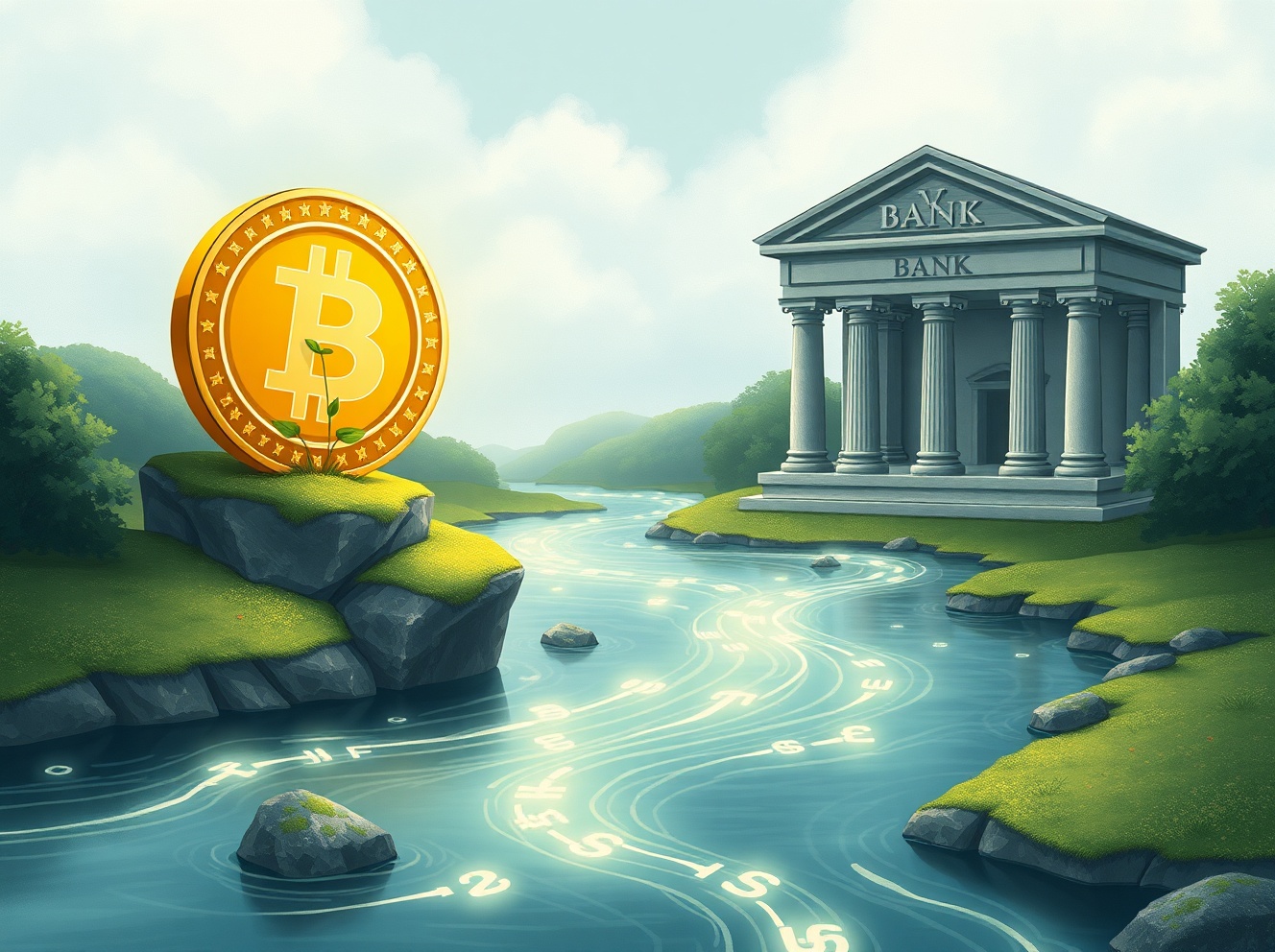
Stablecoin Interest Payments Spark Fiery Davos Debate Between Crypto Titan and Central Banker
DAVOS, SWITZERLAND – JANUARY 2025: A fundamental clash over the future of money erupted at the World Economic Forum, pitting cryptocurrency innovation directly against traditional financial stability. The debate on stablecoin interest payments between Coinbase CEO Brian Armstrong and Bank of France Governor François Villeroy de Galhau reveals a deep global regulatory fault line with trillion-dollar implications for users and nations alike.
The Core Argument Over Stablecoin Interest Payments
During a pivotal panel discussion reported by CoinDesk, the two leaders presented diametrically opposed visions. Brian Armstrong championed user rights and national competitiveness. He argued that holders of dollar-pegged digital currencies deserve yield on their assets. Armstrong pointed to China’s digital yuan, which already permits interest-like features, as a competitive benchmark. “A U.S. ban on such payments would only allow competitors to thrive,” he stated, framing the issue as an economic imperative. Conversely, Governor Villeroy de Galhau defended the traditional banking system’s primacy. He expressed clear concern that private tokens offering interest could destabilize deposit bases and credit creation. “The primary public objective must be to preserve financial stability,” he asserted, indicating a preference for a non-interest-bearing digital euro.
Global Context of the CBDC Race
This Davos disagreement did not occur in a vacuum. It reflects a broader, global scramble to define the next era of currency. Over 130 countries are now exploring Central Bank Digital Currencies (CBDCs), according to Atlantic Council data. Their designs vary significantly. For instance, China’s digital yuan pilot includes programmable features and limited interest capabilities. The European Central Bank’s digital euro project, however, currently emphasizes its role as a digital cash equivalent, explicitly discussing holding limits and a lack of remuneration. This transatlantic and transpacific divergence creates a complex landscape for global stablecoin issuers like Circle (USDC) and Tether (USDT), who must navigate conflicting regulatory expectations.
Expert Analysis on Systemic Risk
Financial stability experts often highlight the “disintermediation” risk Governor Villeroy referenced. If consumers move large deposits from traditional banks to interest-bearing stablecoins, banks could face higher funding costs and reduced capacity for lending. A 2024 Bank for International Settlements (BIS) paper noted this concern requires careful calibration. However, other analysts, like those at the IMF, suggest that with proper safeguards—such as holding stablecoin reserves in secure, liquid assets—the innovation could coexist with traditional finance. The debate, therefore, centers on design and limits, not just the principle of interest itself.
Broader Disagreement on Bitcoin and Sovereignty
The panel’s tension extended beyond stablecoins to the philosophical role of money. Armstrong described Bitcoin as uniquely independent due to its lack of a central issuer. This characteristic, he suggested, provides a check against systemic control. Villeroy de Galhau countered with a stark warning about sovereignty. He framed unregulated private currencies as a potential political threat that could undermine a state’s monetary control—a core function of modern central banking. This exchange underscores a fundamental question: should digital money be a tool of public policy or a private-sector financial product?
The Practical Impact on Users and Markets
The regulatory outcome of this debate will directly affect millions. Currently, many stablecoin holders earn yield through decentralized finance (DeFi) protocols, not from the issuers themselves. A direct interest payment model from regulated entities would represent a seismic shift. It would provide a simpler, potentially safer yield avenue for mainstream adopters. Market data shows the total value locked in DeFi protocols offering stablecoin yield exceeds $50 billion, demonstrating significant user demand for these returns. The resolution will influence capital flows, innovation hubs, and where the next generation of financial services gets built.
Historical Timeline of the Interest Debate
The conflict has evolved over several years. In 2022, U.S. regulators began scrutinizing crypto lending platforms offering yield. By 2023, the EU’s MiCA regulation provided a framework for stablecoins but left specific rules on interest to national authorities. The 2024 launch of major bank-led tokenization projects further blurred the lines between traditional and crypto finance. The 2025 Davos confrontation marks a peak in this ongoing dialogue, bringing the issue to the forefront of global economic leadership.
Conclusion
The Davos debate on stablecoin interest payments between Brian Armstrong and François Villeroy de Galhau is more than a theoretical dispute. It is a concrete battle over the architecture of the future financial system, balancing innovation, user benefit, and systemic safety. The path regulators choose—whether toward permissive competition or protective stability—will define the accessibility and functionality of digital money for decades. As nations like China advance their own models, the pressure for coherent Western policy responses intensifies daily.
FAQs
Q1: What are stablecoin interest payments?
Stablecoin interest payments refer to a yield or return paid to holders of stablecoins, similar to interest on a bank savings account. This yield could come directly from the issuer or through integrated financial protocols.
Q2: Why does the Bank of France oppose them?
Governor Villeroy de Galhau argues that private stablecoins paying interest could attract deposits away from traditional banks, potentially raising banks’ funding costs and threatening financial stability and their lending capacity to the economy.
Q3: What is Brian Armstrong’s main argument in favor?
Armstrong argues that users have a right to earn a return on their digital money and that banning such payments harms national competitiveness, especially as other countries like China explore similar features for their digital currencies.
Q4: Does the digital yuan pay interest?
China’s digital yuan (e-CNY) pilot has tested limited, programmable features that can mimic interest payments or subsidies in specific scenarios, making it a point of reference in the global competitiveness debate.
Q5: How would stablecoin interest affect average users?
If permitted, it could provide a new, accessible way for people to earn yield on digital dollar holdings. If banned, users might seek yield through riskier, less-regulated decentralized platforms or see innovation move to more permissive jurisdictions.
This post Stablecoin Interest Payments Spark Fiery Davos Debate Between Crypto Titan and Central Banker first appeared on BitcoinWorld.
You May Also Like

How do I teach myself real estate? A practical self-study roadmap

USDC Treasury mints 250 million new USDC on Solana
