

Must Read
ODO. Former overall deputy ombudsman Arthur Carandang.ODO. Former overall deputy ombudsman Arthur Carandang.
Why Carandang’s victory vs Duterte is also a win for Ombudsman’s independence
For feedback or concerns regarding this content, please contact us at [email protected]
Former overall deputy ombudsman (ODO) Melchor Arthur Carandang was punished by the Duterte administration for merely doing his job.
Duterte’s Office of the President (OP) fired him in 2018 over alleged breach of confidentiality and graft when he made statements about the bank investigation into former president Rodrigo Duterte’s wealth.
Eight years later, in 2026, Carandang found justice in a Supreme Court (SC) decision that voided his dismissal.
“The Order, dated June 14, 2019, of the Office of the Ombudsman directing Melchor Arthur H. Carandang to cease and desist from performing his powers and functions as Overall Deputy Ombudsman, and declaring his post vacant is likewise declared void,” the SC’s 3rd Division said in its January 29, 2026 ruling penned by Associate Justice Maria Filomena Singh.
The SC cannot reinstitute Carandang because his term had already expired in 2020. Instead, the High Court gave Carandang his backwages from the period of his preventive suspension and dismissal, up to the supposed end of his term.
“Carandang is entitled to all retirement benefits effective upon the expiration of his term only up to the end of his term,” said the Court.
President’s power has limitations
“The 28-page ponencia of Justice Singh lucidly analyzes why the president has no administrative or disciplinary jurisdiction over Deputy Ombudsman,” former SC associate justice and ombudsman Conchita Carpio Morales told Rappler.
Carandang’s case was a test of the Ombudsman’s independence. The issue was whether the executive (Duterte) has the power to dismiss an official (Carandang) of a constitutional body like the Office of the Ombudsman.
For the SC, Duterte’s OP had no power over Carandang because the authority to discipline the former Ombudsman official lies with the constitutional body.
The 3rd Division upheld the Court of Appeals’ (CA) ruling that the Second Gonzales decision applies as “stare decisis” (to stand by things decided) in Carandang’s case. The CA granted Carandang’s 2021 petition challenging his dismissal, that’s why the case reached the SC.
In 2014, the Court promulgated the Second Gonzales decision that declared Section 8(2) of Republic Act No. 6770 or The Ombudsman Act of 1989 unconstitutional. Under the said provision, a deputy or special prosecutor may be removed from office by the president.
The stare decisis doctrine, meanwhile, requires courts to follow already settled decisions when faced with similar facts and circumstances. So in other words, Carandang’s dismissal was void because Duterte’s OP had no power to dismiss him. Their supposed legal basis was already unconstitutional.
“Beyond historical precedent, it appears that the independence granted to the Office of the Ombudsman under the 1987 Constitution was deliberately designed to curb the potential for executive overreach,” said the SC.
“Allowing the President to unilaterally discipline officials charged with investigating potential wrongdoing within the administration invites retaliation, coercion, and the suppression of oversight, conditions fundamentally at odds with transparency and accountability. The attempt to remove Carandang reflects precisely the abuse of power that the Second Gonzales Decision sought to prevent,” the Singh ponencia added.
Ombudsman-Duterte standoff
After the complaints were filed against Carandang, he was suspended at first, then was later ordered dismissed.
For a time, Carandang remained active in his position because his boss, Morales, opposed the suspension.
“I refused to implement the order as the president does not have disciplinary jurisdiction over Deputy Ombudsmen (following the case of Gonzales). That aggravated my sour relationship with Duterte,” the former Ombudsman told Rappler.
What Morales offered was to instead investigate Carandang for alleged breach, and that they would decide if he would be punished with sanctions. Unfortunately for Carandang, Morales’ term was only until July 26, 2018.
“On July 30, 2018, four days after my retirement, the Palace issued the decision dismissing Carandang. My successor dutifully carried out the decision,” said Morales.
Duterte appointed former SC associate justice Samuel Martires as his Ombudsman, and as expected by some, the then-ombudsman implemented the dismissal order in 2019. Martires said he had no choice but to dismiss his second in command.
“They used ODO Art to try and push for the reversal of the Supreme Court’s ruling — never mind that in the process, they sullied the good name of ODO Art, and even forfeited all the benefits that he worked so hard to earn. ODO Art was already there when the Office of the Ombudsman was established, and he worked his way up to become the second-in-command of the office, without any record of corruption or abuse,” a former colleague of Carandang at the Ombudsman told Rappler.
“I am happy that he has now been fully vindicated, but I personally want to see the lawyers who pushed for his dismissal — the illegality of which they openly admitted — punished for their blatantly wrongful conduct,” Carandang’s former colleague added.
Duterte appointed his former lawyer, Warren Liong, to replace Carandang in 2020. Liong would later be dragged into the Pharmally Pharmaceutical Corporation mess that involves allegedly anomalous procurement contracts during the COVID-19 pandemic.
The CA affirmed this year that Liong and fellow defendants were administratively liable for grave misconduct, gross neglect of duty, serious dishonesty, and conduct prejudicial to the best interest of the service due to the Pharmally gaffe.
Carandang was just doing his job
The bases of the administrative complaints against Carandang were his statements about the supposedly anomalous bank transactions related to Duterte. These were related to former senator Antonio Trillanes IV’s complaints to the Ombudsman pertaining to Duterte’s alleged unexplained assets.
Two separate complaints were filed against Carandang after his interview. Among the complainants were lawyers Jacinto Paras and Glenn Chong, both allies of the former president.
For its part, Duterte’s OP found sufficient evidence to find Carandang liable for graft and corruption and betrayal of public trust — bases to dismiss him from government service.
Even in a hypothetical situation where the OP has jurisdiction over Carandang, the Singh ruling said the allegations against the former ODO rested on a “weak foundation.”
The SC said Carandang’s statements did not meet the required evidence to prove the administrative allegations. It explained that the former ODO’s statements were actually observations made by an official whose job was to probe into public officials and employees, including the president.
According to the High Court, Carandang’s use of the terms “baka” (maybe) and “siguro” (possibly), among others, showed that there was no wrongful intent on Carandang’s part during the media interview.
The SC took note of this because there was an allegation that Carandang made false statements when he said that he received bank transactions from the AMLC, despite the AMLC secretariat’s statement that it did not provide any report to the Ombudsman.
The SC added that the former ODO’s statements showed “neutrality,” adding that “by no stretch of the imagination can any act of graft or corrupt practice be attributed to him.”
“Rather than betraying public trust, Carandang’s act of providing information on the status of a pending complaint before his office is consistent with the public’s right to information on matters of national interest,” the Singh ponencia explained. – Rappler.com


Disclaimer: The articles reposted on this site are sourced from public platforms and are provided for informational purposes only. They do not necessarily reflect the views of MEXC. All rights remain with the original authors. If you believe any content infringes on third-party rights, please contact [email protected] for removal. MEXC makes no guarantees regarding the accuracy, completeness, or timeliness of the content and is not responsible for any actions taken based on the information provided. The content does not constitute financial, legal, or other professional advice, nor should it be considered a recommendation or endorsement by MEXC.
You May Also Like
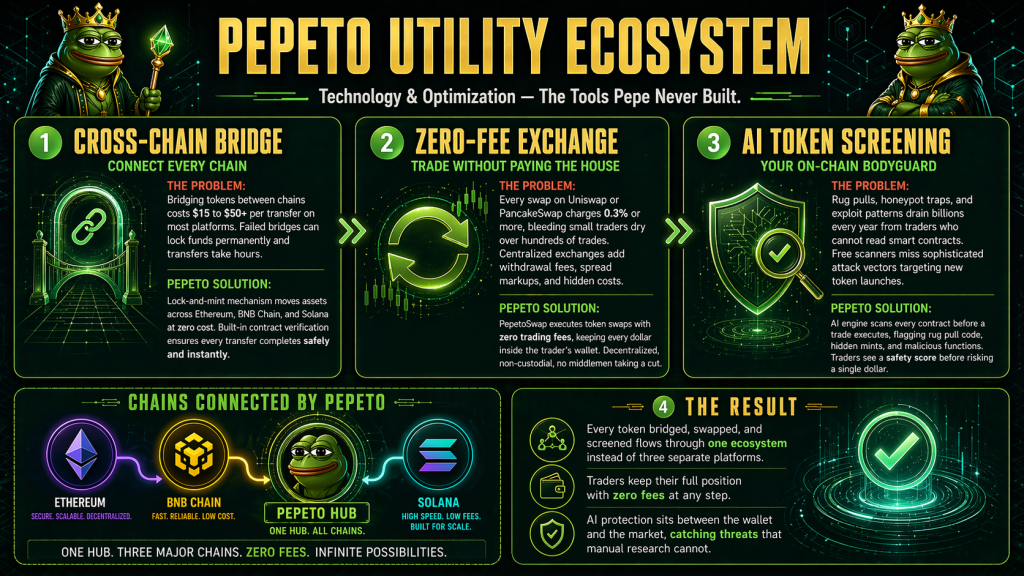
Best Crypto to Buy Under $1 in 2026: Pepeto Leads DOGE and ADA After ETH Block 25 Million
Ethereum just reached block 25 million after nearly 11 years of continuous operation, and the global stablecoin market cap hit a record $320 billion as adoption
Share
Captainaltcoin2026/05/03 13:35

Bitcoin posts strongest April in 12 months
Bitcoin finished April with an 11.87% month, its strongest showing in a year and a potential signal that the market is rethinking the path higher. The gain follows
Share
Crypto Breaking News2026/05/03 12:59

Ares Strategic Mining Establishes New Investor Relations Team Following $10 Million Funding
Ares Strategic Mining introduces a new Investor Relations Team after securing $10M funding, aiming to enhance shareholder engagement and support a potential NASDAQ
Share
Citybuzz2026/04/02 18:30



