

Payward Closes Bitnomial Deal, Eyes US-Regulated Crypto Derivatives
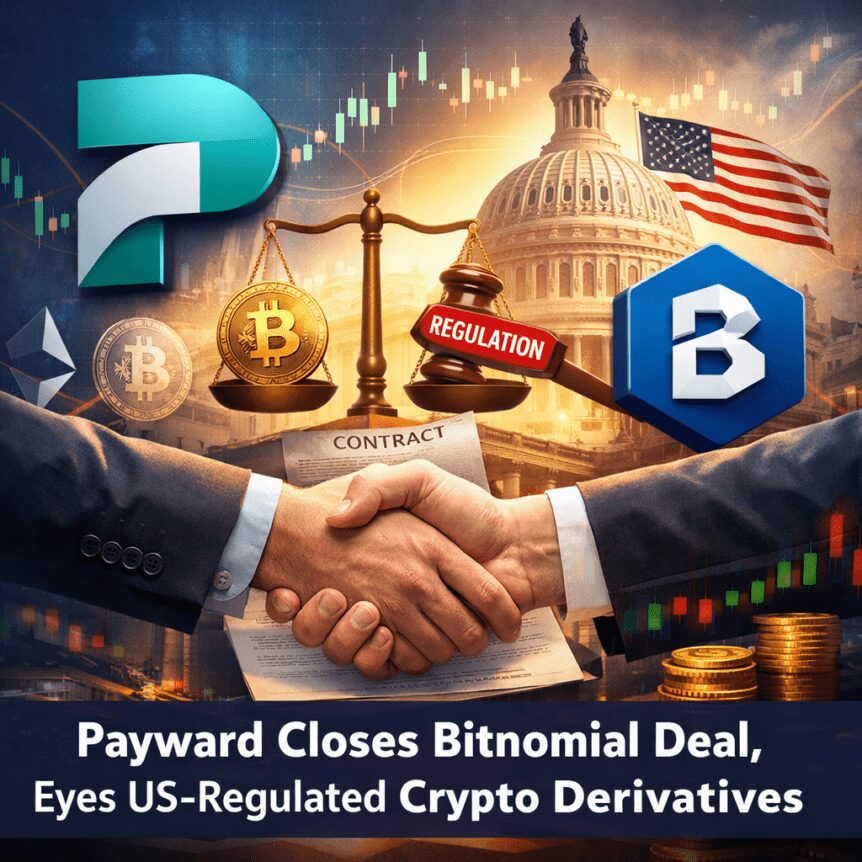
Payward, the parent company of Kraken, has completed its acquisition of Bitnomial, unlocking a fully CFTC-regulated derivatives stack in the United States. The deal gives Payward a complete onshore infrastructure for crypto derivatives, anchored by Bitnomial’s licenses for exchange, clearing, and brokerage services.
With the closing, Payward now controls a Futures Commission Merchant, a Designated Contract Market, and a Derivatives Clearing Organization. The plan is to leverage this stack to roll out CFTC-regulated products across Kraken and NinjaTrader, beginning with spot margin trading and followed by perpetual futures and options offerings.
Bitnomial will operate under its existing regulatory framework, but the acquisition enables Payward to connect fintechs, banks, and brokerages to US-regulated derivatives through its platform. The definitive agreement to acquire Bitnomial was announced on April 17, positioning Bitnomial as the first crypto-native company in the US to hold licenses across exchange, clearing, and brokerage functions under the CFTC.
Key takeaways
- Payward now holds a full US derivatives stack via Bitnomial—FCM, DCM, and DCO—paving the way for regulated crypto derivatives on Kraken and NinjaTrader.
- Initial product focus will be on spot margin, with perpetual futures and options expected to follow as the regulated framework expands.
- Bitnomial will continue operating within its regulatory structure, enabling partners such as fintechs, banks, and brokerages to access US-regulated derivatives through Payward’s platform.
- The move occurs amid growing momentum to bring crypto derivatives onshore in the US, where regulators have signaled an interest in aligning frameworks for perpetual futures and other products.
- Industry-wide developments include CME Group’s planned AVAX and SUI futures and broader push toward 24/7 crypto derivatives trading in the US, subject to regulatory approvals.
Regulatory momentum and US market dynamics
The acquisition lands Payward at a notable inflection point in US crypto regulation. Crypto derivatives—from futures to options—have long accounted for a substantial share of trading volumes, yet a sizable portion of activity has migrated to offshore venues. In a joint statement issued in September 2025, the Securities and Exchange Commission and the CFTC acknowledged that regulatory fragmentation has driven offshore activity and limited the US menu of perpetual futures. The agencies signaled an intent to explore onshore pathways using existing authorities, including potential perpetual futures frameworks and greater cross-market alignment.
Against this backdrop, US exchanges have begun expanding their derivatives offerings. CME Group, the country’s largest derivatives venue, signaled a stepped-up push into crypto futures, detailing plans to list contracts tied to assets such as Avalanche (AVAX) and Sui (SUI) after previously announcing products for Cardano (ADA), Chainlink (LINK), and Stellar (XLM). CME has also flagged a move toward 24/7 trading for crypto futures and options, contingent on regulatory approval.
These developments sit alongside broader offshore expansions aimed at non-US clients. For instance, Kraken rolled out tokenized equity perpetual futures for non-US traders in February, delivering 24/7 leveraged exposure to asset baskets that include US stock indices, gold, and equities. In Europe, Coinbase extended its derivatives footprint with new crypto and equity-index futures across 26 countries through its MiFID-regulated entity, while other venues such as One Trading, Gemini, and Backpack have launched regulated perpetual contracts for European traders.
Taken together, the regulatory conversation in the US and the competitive expansion abroad point to a converging dynamic: more crypto institutions seeking regulated onshore access while offshore venues continue to broaden their global reach. The Bitnomial acquisition fits within this broader trajectory, offering a regulated runway for traditional finance players and crypto-native firms to participate in US derivatives markets through Payward’s infrastructure.
What this means for traders and the ecosystem
For investors and institutions, a fully licensed US derivatives stack under one umbrella could lower barriers to risk management and custody of regulated crypto products. Connecting Kraken and NinjaTrader to a compliant framework could accelerate the availability of risk controls, clearing, and settlement under a familiar regulatory regime. It also positions Payward to partner with banks, brokerages, and fintechs seeking regulated access to crypto derivatives without navigating a mosaic of licenses and compliance regimes.
From a market structure perspective, the move reinforces the push toward standardization and oversight in a space that has historically been fragmented across jurisdictions. Regulators’ emphasis on onshore frameworks and cross-market alignment will continue to shape product design, trading hours, and margin treatment as new offerings roll out. Investors should watch how quickly spot-margin products launch, how perpetuals and options are structured, and how risk controls and capital requirements evolve under the Bitnomial-driven regime.
On the competitive front, the US landscape remains a mix of regulated incumbents and ambitious entrants. CME’s roadmap highlights one path for more formalized, institution-friendly crypto derivatives, while Payward’s Bitnomial-backed stack signals a credible onshore alternative rooted in crypto-native licensing. The next chapters will likely reveal timelines for product launches, regulatory approvals, and the degree to which these platforms harmonize with international offerings.
For readers tracking adoption, the key question is how quickly regulated products gain traction among traders who previously relied on offshore venues. If Payward can accelerate product readiness and maintain robust compliance, the combined Kraken/NinjaTrader pipeline could become a meaningful onramp for institutions seeking regulated exposure to crypto derivatives in the United States.
As the regulatory narrative evolves and product roadmaps unfold, market participants should monitor upcoming milestones: the integration timeline for Bitnomial’s licenses, the launch cadence for spot-margin and subsequent derivatives, and the regulatory decisions that will determine 24/7 trading feasibility and the scope of onshore perpetual futures in the near term.
In the meantime, the industry can expect continued emphasis on compliance-driven growth as more players push to normalize crypto derivatives within a US framework that regulators are actively refining. The Bitnomial acquisition marks a concrete step in that direction, with implications for traders, institutions, and the broader crypto economy.
This article was originally published as Payward Closes Bitnomial Deal, Eyes US-Regulated Crypto Derivatives on Crypto Breaking News – your trusted source for crypto news, Bitcoin news, and blockchain updates.


You May Also Like
'Bright red line': Alarm bells as GOP becomes an incubator of growing 'cancer'
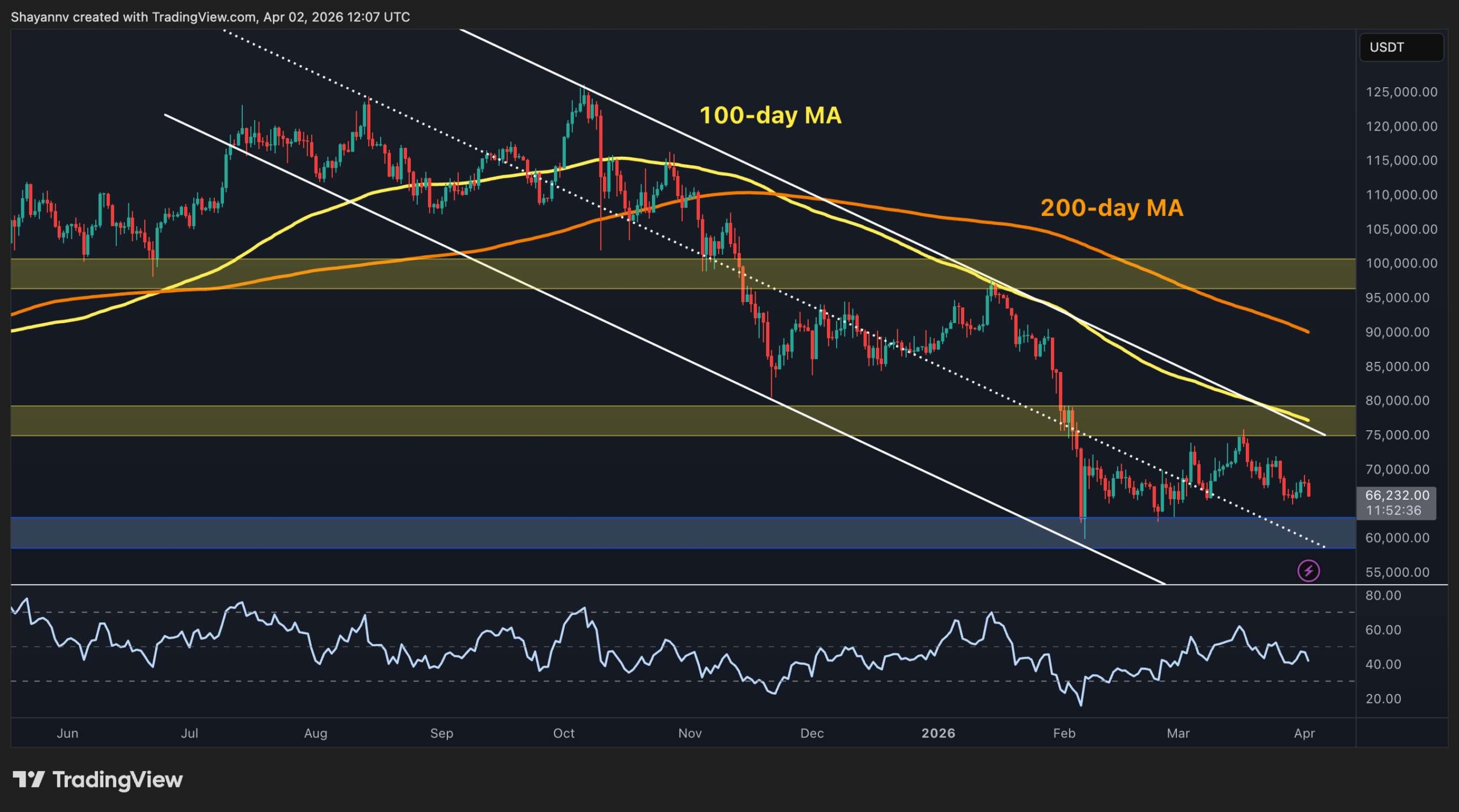
Bitcoin Price Analysis: What’s Next for BTC After Tanking to $66K?




