

Mira Murati returns to the spotlight, carefully: New AI models, old questions
BitcoinWorld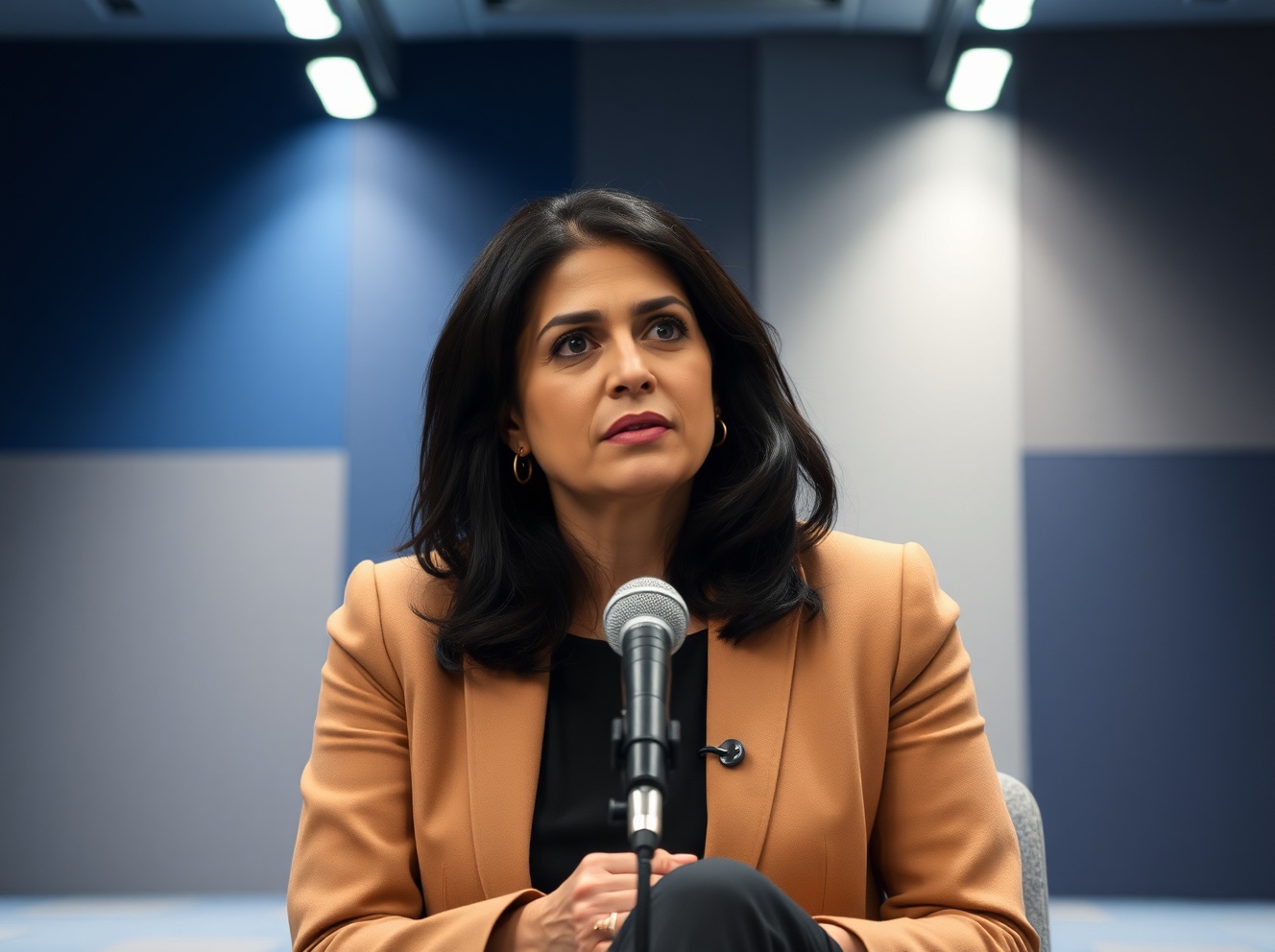
Mira Murati returns to the spotlight, carefully: New AI models, old questions
Mira Murati isn’t a natural creature of the conference stage. As the CTO of OpenAI, she was present but rarely the public face of the company. As CEO of her own company, Thinking Machines Lab, she has been even harder to find. So when she sat down with Bloomberg in San Francisco on Thursday — her first major media appearance in roughly 18 months — it was worth paying attention, even if she was careful not to say too much.
Why now? The timing of Murati’s return
The timing makes sense. Thinking Machines has spent the better part of a year and a half operating largely in the background: raising capital, hiring researchers, and shipping one product, Tinker, an API for fine-tuning open-source AI models. In the meantime, the companies competing for the same talent, customers, and headlines have only grown more omnipresent. OpenAI, where Murati spent six years as CTO, is constantly in the news cycle. Anthropic’s momentum is all that anyone can talk about right now. And xAI, Elon Musk’s AI venture, has been folded into SpaceX ahead of what is expected to be its massive public offering, generating its own gravitational pull on attention and investment. In that environment, staying heads down has diminishing returns; at some point, you have to make some noise just to remind the market you exist.
What Murati actually revealed
Murati used the Bloomberg appearance to do exactly that and not much more. She previewed what Thinking Machines is calling “interaction models,” which she described as a fundamentally different kind of AI interface. Rather than the turn-based, prompt-and-response dynamic that defines most AI products today, she told interviewer Emily Chang, the company’s models are designed to process continuous streams of audio, text, and video in 200-millisecond intervals. The idea is that they can pick up on the texture of human communication — the interruptions, the mid-thought corrections, even pauses to think — in something closer to real time. It fits the lab’s core thesis that the path to powerful AI runs through closer human collaboration, not around it. But Murati was careful to frame it as a first step, not a finished product, and she declined to put a specific release date on anything.
Reflections on OpenAI’s “blip”
She also answered questions about the episode that first put her more squarely in the public eye: the chaotic week in November 2023 when OpenAI’s board fired Sam Altman and she became interim CEO. Inside OpenAI it came to be called “the blip.” Murati said she felt clear about her decisions in each moment — that protecting the mission and the team was the through-line that made the choices feel obvious even as the situation appeared to be falling apart from the outside. She said the company would have “imploded” if not for her involvement through that strange five-day stretch and its immediate aftermath. But she acknowledged that clarity of intent is not the same thing as clarity about consequences. In retrospect, she said, she would have pushed harder for more information, a better transition plan, and more transparency. What she did not say, at least not directly, is whether she thinks things turned out well. Asked whether she still trusts her former boss, she sidestepped the question, steering the conversation toward a larger concern that she returned to several times: the concentration of consequential decisions in too few hands — not just at OpenAI but across the industry.
Governance, not just good people
Her worry, she said, is less about the character of any individual leader (though she acknowledged that matters) and more about the absence of structural checks. Good people make bad calls. Well-intentioned organizations drift. Too much attention has been paid to virtue and too little to governance, she suggested. This is a notable shift in emphasis from the typical Silicon Valley narrative, which often focuses on the personality of founders. Murati’s argument is that the industry needs better institutional guardrails, not just better CEOs.
On talent departures and competition
Chang also politely pressed her on the departures of several high-profile researchers from Thinking Machines in recent months, a subject Murati has largely avoided in public and that she downplayed on Thursday. First, she said, building a frontier AI lab from scratch compresses years of normal organizational volatility into months. She also acknowledged that compensation — the nine-figure packages that have become standard currency in the war for AI talent — captures people’s imaginations, but she suggested it isn’t usually the whole story. To some audience laughter, she said of her own competitive instincts, “When I wake up in the morning, I am not thinking about how to kill the competitor.”
The bigger picture: AI’s future and human agency
Naturally, Chang asked about what comes next for AI broadly, including for the humans who AI companies once said would be empowered by AI but who’ve more recently grown scared by talk of mass job displacement, not to mention a future where AI is used to create chemical weapons. Murati, who was born in Albania and speaks with a slight Eastern European accent, was measured in her response. She pushed back on the framing of inevitable dystopia or inevitable utopia, arguing that neither outcome is predetermined and that the period we’re in right now is the one that will determine which way things go. Still, she said — and not for the first time during the interview — that if humans take their hands off the wheel too soon, the future will look very different, and not better.
Conclusion
Murati’s return to the public stage is a signal that Thinking Machines Lab is ready to compete for attention, talent, and market share in a crowded field. But her message was less about product hype and more about governance, caution, and the need for structural accountability in AI development. Whether that message resonates in an industry driven by speed and scale remains to be seen, but for now, Murati has made it clear she intends to be part of the conversation — on her own terms.
FAQs
Q1: What is Thinking Machines Lab?
Thinking Machines Lab is an AI startup founded by Mira Murati after leaving OpenAI. It focuses on developing AI models designed for more natural, continuous human interaction, rather than the traditional prompt-and-response format. Its first product, Tinker, is an API for fine-tuning open-source models.
Q2: What are “interaction models”?
Interaction models are a new type of AI interface being developed by Thinking Machines Lab. Unlike current AI chatbots that operate on a turn-based system, these models process continuous streams of audio, text, and video in 200-millisecond intervals, allowing them to pick up on human conversational cues like interruptions, mid-thought corrections, and pauses.
Q3: Why did Mira Murati leave OpenAI?
Murati left OpenAI in late 2023, shortly after the chaotic episode in which the board fired Sam Altman and she served as interim CEO. While she has not given a single definitive reason, her comments suggest she was concerned about governance and decision-making concentration at the company. She has framed her departure as a move to build a different kind of AI company with stronger structural checks.
This post Mira Murati returns to the spotlight, carefully: New AI models, old questions first appeared on BitcoinWorld.


You May Also Like
NYT: U.S.-Iran Draft Agreement Proposes $300 Billion Investment Fund for Reconstruction

Egyptian foreign minister to meet Putin over Iran conflict
Trump's pick to lead the entire US intelligence community faces bipartisan criticism



