

TON Price Doubles After Telegram’s Exclusive Move Sparks Crypto Criticism
Toncoin’s price doubled after Telegram announced what appears to be an exclusive partnership with the TON blockchain, a move that has drawn sharp criticism from those who argue it contradicts crypto’s foundational commitment to open, permissionless networks.
What Telegram Changed and Why TON Reacted So Sharply
The catalyst behind the rally traces to a Telegram-TON exclusive partnership that appears to deepen the messaging platform’s integration with the TON blockchain. The arrangement positions TON as a preferred or sole blockchain layer within Telegram’s ecosystem.
TON’s price response was immediate and outsized. The token roughly doubled in value as traders priced in the potential reach of Telegram’s 900-million-plus user base funneling directly into TON-based services. For context, similar distribution plays in crypto, such as large-scale CeFi fundraising rounds, have historically moved markets, but rarely this fast.
The exact mechanics of the partnership remain partially unclear. The research underlying this report is marked as partial, and the specific terms of exclusivity have not been fully verified. What is confirmed is that the TON Foundation published a page describing the arrangement, and the market treated it as a major bullish signal.
Why Critics Say the Move Cuts Against Crypto’s Core Promise
The backlash centers on a straightforward tension: crypto networks are supposed to be open and composable, letting any project build on any chain without gatekeeping. An exclusive partnership between a dominant messaging app and a single blockchain introduces exactly the kind of preferential access that decentralized systems were designed to eliminate.
Critics argue that when one platform with near-monopoly reach in certain markets picks a single chain, it creates a walled garden. Other blockchains lose the chance to compete for Telegram’s users on merit. The concern is not that TON benefits, but that the benefit comes through exclusion rather than technical superiority.
This is a criticism, not a settled verdict. Supporters counter that Telegram’s deep involvement with TON predates the broader crypto ecosystem’s interest, and that tight integration delivers a better user experience. Projects like Orbs’ SPOT interface show that tightly scoped DeFi tools can work well when designed for specific environments.
Still, the debate matters because it tests whether mainstream adoption justifies centralized distribution. If Telegram’s move succeeds commercially but narrows user choice, the crypto industry will need to decide whether that tradeoff aligns with its stated values.
What Would Show Whether TON’s Repricing Has Real Follow-Through
A price doubling on headline news is one thing. Sustained repricing requires follow-through in measurable on-chain activity. The key indicators to watch are whether TON’s network usage, total value locked, and transaction volume rise durably, not just during the initial excitement.
TON’s DeFi ecosystem activity, visible through protocol-level metrics, will be one of the clearest signals. If the Telegram partnership drives real users into TON-based DeFi applications, TVL growth should follow the price move rather than lagging behind it.
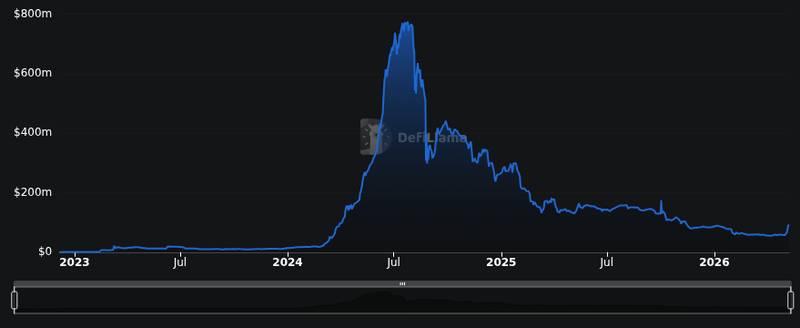 DefiLlama protocol snapshot backing the DeFi usage narrative around toncoin.
Market structure also matters. Sustained trading volume and stable market capitalization after the initial spike would suggest the repricing reflects genuine revaluation, not just speculative froth. Listings on additional exchanges, such as the kind of new trading pair expansions seen recently on Upbit, could provide further liquidity support.
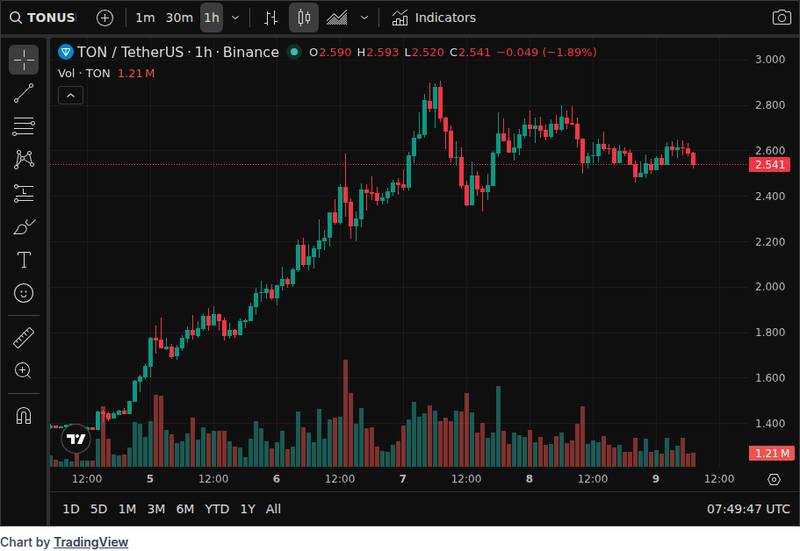 CoinGecko market snapshot used to anchor the spot-price section for toncoin.
The exclusivity backlash also carries real risk. If the broader crypto community treats TON as a centralized outlier rather than a legitimate Layer 1 competitor, developer and capital migration could stall regardless of Telegram’s distribution advantage. Whether the partnership converts casual Telegram users into active TON participants, rather than just generating a one-cycle narrative spike, will determine if this repricing holds.
Additional source references: source document 1.
Disclaimer: This article is for informational purposes only and does not constitute financial or investment advice. Cryptocurrency and digital asset markets carry significant risk. Always do your own research before making decisions.


You May Also Like

Stablecoin yield negotiations are pretty much done, Coinbase CLO Grewal says

What Makes a Payment Fast and Secure in 2026?




