JPMorgan CEO Criticizes Coinbase as Banks Push Back on CLARITY Bill
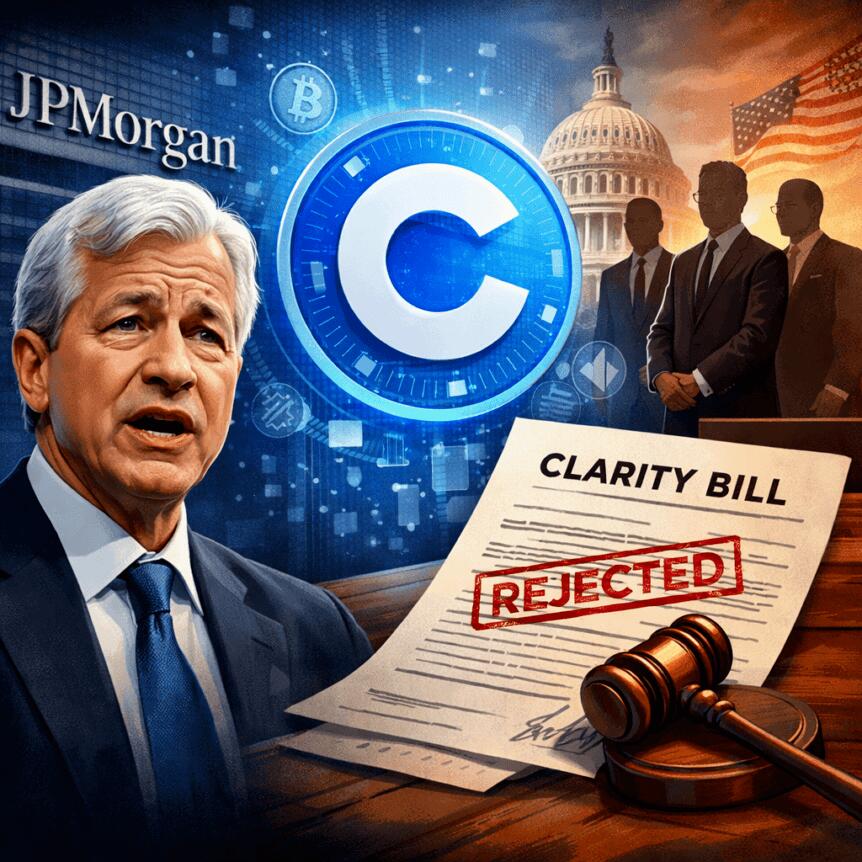
Jamie Dimon, the chief executive of JPMorgan Chase, has reiterated strong opposition to the current draft of the Digital Asset Market Clarity Act (CLARITY), arguing that the proposal as written would shape crypto market structure in ways banks will resist.
<pAccording to Fox Business, Dimon told the network that the latest version of CLARITY would effectively permit crypto firms to pay interest on user deposits and stablecoin balances—a feature he described as problematic from a banking compliance perspective.
<pDimon also contended that the bill does not impose the same anti‑money laundering (AML) provisions, Bank Secrecy Act sanctions, or capital reserve requirements that banks must meet when engaging with crypto service providers. “The banks will not accept it that way,” he said, adding that if crypto companies want to offer yield‑bearing products to customers, they should apply for banking charters.
Dimon’s comments come as the CLARITY bill undergoes ongoing negotiations between the crypto industry and the banking lobby. He criticized Coinbase and CEO Brian Armstrong’s role in those discussions, framing the lobbying dynamic as a contested power center in Washington.
<pAccording to Cointelegraph, the Senate Banking Committee marked up the CLARITY Act in May and voted to advance it in that chamber. It remains to pass both the Senate and the House and would require the signature of U.S. President Donald Trump to take effect.
Related: Cointelegraph coverage of Armstrong’s role in the negotiations
Key takeaways
- The governing critique centers on yield‑bearing products and the potential to pay interest on deposits and stablecoins, a point raised by Dimon in his Fox Business interview.
- The bill’s perceived gaps include AML, BSA sanctions, and capital reserve frameworks—areas Dimon says banks would expect crypto service providers to meet.
- Legislative progress shows the CLARITY Act was advanced in the Senate Banking Committee in May, but it still faces hurdles before becoming law.
- Political dynamics suggest limited bipartisan support to date, with only a small number of Democrats joining Republicans in the initial advancement, raising questions about floor passage.
- Market expectations, as tracked by Polymarket, indicated a shifting probability of enactment in 2026, reflecting ongoing regulatory uncertainty and policy debate.
Contextualizing CLARITY within the regulatory landscape
<pThe CLARITY Act seeks to define the regulatory framework for digital asset market structures in the United States. Dimon’s critique highlights the ongoing friction between traditional banking compliance norms and crypto market designs that contemplate yield generation and non‑custodial arrangements. In practice, the debate touches on core compliance issues, including AML/KYC standards, sanctions enforcement, and capital adequacy requirements that shape where and how crypto services can operate within the banking system.
<pFrom a policy perspective, the proposed legislation sits amid broader regulatory conversations in the United States and around the world. While CLARITY attempts to clarify market structure for digital assets domestically, EU policy developments under the MiCA framework illustrate a different regulatory approach to asset classifications, licensing, and consumer protections. The coexistence of these regimes underscores cross‑border regulatory differences that institutions must navigate when evaluating licensing, banking partnerships, and custody arrangements for crypto activities.
<pAccording to Polymarket, the odds of CLARITY becoming law surged to roughly 68% after the May markup, before retreating to about 59% as the legislative phase continued. The market’s read reflects the high level of political uncertainty surrounding crypto regulation and the difficulty of achieving durable cross‑party consensus in a divided environment.
Legislative dynamics and the path to enacted rules
<pChairman Tim Scott described the markup as bipartisan, indicating some level of cross‑party cooperation in the committee vote. However, the limited number of Democratic allies in the advancement signals ongoing partisan friction that could complicate floor considerations in both chambers. Even with a favorable committee outcome, the bill would still need to clear the full Senate and the House and be signed into law by the president, a process that remains uncertain given the current political climate.
<pThe evolving sponsorship and negotiation dynamics around CLARITY have prompted crypto firms and financial institutions to reassess their planning around product offerings, licensing pathways, and capital‑integration requirements. Industry participants are watching how any proposed changes would interact with existing banking regs, including AML/KYC obligations and enforcement priorities from agencies such as the SEC, CFTC, and DOJ, as well as the potential alignment or divergence with global standards under MiCA.
<pRelated commentary notes the broader question of how regulators will balance innovation with investor protection and systemic resilience. A separate Cointelegraph feature asks whether the CLARITY Act will define a favorable path for DeFi or create new compliance challenges for non‑custodial structures that are central to decentralised finance debates.
Implications for banks, crypto firms, and compliance programs
<pThe central tension illustrated by Dimon’s remarks is a push‑pull between market innovation and traditional bank risk management. If the CLARITY Act were enacted without parallel enhancements to AML/CSS frameworks, sanctions regimes, and capital requirements, banks could view crypto activity as operating outside established prudential norms. That would likely affect decisions around banking charters, correspondent banking relationships, and the structuring of yield‑bearing products for customers.
<pFor crypto firms, the bill's outcome will shape market access, custody arrangements, and credit‑like product offerings. The prospect of yield products in a regulated environment could drive greater institutional participation, but only if a robust, enforceable framework for AML, customer due diligence, and capital adequacy is in place. The current discourse suggests institutions will continue to seek clarity on licensing pathways and regulatory oversight, particularly for entities engaging in staking, lending, or stablecoin management.
<pFrom a policy standpoint, the CLARITY debate reinforces the need for alignment between U.S. authorities and evolving global standards. As regulators weigh licensing regimes and consumer protections, the landscape remains fluid, with observers monitoring not only the bill’s progress but also enforcement priorities and cross‑border cooperation on sanctions enforcement, AML controls, and risk management practices.
Closing thoughts: the CLARITY Act’s trajectory will hinge on bipartisan negotiation, floor votes, and presidential assent. In the near term, the industry will continue to assess the potential implications for financial stability, investor protection, and the operational practices of banks and crypto service providers alike.
Watch next for updates on committee actions, floor votes, and any amendments that could redefine the balance between innovation and regulation in the U.S. crypto market.
This article was originally published as JPMorgan CEO Criticizes Coinbase as Banks Push Back on CLARITY Bill on Crypto Breaking News – your trusted source for crypto news, Bitcoin news, and blockchain updates.


You May Also Like

KPMG Warns Fed May Raise Rates in H2 as Iran War Fuels Stagflation

LIVESTREAM: 2026 Palaro secondary girls’ volleyball final – NCR vs Negros Island Region

Gold Spot Volume on Binance Surges to $80M as Demand Extends Beyond Futures