Adam Back denies being Bitcoin founder Satoshi Nakamoto, calls new evidence circumstantial
For nearly two decades, the true identity of Bitcoin’s creator, Satoshi Nakamoto, has been the tech world’s most fiercely guarded secret, a multi-billion-dollar ghost story. But the ghost might finally have a name. In a blockbuster exposé published today, Pulitzer-winning journalist John Carreyrou, the man who famously brought down Theranos, points a heavily researched finger at Adam Back.
According to The New York Times‘s year-long investigation, the 55-year-old British cryptographer and Blockstream CEO isn’t just a pioneer of the cypherpunk movement; he is the elusive Satoshi himself.
The piece is exhaustive, drawing on a database of 134,308 posts from the 1990s–2000s, including Cypherpunk and cryptography mailing lists, computer-assisted stylometric analysis, technical lineage, timeline forensics, and a tense in-person confrontation. Yet Back has flatly denied it, multiple times on X today and in a two-hour interview in El Salvador, calling the evidence “confirmation bias” and “coincidence”.
The crypto community largely agrees: compelling circumstantial dots, but no smoking gun. The mystery persists.
Carreyrou’s case rests on four interlocking pillars. First, technical DNA: Back invented Hashcash in 1997 as a proof-of-work anti-spam mechanism; Satoshi explicitly cited it in the Bitcoin white paper and repurposed it for mining. Back’s late-1990s Cypherpunk posts sketched decentralised electronic cash using puzzles, scarcity, Byzantine fault tolerance, and energy arguments that mirror Bitcoin almost verbatim. He even proposed combining Hashcash with Wei Dai’s b-money, precisely what Satoshi did.
 Adam Back
Second, stylometric fingerprinting: Three independent analyses (including AI-driven synonym tracking and quirk matching) of 620 candidates converged on Back alone. Shared tics include two spaces after periods, British/American spelling flips (“optimise/optimise”), hyphenated “proof-of-work”, “burning the money”, “partial pre-image”, and the archaic “it’s/its” confusion. Satoshi and Back both ended sentences with “also” and favoured phrases like “a menace to the network”. Among thousands of posts, only Back matched the full suite.
Third, timeline and behaviour: Back was hyperactive on digital cash lists until 1999, then largely silent during Bitcoin’s 2008–2011 launch, only resurfacing on Bitcointalk six weeks after Satoshi’s final April 2011 post. His 2015 Bitcoin-dev emails echoed Satoshi’s anti-big-block stance with near-identical phrasing. A 2009 move to Malta (a tax haven) and shared Hal Finney connections add colour.
Fourth, human moments: In the El Salvador interview, Carreyrou noted Back’s verbal slip when confronted with Satoshi’s famous line, “I’m better with code than with words.” Back responded as if channelling the quote. He also declined to release email metadata that might have clarified communications with Satoshi.
Bitcoin founder Satoshi Nakamoto: A familiar denial and the missing keys
Back’s rebuttal, posted hours after the article dropped, is consistent with years of denials (including in the 2024 HBO documentary and Craig Wright’s UK trial, where he testified against the Australian).
On X he wrote, “i’m not satoshi, but I was early in laser focus on the positive societal implications of cryptography, online privacy and electronic cash, hence my ~1992 onwards active interest in applied research on ecash, privacy tech on cypherpunks list which led to hashcash and other ideas.”
He says the rest is a combination of coincidence and similar phrases from people with similar experience and interests.” He emphasised his early Cypherpunk work on eCash and privacy since 1992, which led naturally to Hashcash, but added, “I also don’t know who Satoshi is, and I think it is good for Bitcoin that this is the case.” He noted.
Also read: Bitcoin price rises to $72,000 as US-Iran ceasefire sparks market relief
However, a careful look at the saga rightly revealed the absence of cryptographic proof. Only moving coins from Satoshi’s 1.1 million BTC wallets (worth $70–100 billion today) would settle it. Without that, stylometry, however sophisticated, remains speculative.
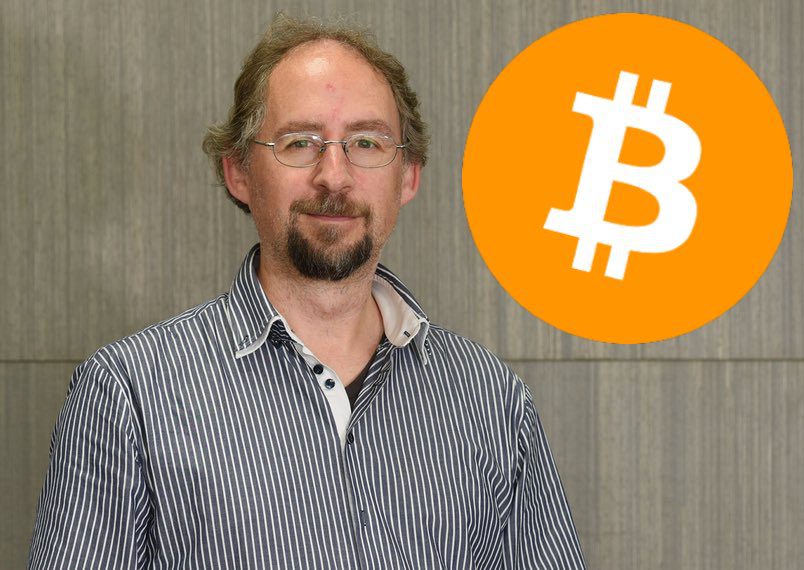 Adam Back
Satoshi could have deliberately mimicked Back’s style or collaborated. The Cypherpunk scene was small; shared jargon was common. Critics like Jameson Lopp and Galaxy Digital’s Alex Thorn called the piece “weak evidence” and “garbage”, arguing it paints an unnecessary target on Back.
This isn’t the first time the media has “solved” Satoshi. Newsweek’s 2014 Dorian Nakamoto story, the HBO documentary’s Peter Todd claim, and Craig Wright’s debunked fraud all collapsed under scrutiny. Carreyrou’s work is more rigorous than most, leveraging modern AI and exhaustive archives, but it joins a long line of near misses.
The community’s reflexive scepticism reflects Bitcoin’s ethos: the code matters more than the creator.
If Back is Satoshi, the revelation would humanise Bitcoin’s origin as the work of a veteran British cypherpunk rather than a lone Japanese genius or NSA front. It might complicate Blockstream’s narrative (though Back has long separated his corporate role from Satoshi lore) and fuel debates over anonymity’s value. Yet his denial protects the myth: Bitcoin remains a neutral, leaderless asset class. Anonymity, Back argues, prevents it from being dismissed as one man’s project.
Admittedly, Carreyrou has advanced the lore without ending it. The evidence is the strongest circumstantial case yet, but proof demands keys, not keywords. Until Satoshi signs a message or spends a coin, Satoshi Nakamoto remains a mystery.


You May Also Like

Standard Chartered is Taking Over Full Crypto Custody Platform Zodia

Bitcoin World Reveals Top 5 Stunning Gainers And Losers