

Trump Iran Nuclear Agreement: A Stunning Diplomatic Shift in Middle East Policy
BitcoinWorld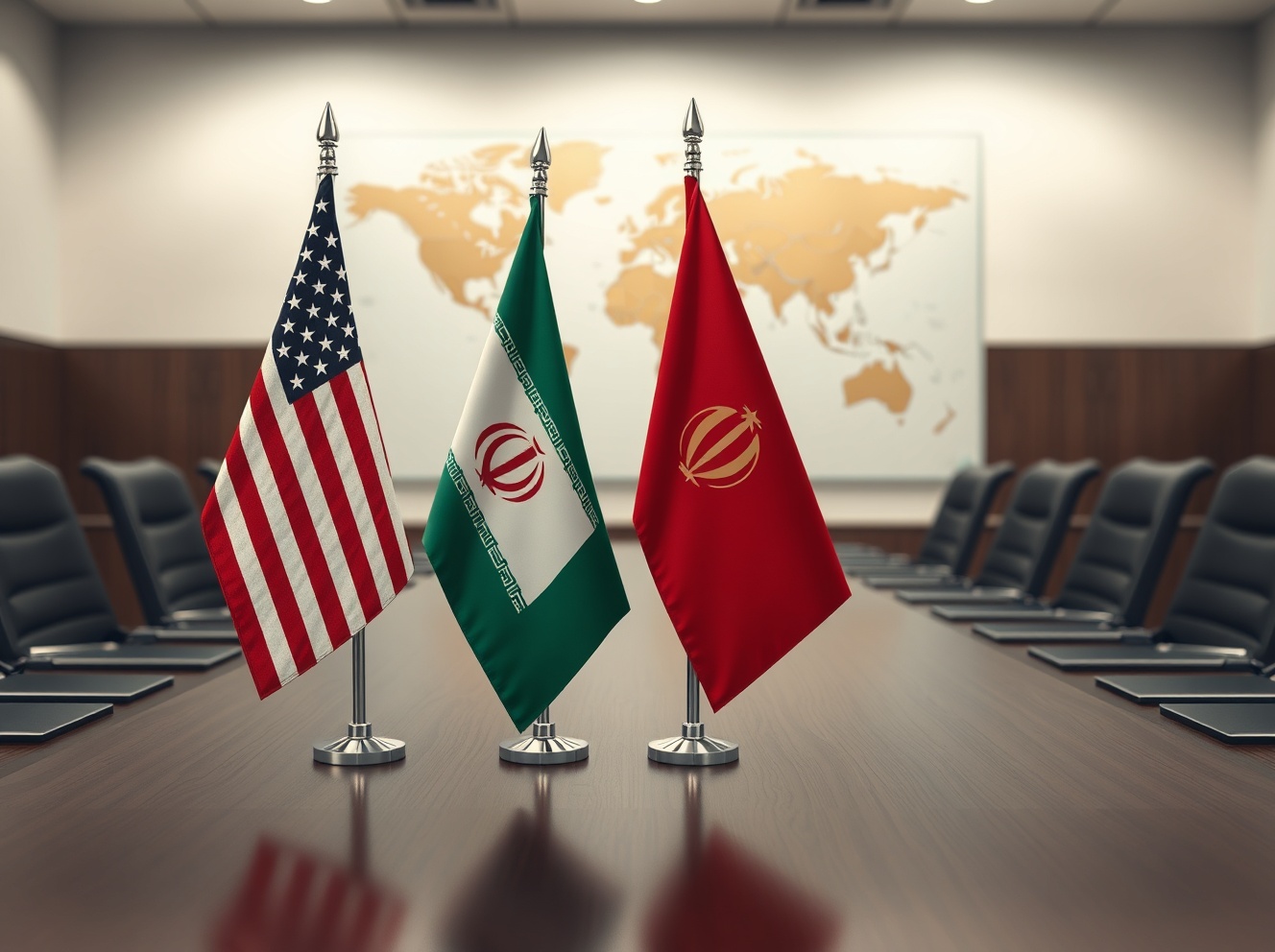
Trump Iran Nuclear Agreement: A Stunning Diplomatic Shift in Middle East Policy
In a significant development for global security, U.S. President Donald Trump stated that Iran has agreed not to develop nuclear weapons. This announcement, made from the White House on Tuesday, marks a potential turning point in one of the world’s most tense diplomatic standoffs. The declaration immediately reverberated across international capitals, prompting analysis from policymakers and experts worldwide. Consequently, this statement requires careful examination within the complex historical and political context of U.S.-Iran relations and nuclear non-proliferation efforts.
Analyzing the Trump Iran Nuclear Agreement Statement
President Trump’s assertion about Iran’s agreement originates from recent diplomatic communications. The White House provided a brief readout following the President’s remarks. Officials clarified the context of this new understanding. Importantly, this development follows years of escalating tensions and the U.S. withdrawal from the Joint Comprehensive Plan of Action (JCPOA) in 2018. The administration now cites a fresh commitment from Tehran. This pledge reportedly involves a verifiable halt to weapons-grade nuclear development activities. Furthermore, international monitoring agencies may receive enhanced access. The statement’s timing is crucial, occurring amidst broader regional negotiations.
Historical context is essential for understanding this announcement. The relationship between the United States and Iran has been fraught for decades. Key events include the 1979 Iranian Revolution and the subsequent hostage crisis. Additionally, Iran’s nuclear program became a major international concern in the early 2000s. The 2015 JCPOA, negotiated by the Obama administration, aimed to curb Iran’s nuclear capabilities. However, President Trump criticized that deal heavily. He ultimately withdrew the United States from the agreement. This move reinstated severe economic sanctions on Iran. Consequently, Tehran gradually resumed previously restricted nuclear activities. The new statement suggests a possible de-escalation path.
The Geopolitical Impact of a Nuclear Restraint Agreement
This potential agreement carries profound implications for Middle Eastern stability. Regional powers are closely monitoring the situation. Key stakeholders include Israel, Saudi Arabia, and the United Arab Emirates. These nations have historically viewed Iran’s nuclear ambitions as an existential threat. A verifiable restraint agreement could reduce immediate conflict risks. However, it also reshapes regional security dynamics. For instance, it may affect ongoing proxy conflicts in Yemen and Syria. Moreover, it influences global energy markets and strategic alliances.
International reactions have been mixed but attentive. European Union diplomats expressed cautious optimism. They emphasized the need for concrete, verifiable actions. Simultaneously, Russian and Chinese officials acknowledged the development. They highlighted the importance of multilateral diplomacy. The United Nations Secretary-General welcomed any step toward non-proliferation. Crucially, the International Atomic Energy Agency (IAEA) will play a central verification role. Its inspectors provide the technical backbone for any agreement. Their access and reporting will determine the statement’s factual weight.
Expert Analysis on Verification and Implementation
Nuclear policy experts stress that declarations require rigorous verification. Dr. Elena Michaels, a senior fellow at the Center for Nonproliferation Studies, provided context. “A political statement is the first step,” Michaels noted. “The real work lies in technical negotiations. These talks define monitoring protocols and inspection regimes.” She outlined essential components for a credible agreement. These components include:
- Unrestricted IAEA Access: Inspectors must visit declared and suspected sites.
- Continuous Monitoring: Installing cameras and sensors at key facilities is non-negotiable.
- Data Transparency: Iran must provide a complete history of its nuclear activities.
- Sanctions Relief Timeline: Economic incentives must be clearly linked to compliance milestones.
Furthermore, the domestic political landscape in both countries affects implementation. In the United States, Congress may seek to legislate on any new deal. In Iran, hardline factions could oppose concessions. Therefore, the path from statement to sustained agreement is complex. It involves continuous diplomatic engagement and confidence-building measures.
Comparative Timeline: From JCPOA to the Present
Understanding this announcement requires a view of the recent timeline. The following table outlines key events in U.S.-Iran nuclear diplomacy.
| Date | Event | Significance |
|---|---|---|
| July 2015 | JCPOA signed by Iran, P5+1, and EU. | Established limits on Iran’s nuclear program in exchange for sanctions relief. |
| May 2018 | U.S. withdraws from JCPOA. | Trump administration reimposes sanctions, beginning ‘maximum pressure’ campaign. |
| May 2019 | Iran begins reducing JCPOA compliance. | Tehran announces incremental steps away from the deal’s limits. |
| January 2020 | U.S. drone strike kills General Soleimani. | Tensions spike dramatically; Iran responds with missile strikes. |
| 2021-2024 | Indirect talks in Vienna. | Multiple rounds of negotiations occur but fail to restore the JCPOA. |
| Present Statement | Trump announces Iran’s agreement. | Represents a new, potentially bilateral understanding outside the JCPOA framework. |
This timeline shows a cycle of escalation and diplomacy. The new statement attempts to break that cycle. It proposes a different foundation for engagement. Whether it succeeds depends on the details not yet public. The international community awaits those specifics.
Conclusion
President Trump’s announcement that Iran has agreed not to develop nuclear weapons is a significant diplomatic event. It opens a potential new chapter in a long-standing confrontation. However, its ultimate importance hinges on verification and implementation. The global non-proliferation regime depends on such agreements being both politically viable and technically sound. Moving forward, all parties must prioritize transparency and sustained dialogue. The alternative is a return to dangerous escalation. Therefore, this moment requires careful, sober statecraft from all involved nations. The stakes for regional and global security could not be higher.
FAQs
Q1: What exactly did President Trump announce regarding Iran?
President Trump stated that Iran has agreed not to develop nuclear weapons. This announcement suggests a new bilateral understanding, though the specific terms and verification mechanisms require further clarification from both governments.
Q2: How does this new statement relate to the old Iran nuclear deal (JCPOA)?
This appears to be a separate, potentially bilateral understanding distinct from the multilateral 2015 JCPOA. The U.S. withdrew from the JCPOA in 2018. This new announcement may represent an effort to establish a different framework for restraining Iran’s nuclear program.
Q3: Who will verify if Iran is complying with this agreement?
Verification would likely involve the International Atomic Energy Agency (IAEA), the UN’s nuclear watchdog. Credible compliance depends on robust, unimpeded inspections of Iranian nuclear facilities, a point emphasized by non-proliferation experts.
Q4: What has been the international reaction to this development?
Reactions have been cautious. Allies and rivals are awaiting concrete details. Many governments have expressed a hope for de-escalation but stress that any agreement must be verifiable and durable to improve regional security.
Q5: What are the main challenges to making this agreement lasting and effective?
Key challenges include establishing a technically sound inspection regime, managing domestic political opposition in both the U.S. and Iran, defining clear consequences for non-compliance, and addressing the concerns of regional allies like Israel and Saudi Arabia.
This post Trump Iran Nuclear Agreement: A Stunning Diplomatic Shift in Middle East Policy first appeared on BitcoinWorld.
You May Also Like

American Bitcoin’s $5B Nasdaq Debut Puts Trump-Backed Miner in Crypto Spotlight
XRP Ledger Stablecoin Supply Jumps 100% Since December

