

Geopolitical Tensions and Energy Markets Drive Bitcoin to $70,800 as Traditional Markets Struggle
Key Highlights
- Bitcoin surged above $70,800, registering gains exceeding 1% following announcements from six leading economies aimed at securing energy supply routes and stabilizing global markets.
- Crude oil retreated nearly 2%, with WTI sliding to $93.80 following a coordinated statement from Britain, France, Germany, Italy, the Netherlands, and Japan.
- Alternative cryptocurrencies including Ether, XRP, and Solana posted modest increases under 1%, underperforming Bitcoin’s rally.
- The S&P 500 crossed beneath its 200-day moving average for the first occasion since May of the previous year, indicating potential bearish momentum.
- Federal Reserve officials have indicated interest rates will likely remain unchanged, with market participants not anticipating cuts despite one potential reduction still being discussed.
Bitcoin spearheaded a widespread cryptocurrency market rebound on Friday as declining oil prices provided relief for risk-sensitive assets. The leading digital currency advanced to $70,800, posting daily gains exceeding 1%, following an overnight decline that saw prices touch $68,900.
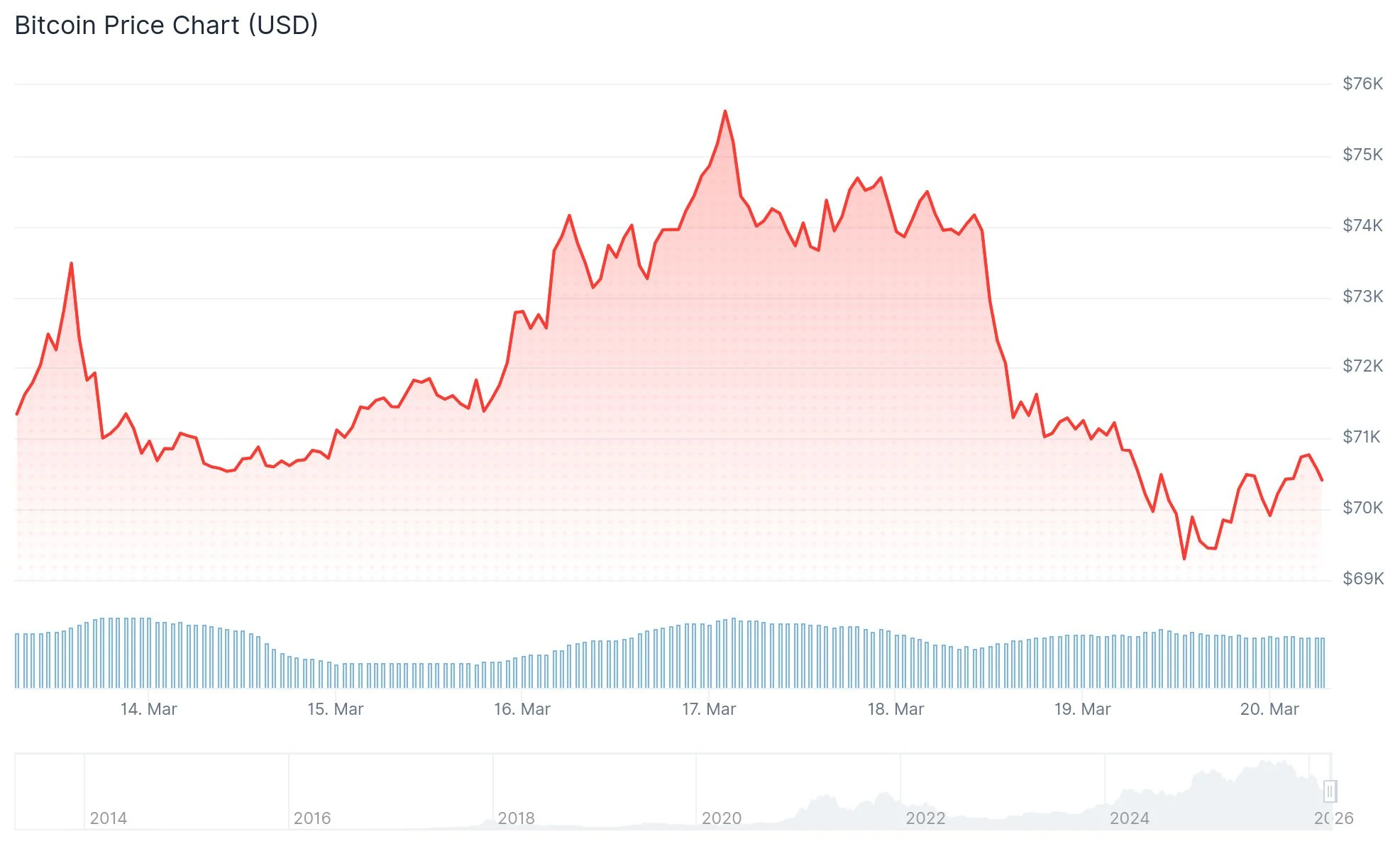 Bitcoin (BTC) Price
The cryptocurrency’s upward movement coincided with a coordinated announcement from six leading industrialized nations — the United Kingdom, France, Germany, Italy, the Netherlands, and Japan — who collectively denounced Iran’s recent military actions and committed to guaranteeing secure transit through the strategically vital Strait of Hormuz. The declaration was distributed through UK Prime Minister Keir Starmer’s official channels.
West Texas Intermediate crude oil declined approximately 2% to reach $93.80 in the wake of the announcement. Brent crude experienced comparable reductions. Additionally, U.S. Treasury Secretary Scott Bessent indicated on Thursday that the administration might consider removing sanctions on Iranian oil tankers and potentially utilize the nation’s Strategic Petroleum Reserve.
Other digital assets experienced more moderate movements. Ether, XRP, and Solana each posted gains below 1%, underperforming Bitcoin’s recovery.
Neverthstanding the rebound, market volatility persists. The Middle Eastern conflict continues to unfold, and WTI crude maintains trading levels significantly elevated compared to pre-conflict prices, hovering near crucial support around $92. Market analysts from Mott Capital Management noted that oil maintains an upward bias as long as it sustains that support threshold.
Equity Markets Face Continued Headwinds
Traditional stock markets continued experiencing pressure as the week drew to a close. U.S. futures contracts showed modest improvement Friday morning, with Dow futures advancing 0.2% and S&P 500 futures climbing 0.1%. However, the overarching trend remains decidedly negative.
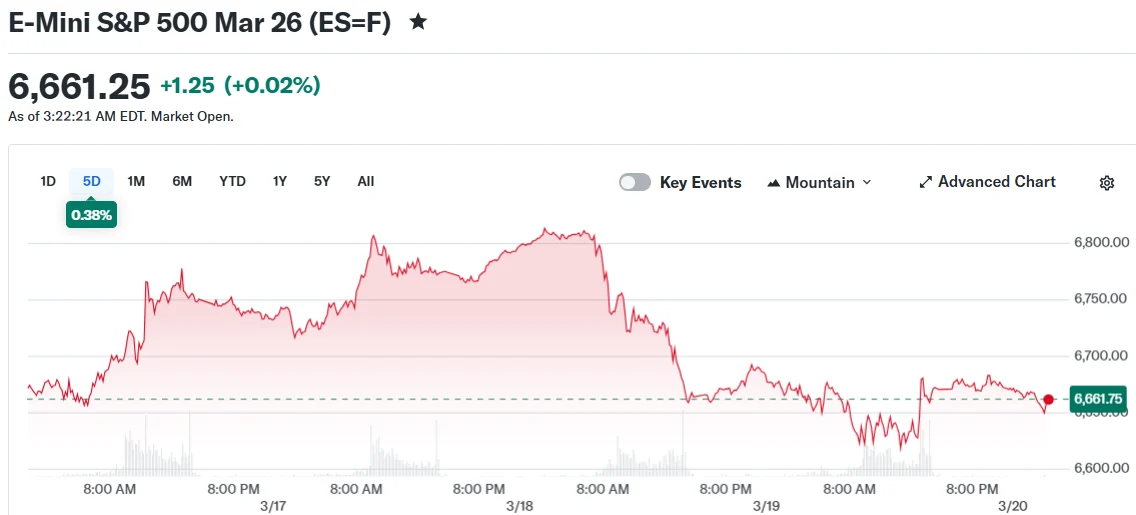 E-Mini S&P 500 Mar 26 (ES=F)
Primary U.S. equity indexes are positioned for their fourth consecutive week of declines. The Dow has fallen approximately 1.2% over the week, while the S&P 500 has retreated about 0.4% and the Nasdaq has declined roughly 0.1%. Both the Dow and Nasdaq are currently trading approximately 8% beneath their recent all-time peaks.
During Thursday’s session, the S&P 500 finished trading beneath its 200-day simple moving average for the initial time since May of last year. This technical development is closely monitored by market participants as an indicator of changing market dynamics.
https://twitter.com/TrendSpider/status/2034691377775145236?s=20
Market sentiment received a modest boost following comments from Israeli Prime Minister Benjamin Netanyahu, who stated Israel was contributing to U.S.-led efforts through intelligence cooperation and additional support directed at reopening the Strait of Hormuz. He also implied the regional conflict might conclude earlier than widespread expectations suggest.
Central Bank Policy Maintains Market Uncertainty
The Federal Reserve this week communicated increasing ambiguity regarding both economic expansion and inflationary pressures. Fed Chair Jerome Powell’s recent statements have led market participants to anticipate stable interest rates in the near term, despite policymakers acknowledging that one rate reduction could materialize before year’s end.
This positioning has left both cryptocurrency and conventional financial markets vulnerable to energy price fluctuations, with minimal cushion from anticipated monetary policy easing.
Regarding corporate developments, the quarterly earnings reporting period has largely concluded. GameStop and Carnival are scheduled to announce their financial results in the coming week.
The post Geopolitical Tensions and Energy Markets Drive Bitcoin to $70,800 as Traditional Markets Struggle appeared first on Blockonomi.
You May Also Like

World Gold Council unveils plan to standardize tokenized gold infrastructure

Navigating Cautious Stance And Hawkish Risks In The Eurozone

