

Lagarde Speech: ECB Confidently Positioned to Navigate Major Economic Shock Unfolding
BitcoinWorld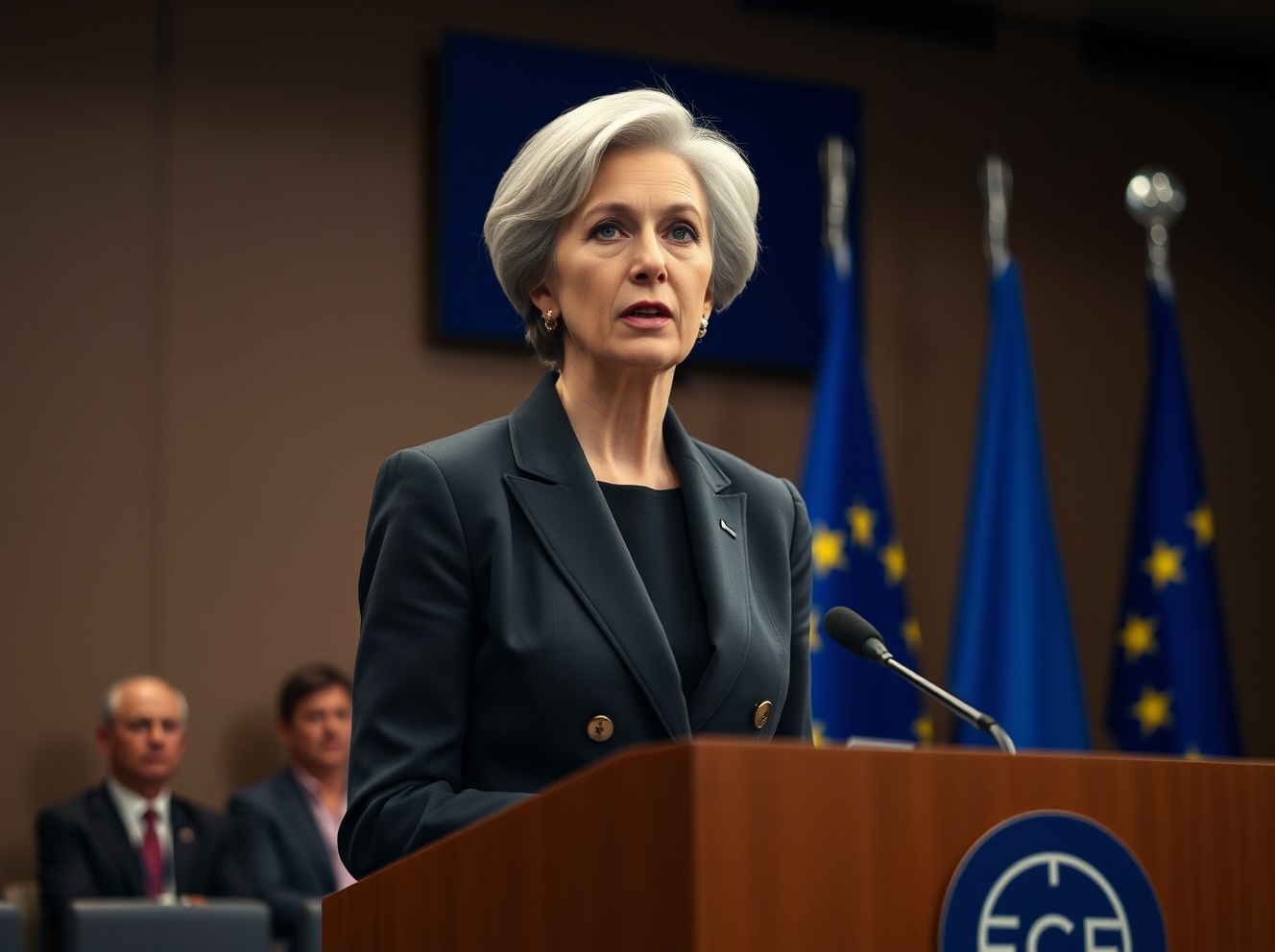
Lagarde Speech: ECB Confidently Positioned to Navigate Major Economic Shock Unfolding
European Central Bank President Christine Lagarde delivered a pivotal address in Frankfurt today, asserting the institution’s preparedness for what she termed a “major shock” currently unfolding across global financial markets. Her speech, accompanied by revealing economic charts, signals a critical moment for European monetary policy as central banks worldwide confront persistent inflation pressures and geopolitical tensions.
Lagarde Speech Outlines ECB’s Strategic Position
Christine Lagarde’s remarks came during a scheduled monetary policy press conference at the ECB headquarters. The President emphasized the central bank’s strengthened position following years of policy normalization. Furthermore, she highlighted the institution’s enhanced toolkit developed since the 2008 financial crisis and the COVID-19 pandemic. Lagarde specifically referenced the ECB’s flexible inflation targeting framework, which now allows for temporary overshoots during economic transitions.
The speech contained several key messages regarding the ECB’s current stance. First, policymakers maintain confidence in their ability to manage emerging volatility. Second, the institution possesses sufficient policy flexibility to address diverse scenarios. Third, coordination with other major central banks remains robust. Fourth, financial stability mechanisms have undergone significant reinforcement in recent years.
Analysis of Economic Charts Presented
The accompanying charts revealed crucial data points that contextualize Lagarde’s confidence. One chart displayed euro area inflation projections through 2026, showing a gradual return toward the 2% target despite recent energy price volatility. Another chart illustrated the ECB’s balance sheet reduction trajectory, demonstrating a measured approach to quantitative tightening. A third visualization compared current financial stress indicators with historical crisis periods, revealing contained systemic risk levels.
These visual data points support several important conclusions. Core inflation shows signs of sustained moderation across most eurozone economies. Banking sector liquidity remains well above regulatory minimums. Sovereign debt spreads have stabilized despite increased market volatility. Labor market resilience continues to support consumer spending patterns.
Expert Perspectives on Policy Readiness
Financial analysts immediately parsed Lagarde’s terminology regarding the “major shock.” Many experts interpret this as referencing simultaneous pressures from geopolitical conflicts, climate transition costs, and technological disruption. Former ECB chief economist Peter Praet noted, “The ECB has systematically rebuilt its crisis response capabilities since the sovereign debt era. Their current position reflects both institutional learning and substantive balance sheet strength.”
Market response to the speech remained measured, with euro volatility indices actually declining slightly during Lagarde’s remarks. This reaction suggests investor confidence in the communicated policy framework. Bond markets particularly responded to assurances regarding the Transmission Protection Instrument, the ECB’s tool for preventing fragmentation in eurozone debt markets.
Comparative Central Bank Positioning
The ECB’s declared readiness contrasts with other major central banks facing similar challenges. The Federal Reserve continues grappling with stubborn services inflation despite aggressive rate hikes. The Bank of England balances inflation control against recession risks. Meanwhile, the Bank of Japan maintains ultra-accommodative policies while managing yen volatility.
This comparative analysis reveals distinct advantages in the ECB’s current position. First, eurozone energy diversification has progressed faster than anticipated. Second, fiscal coordination mechanisms have improved through the Recovery and Resilience Facility. Third, banking union completion, though incomplete, provides stronger foundations than during previous crises. Fourth, the euro’s international role has modestly increased, providing additional policy space.
Historical Context and Institutional Evolution
The ECB’s current confidence stems from deliberate institutional evolution since its founding. The sovereign debt crisis exposed critical weaknesses in crisis management frameworks. Consequently, policymakers developed new instruments including Outright Monetary Transactions and Pandemic Emergency Purchase Programs. These tools now form part of a comprehensive crisis response toolkit that Lagarde referenced implicitly throughout her address.
Substantial changes have occurred in ECB governance and communication strategies. Forward guidance has become more nuanced and data-dependent. The strategic review completed in 2021 introduced symmetric inflation targeting. Regular climate stress tests now inform financial stability assessments. These developments collectively enhance the institution’s capacity to manage complex, simultaneous shocks.
Potential Shock Scenarios and Preparedness
While Lagarde avoided specifying the exact nature of the unfolding shock, analysts identify several plausible scenarios. A renewed energy crisis triggered by geopolitical escalation remains possible. Additionally, a sharp correction in commercial real estate markets could transmit through financial systems. Simultaneously, climate-related disruptions to global supply chains present ongoing risks. Finally, rapid AI adoption may create unexpected labor market dislocations.
The ECB’s preparedness for these scenarios appears multidimensional. Liquidity provision mechanisms have been streamlined and expanded. Macroprudential policy coordination with national authorities has intensified. Climate risk integration into monetary policy operations continues advancing. Digital euro preparations provide optionality for future payment system disruptions.
Conclusion
Christine Lagarde’s speech represents a significant communication of institutional confidence during uncertain times. The ECB President’s assertion of readiness for unfolding economic shocks reflects both substantive policy improvements and strategic positioning. The accompanying charts provide empirical support for this confidence, showing contained inflation trajectories and robust financial indicators. As global economic volatility persists, the European Central Bank’s declared preparedness offers stability assurances to markets and citizens alike. The institution’s evolved toolkit and governance frameworks position it to navigate whatever major shock may be unfolding across the global economy.
FAQs
Q1: What specific “major shock” is Christine Lagarde referencing?
President Lagarde did not specify a single shock but indicated multiple simultaneous pressures including geopolitical tensions, climate transition costs, and technological disruptions affecting global economic stability.
Q2: How does the ECB’s current position differ from previous crisis responses?
The institution now possesses a more comprehensive toolkit including the Transmission Protection Instrument, enhanced forward guidance frameworks, and integrated climate risk assessments that were unavailable during earlier crises.
Q3: What do the charts presented during the speech reveal about eurozone inflation?
The inflation projections show a gradual return toward the 2% target through 2026, with core inflation displaying sustained moderation despite ongoing energy price volatility in certain sectors.
Q4: How have financial markets responded to Lagarde’s confidence declaration?
Initial market response has been measured, with euro volatility indices declining slightly and sovereign debt spreads remaining stable, suggesting investor confidence in the communicated policy framework.
Q5: What institutional changes have strengthened the ECB’s crisis preparedness?
Key developments include the 2021 strategic review introducing symmetric inflation targeting, streamlined liquidity provision mechanisms, enhanced macroprudential coordination, and systematic integration of climate risk into monetary policy operations.
This post Lagarde Speech: ECB Confidently Positioned to Navigate Major Economic Shock Unfolding first appeared on BitcoinWorld.
You May Also Like

Security analysts call out Coinbase for ‘extremely foolish’ phishing exposure

Meet Kagi Translator, an AI bot that will turn any idea into a LinkedIn caption

