

Vitalik Buterin Explores Ethereum’s Future Role in AI and AGI Integration
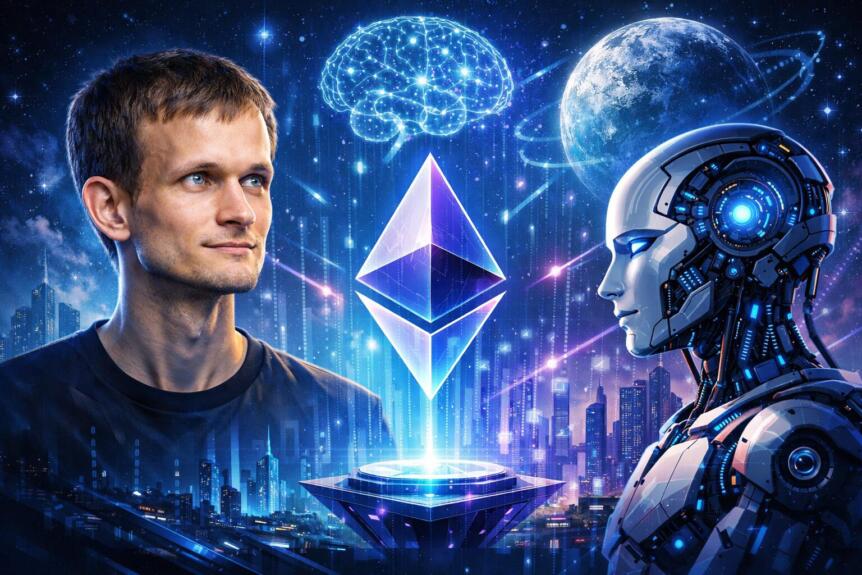
Vitalik Buterin, co-founder of Ethereum, reignited conversations about the potential intersection of Ethereum and artificial intelligence (AI). In a recent post on X, Buterin revisited his past thoughts on how the Ethereum network could contribute to the development of AI and artificial general intelligence (AGI). His comments underscore his ongoing commitment to long-term technological objectives, highlighting Ethereum’s broader potential beyond decentralized finance.
Buterin sees Ethereum as a foundational layer not only for blockchain transactions but also for enhancing AI systems. He envisions Ethereum supporting more open, transparent, and censorship-resistant AI technologies. Through Ethereum’s decentralized infrastructure, Buterin believes AI could develop in a way that aligns with human progress, rather than accelerating unchecked technological growth.
Ethereum as the Economic Layer for AI Transactions
Buterin suggests that Ethereum could play a pivotal role as an economic coordination layer for AI-to-AI transactions. Autonomous AI agents, operating independently, could use Ethereum to interact, negotiate, and exchange value seamlessly. In this model, Ethereum would serve as a neutral and reliable settlement layer, facilitating trust in transactions within machine-driven economies.
This vision of Ethereum goes beyond supporting financial markets. Buterin highlights Ethereum’s potential to create a decentralized environment where AI systems can autonomously interact efficiently and securely. By providing a transparent and immutable ledger, Ethereum could support an ecosystem where AI agents transact with each other in a trustless manner, all within the bounds of decentralized principles.
AI-Assisted On-Chain Verification and Trust
Buterin also emphasizes the importance of on-chain verification, with Ethereum providing the trust framework for various operations. He imagines a future where AI could assist in auditing smart contracts, verifying data, and improving decentralized governance systems. With Ethereum at the core, this verification process would be transparent, efficient, and immutable, strengthening the security and reliability of the entire system.
This idea aligns with Buterin’s vision of building a decentralized infrastructure that could sustain long-term technological development. He points out that AI could improve market efficiency, ensuring that decentralized systems function with higher levels of trust and accuracy. The integration of AI in Ethereum’s blockchain could bring about a new era of AI systems that are more accountable and reliable, further embedding Ethereum into the future of computing technology.
A Vision Beyond Market Cycles
Buterin’s recent tweet serves as a reminder to the crypto community that Ethereum’s development isn’t only about short-term trends or market movements. While many in the crypto industry remain focused on speculative developments, Buterin’s call for long-term thinking encourages broader innovation. His remarks suggest that Ethereum’s real potential lies in its ability to shape the next generation of computing infrastructure, not just in financial applications.
By revisiting ideas from nearly two years ago, Buterin aims to inspire developers and researchers to look at Ethereum’s broader potential. Ethereum’s decentralized architecture could serve as the foundation for future breakthroughs in AI and AGI development. Buterin’s comments, though not offering a clear roadmap, are a signal to think bigger and consider how Ethereum can be integrated into the next wave of technological advancements.
This article was originally published as Vitalik Buterin Explores Ethereum’s Future Role in AI and AGI Integration on Crypto Breaking News – your trusted source for crypto news, Bitcoin news, and blockchain updates.
You May Also Like

Shiba Inu Faces Growing Risks as Leadership Instability Concerns Holders

Vitalik: Staking means defending the blockchain, and there will inevitably be resistance when exiting
